
Contents
Overview
The concept of food insecurity in the U.S. gained formal recognition and academic traction in the late 20th century. While hunger has always been a feature of American society, early research, like that by Kristin McComas and Mark Weinstein, began to map the prevalence and correlates of this condition, revealing its presence across diverse demographics, not just among the chronically unemployed. The historical context is crucial: even during periods of apparent national prosperity, such as the post-World War II economic boom, pockets of deprivation persisted, often overlooked by mainstream narratives of American success. The evolution of federal nutrition programs, from the Emergency Food Assistance Program (TEFAP) to the Supplemental Nutrition Assistance Program (SNAP), reflects a continuous, albeit often contentious, effort to address this deeply rooted issue.
⚙️ How It Works
Food insecurity operates on multiple levels, from individual households to entire communities. At the household level, it manifests as a lack of financial resources to purchase adequate food, leading to difficult choices between food and other necessities like housing or healthcare. This can result in skipping meals, reducing portion sizes, or consuming less nutritious, cheaper options. At the community level, 'food deserts'—areas with limited access to affordable and nutritious food, often due to a lack of supermarkets—exacerbate the problem, particularly in low-income urban and rural areas. The mechanisms of food distribution, influenced by agricultural subsidies and market forces, can inadvertently create these disparities. The U.S. Department of Agriculture plays a significant role in measuring and reporting on food insecurity, using surveys to gauge the prevalence and severity of the problem across the nation, informing policy and aid distribution.
📊 Key Facts & Numbers
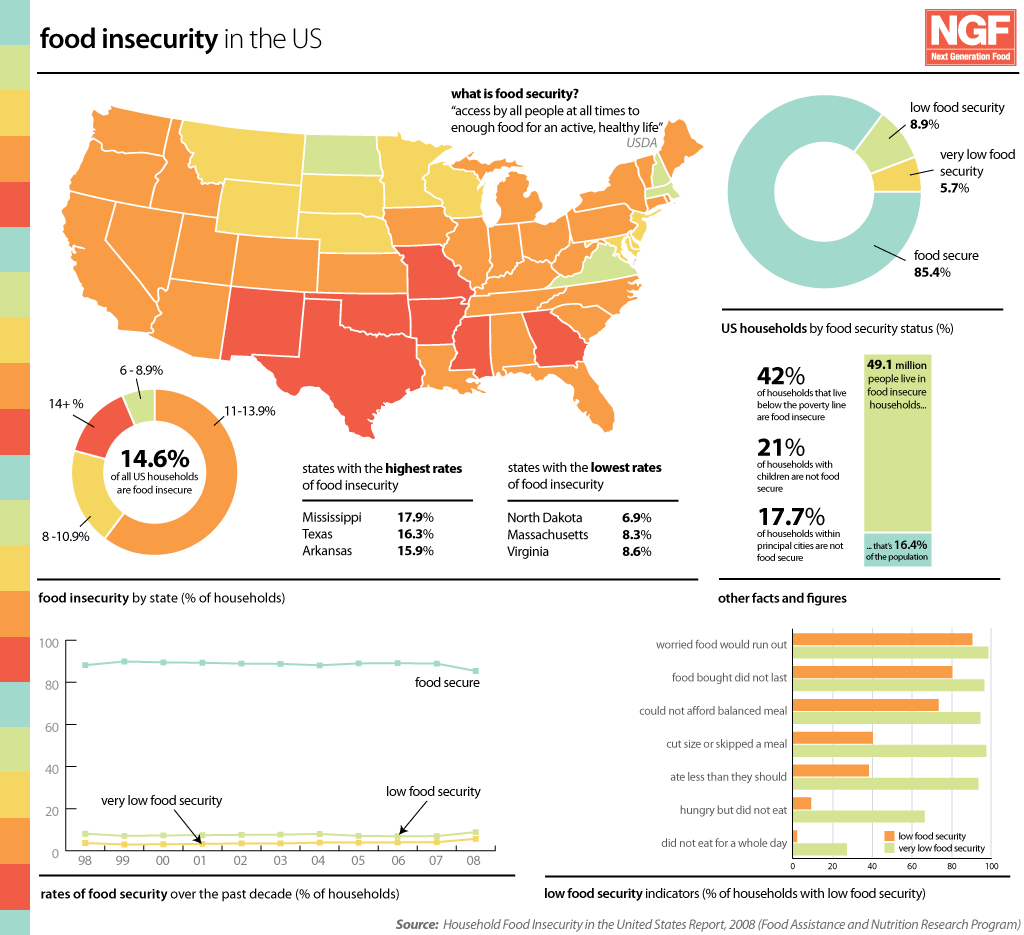
In 2021, 10.2% of U.S. households experienced food insecurity. The Women, Infants, and Children (WIC) program serves over 5.5 million participants annually, highlighting the scale of need.
👥 Key People & Organizations
Key organizations and individuals have shaped the discourse and response to food insecurity. The U.S. Department of Agriculture is the primary federal agency responsible for collecting data and administering major food assistance programs like the Supplemental Nutrition Assistance Program. Non-profits like Feeding America operate a vast network of food banks and pantries, distributing billions of pounds of food annually. The Rockefeller Foundation has funded numerous initiatives aimed at addressing food system inequities. Prominent researchers such as Rajiv Bhatia have explored the links between urban planning, food access, and public health. Policy advocates like Joel Berg, author of 'All You Can Eat: How Hungry People Survive in the Richness of America,' have been vocal critics of inadequate policy responses. The Congressional Budget Office regularly analyzes the costs and impacts of proposed food assistance legislation.
🌍 Cultural Impact & Influence
Food insecurity casts a long shadow over American culture, influencing health outcomes, educational attainment, and social cohesion. The stigma associated with needing food assistance can lead to social isolation and psychological distress. The prevalence of diet-related diseases, such as obesity and diabetes, is significantly higher among food-insecure populations, creating a cycle of poor health and increased healthcare costs. This health disparity is often concentrated in communities of color, reflecting systemic inequities. Culturally, the juxtaposition of abundant food production and widespread hunger raises profound questions about American values and priorities. The rise of 'food deserts' has also spurred movements for urban agriculture and community gardens, fostering a renewed connection to food sources and promoting healthier eating habits in underserved neighborhoods. The visibility of food pantries and soup kitchens has become a common, albeit often unacknowledged, feature of the American urban and rural landscape.
⚡ Current State & Latest Developments
The landscape of food insecurity in the U.S. is dynamic, heavily influenced by economic conditions and policy shifts. The expiration of expanded child tax credits and pandemic-era relief measures in 2023 led to a significant increase in food insecurity rates, particularly among families with children. The 2022 White House Conference on Hunger, Nutrition, and Health aimed to galvanize efforts to end hunger and improve nutrition by 2030, proposing strategies focused on increasing access to healthy food, integrating nutrition and health, and empowering all Americans to afford healthy food. Recent legislative debates surrounding the Farm Bill continue to shape the future of agricultural policy and food assistance programs, with ongoing discussions about eligibility, benefit levels, and program administration. The increasing use of technology, from online grocery ordering for SNAP recipients to data analytics for optimizing food bank operations, represents a growing trend in addressing logistical challenges.
🤔 Controversies & Debates
The debate surrounding food insecurity in the U.S. is multifaceted and often contentious. One central controversy lies in the framing of the problem: is it primarily an issue of individual poverty and lack of personal responsibility, or a systemic failure of economic and agricultural policy? Critics of current systems argue that programs like SNAP, while vital, are often underfunded and burdened by administrative hurdles, failing to adequately address the root causes of poverty. Others contend that agricultural subsidies disproportionately benefit large corporations, distorting food markets and contributing to the affordability of processed, unhealthy foods over fresh produce. The role of private charity, while essential, is also debated; some argue that an over-reliance on food banks masks the need for more robust government intervention and perpetuates a cycle of dependency rather than addressing systemic economic issues. The effectiveness and reach of programs like WIC are also subjects of ongoing evaluation and debate regarding optimal benefit structures and accessibility.
🔮 Future Outlook & Predictions
The future outlook for food insecurity in the U.S. hinges on a complex interplay of policy decisions, economic trends, and societal priorities. Projections suggest that without significant policy interventions, food insecurity rates may remain elevated or even increase, particularly if economic downturns occur. The push for universal school meals, a policy championed by organizations like the Food Research & Action Center, aims to provide a consistent source of nutrition for children, potentially mitigating some of the worst impacts. Innovations in urban agriculture, vertical farming, and sustainable food systems offer potential long-term solutions for increasing access to fresh produce in underserved areas. However, the political will to enact comprehensive reforms, such as a federal job guarantee or a substantial increase in the minimum wage, remains a significant hurdle. The long-term goal articulated by the 2022 White House Conference is ambitious: to end hunger and improve nutrit
Key Facts
- Category
- culture
- Type
- topic