
Contents
- 🎵 Origins & History
- ⚙️ How It Works
- 📊 Key Facts & Numbers
- 👥 Key People & Organizations
- 🌍 Cultural Impact & Influence
- ⚡ Current State & Latest Developments
- 🤔 Controversies & Debates
- 🔮 Future Outlook & Predictions
- 💡 Practical Applications
- 📚 Related Topics & Deeper Reading
- Frequently Asked Questions
- References
- Related Topics
Overview
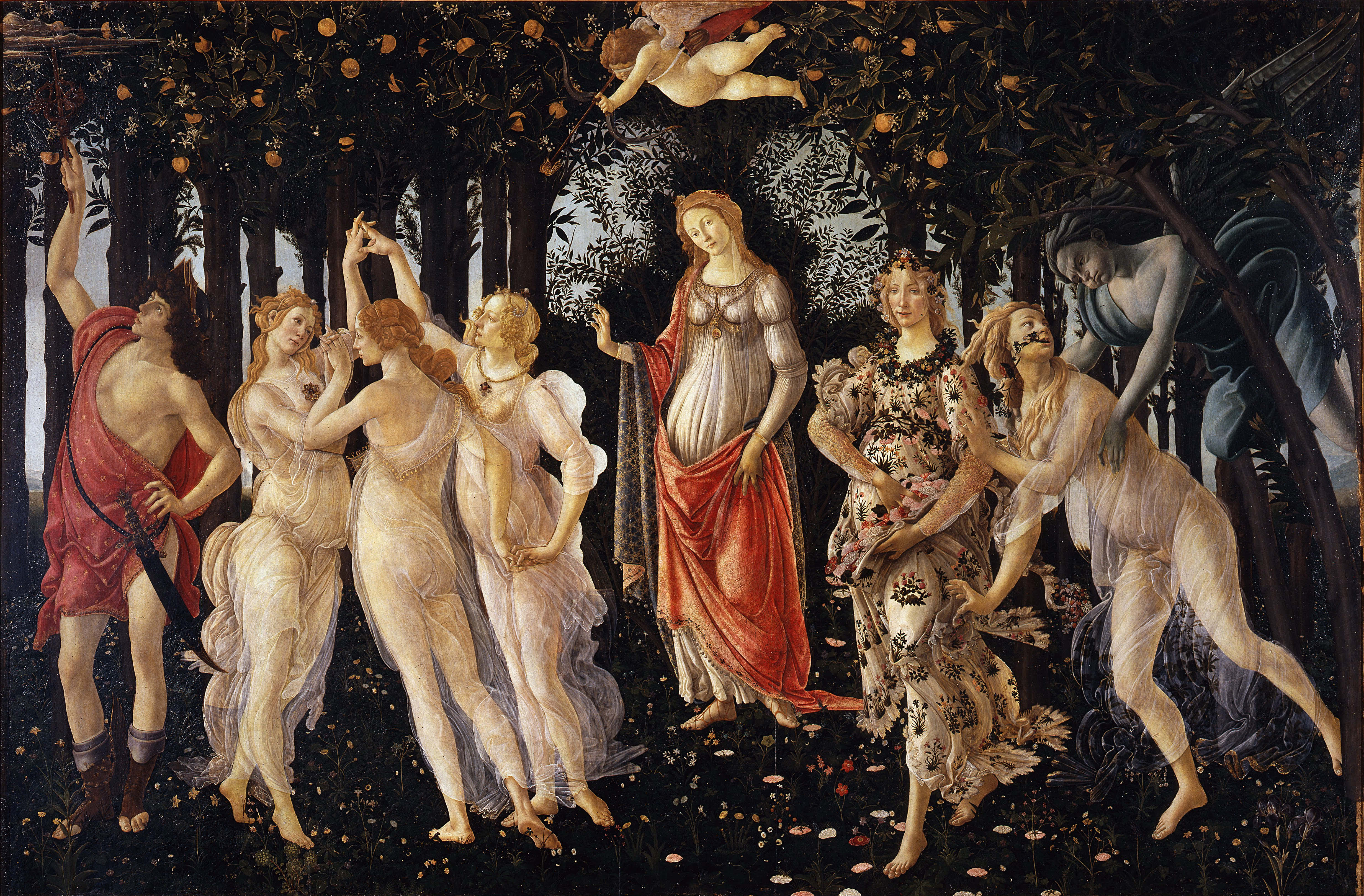
Florentine Renaissance art, flourishing from roughly the early 15th to the late 16th century, represents a seismic shift in Western artistic expression, rooted in Florence's intellectual and economic dynamism. This period saw artists move beyond medieval conventions to embrace humanism, classical antiquity, and scientific observation, fundamentally altering painting, sculpture, and architecture. Key innovations included the mastery of linear perspective, anatomical accuracy, and the development of sfumato and chiaroscuro, all aimed at creating more naturalistic and emotionally resonant works. The patronage of wealthy families like the Medici fueled an explosion of creativity, attracting and nurturing geniuses such as Leonardo da Vinci, Michelangelo, and Raphael, whose masterpieces continue to define Western art. The influence of Florentine art radiated outwards, shaping the High Renaissance and subsequent artistic movements across Europe, solidifying Florence's status as the cradle of artistic modernity.
🎵 Origins & History
The genesis of Florentine Renaissance art can be traced to the early 15th century, a period marked by a fervent rediscovery of classical ideals and a burgeoning humanist philosophy. While the 14th century saw precursors like Petrarch and Coluccio Salutati lay intellectual groundwork, it was the groundbreaking innovations of Filippo Brunelleschi in architecture and perspective, Donatello in sculpture, and Masaccio in painting around 1420 that truly ignited the movement. Initially, these radical departures from the prevailing International Gothic style were met with resistance, existing as a minority taste for two decades. However, the intellectual rigor and visual power of these new approaches, deeply intertwined with the civic pride and mercantile wealth of Florence, gradually gained traction, eventually supplanting older traditions and becoming the dominant artistic language.
⚙️ How It Works
Florentine Renaissance art is characterized by a systematic approach to representation, prioritizing clarity, order, and naturalism. Central to this was the development and application of linear perspective, a mathematical system devised by Filippo Brunelleschi that allowed artists to create a convincing illusion of three-dimensional space on a two-dimensional surface. This was complemented by a profound interest in human anatomy, often informed by direct study and dissection, leading to figures that possessed unprecedented realism and expressiveness. Techniques like sfumato, a subtle blurring of lines and colors to create soft transitions, perfected by Leonardo da Vinci, and chiaroscuro, the dramatic use of light and shadow, further enhanced the sense of volume and emotional depth in paintings. The revival of classical motifs, mythological subjects, and idealized forms also played a crucial role, reflecting the humanist emphasis on human potential and earthly experience.
📊 Key Facts & Numbers
The Florentine Renaissance produced an astonishing volume of masterpieces, with estimates suggesting over 10,000 significant artworks were created within the city during its peak. The economic engine of Florence, fueled by banking and trade, generated immense wealth, with patrons like the Medici family alone commissioning works valued in the millions of contemporary dollars. The Uffizi Gallery in Florence now houses over 1,500 works from this period, representing just a fraction of the artistic output. Between 1400 and 1500, Florence saw an estimated 500 active painters and sculptors, with hundreds more architects and artisans contributing to the city's visual transformation. The average commission for a major altarpiece could range from 100 to 500 gold florins, a sum equivalent to a skilled craftsman's annual income for several years.
👥 Key People & Organizations
The Florentine Renaissance was a constellation of artistic giants and influential patrons. Filippo Brunelleschi (1377-1446) revolutionized architecture with his dome for the Florence Cathedral and codified linear perspective. Donatello (c. 1386-1466) redefined sculpture with his emotionally charged figures, including his bronze David. Masaccio (1401-1428) brought a new realism and psychological depth to painting, famously in his Brancacci Chapel frescoes. Later, leonardo-da-vinci (1452-1519), Michelangelo (1475-1564), and Raphael (1483-1520) – though active in Rome and elsewhere – were profoundly shaped by their Florentine training and early careers. The Medici family, particularly Cosimo de' Medici and Lorenzo de' Medici, served as pivotal patrons, commissioning works and fostering an environment of artistic innovation. The Academy of the Arts of Drawing, founded in 1563, institutionalized artistic training, solidifying Florence's legacy.
🌍 Cultural Impact & Influence
The impact of Florentine Renaissance art on subsequent artistic traditions is immeasurable. It established a canon of techniques and aesthetic ideals that dominated Western art for centuries, influencing movements from the High Renaissance to Neoclassicism. The humanist focus on human dignity and individual achievement resonated beyond art, shaping philosophy, literature, and political thought. Florentine artists and their works traveled widely, disseminating these new ideas to courts and cities across Italy and Europe, from Venice to Paris. The very concept of the artist as an intellectual genius, rather than a mere craftsman, was largely forged in Florence, a notion that continues to define artistic careers today. The enduring popularity of Florentine masterpieces ensures their continued presence in global culture, inspiring countless reproductions, adaptations, and academic studies.
⚡ Current State & Latest Developments
While the peak of Florentine Renaissance art has long passed, its legacy remains vibrantly alive in the 21st century. Florence continues to attract millions of tourists annually, drawn by its unparalleled artistic heritage, with the Uffizi Gallery and Galleria dell'Accademia consistently ranking among the world's most visited museums. Ongoing conservation efforts, often funded by international grants and private donations, work to preserve these invaluable artworks for future generations. Contemporary artists still draw inspiration from the techniques and themes of the Renaissance, engaging in dialogues with these historical masters through reinterpretations and stylistic homages. The digital realm has also opened new avenues for engagement, with virtual tours and high-resolution online archives making Florentine art more accessible than ever before, reaching audiences far beyond the physical confines of the city.
🤔 Controversies & Debates
Debates surrounding Florentine Renaissance art often center on the interpretation of its humanist underpinnings and the extent of its break from medieval traditions. Some scholars argue that the Renaissance was not a complete rupture but rather a gradual evolution, with significant continuity from Gothic art. The role of patronage, particularly the influence of wealthy families like the Medici, raises questions about artistic autonomy versus the demands of patrons. Furthermore, the canonization of certain artists, primarily male figures, has led to discussions about the exclusion and underrepresentation of female artists from this period, though evidence of their contributions is slowly emerging. The very definition of 'Renaissance' and its perceived superiority over earlier periods is also a subject of ongoing scholarly critique, challenging Eurocentric narratives.
🔮 Future Outlook & Predictions
The future of Florentine Renaissance art lies in its continued relevance and reinterpretation. As technology advances, new methods of analysis, such as advanced imaging and AI-driven restoration, promise to reveal deeper insights into artistic techniques and materials. The ongoing challenge of overtourism in Florence may necessitate new strategies for managing visitor access to key sites, potentially shifting focus towards digital engagement or less-visited but equally significant locations. The enduring appeal of these works suggests they will continue to inspire new artistic creations and scholarly research for centuries to come, adapting to new cultural contexts and technological possibilities. The potential for discovering previously unknown works or reattributing existing ones also remains, ensuring a dynamic future for the study of this period.
💡 Practical Applications
The practical applications of Florentine Renaissance art extend far beyond museum walls. Its principles of perspective, composition, and anatomical accuracy are foundational to modern graphic design, animation, and video game development. The techniques of chiaroscuro and sfumato continue to inform cinematography and digital art. Architectural principles derived from Renaissance designs are still evident in civic buildings and urban planning worldwide. Furthermore, the study of Renaissance patronage and artistic economics offers valuable lessons for contemporary art markets and cultural funding models. The very idea of artistic genius and the pursuit of aesthetic excellence, so central to the Florentine period, remains a powerful aspirational goal in creative fields.
Key Facts
- Year
- 1400-1600
- Origin
- Florence, Italy
- Category
- culture
- Type
- movement
Frequently Asked Questions
What are the defining characteristics of Florentine Renaissance art?
Florentine Renaissance art is defined by its embrace of humanism, a focus on realism, and the application of scientific principles like linear perspective. Artists aimed to depict the world and human form with unprecedented accuracy and emotional depth, drawing inspiration from classical antiquity. Key techniques include chiaroscuro for dramatic lighting and sfumato for soft transitions, all contributing to a sense of naturalism and intellectual rigor that distinguished it from earlier medieval styles.
Who were the most important artists of the Florentine Renaissance?
The Florentine Renaissance boasts an unparalleled roster of artistic talent. Early pioneers include Filippo Brunelleschi for architecture and perspective, Donatello for sculpture, and Masaccio for painting. Later masters who trained or worked in Florence and defined the High Renaissance include Leonardo da Vinci, Michelangelo, and Raphael. Other significant figures include Sandro Botticelli, Giotto (a precursor), and Paolo Uccello.
How did the Medici family influence Florentine art?
The Medici family were arguably the most significant patrons of the Florentine Renaissance, wielding immense influence through their wealth and political power. Figures like Cosimo de' Medici and Lorenzo de' Medici commissioned countless artworks, supported artists, and fostered an environment where humanism and classical learning flourished. Their patronage enabled artists to experiment and create ambitious projects, shaping the direction and quality of art produced in Florence, effectively turning the city into an artistic powerhouse.
What is linear perspective and why was it important?
Linear perspective is a mathematical system developed by Filippo Brunelleschi that allows artists to create a realistic illusion of depth and space on a flat surface. By using a vanishing point and converging lines, artists could depict objects and scenes as they appear to the human eye. This innovation was crucial for the Florentine Renaissance as it provided a scientific basis for naturalistic representation, moving art away from symbolic or flattened medieval depictions towards a more rational and observable reality.
Was Florentine Renaissance art truly a 'rebirth' or an evolution?
The notion of the Renaissance as a complete 'rebirth' from a 'dark age' is a subject of scholarly debate. While it undeniably marked a profound shift in artistic and intellectual focus, drawing heavily on classical antiquity, many historians argue it was more of an evolution from late medieval traditions. Elements of Gothic art persisted, and the humanist ideals were built upon existing intellectual currents. The term 'rebirth' itself was popularized by Renaissance thinkers like Giorgio Vasari, reflecting their own perception of a break from the past rather than an objective historical assessment.
How can I experience Florentine Renaissance art today?
Experiencing Florentine Renaissance art today is most powerfully done by visiting Florence, Italy. Key sites include the Uffizi Gallery, which houses masterpieces by Botticelli, Leonardo da Vinci, and Raphael; the Galleria dell'Accademia to see Michelangelo's David; and the Florence Cathedral complex with Brunelleschi's Dome. Beyond these, many churches like Santa Croce and Santa Maria Novella contain significant frescoes and artworks. Virtual tours and online museum collections also offer accessible ways to explore these works globally.
What are the future implications of studying Florentine Renaissance art?
Studying Florentine Renaissance art continues to offer profound insights into the relationship between art, science, philosophy, and society. It provides a model for understanding how cultural and economic factors can foster artistic innovation. Furthermore, the techniques and aesthetic principles developed during this period remain relevant for contemporary artists and designers across various media, from digital art to architecture. The ongoing conservation and interpretation of these works also highlight the importance of preserving cultural heritage and the evolving role of technology in art historical research and public engagement.