
Contents
Overview
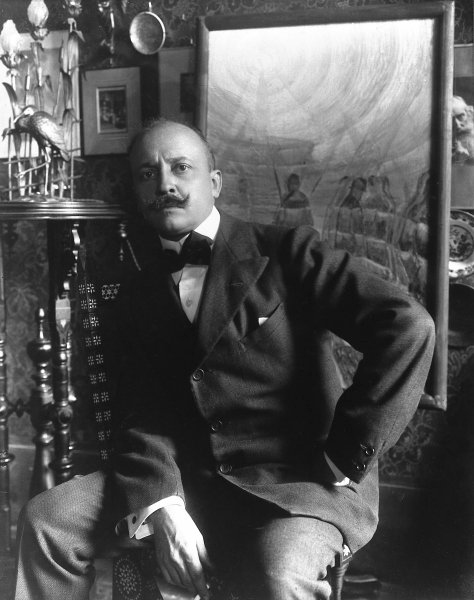
Filippo Tommaso Marinetti was born on December 22, 1876, in Alexandria, Egypt, to Italian parents. His early life and education were marked by a fascination with literature and poetry, which led him to become a key figure in the Italian literary scene. Marinetti's involvement with the Abbaye de Créteil, a utopian and Symbolist community, between 1907 and 1908, significantly influenced his artistic and literary views. This period laid the groundwork for his future work, including his association with notable figures like Guillaume Apollinaire and Pablo Picasso.
📣 The Manifesto of Futurism
The Manifesto of Futurism, written and published by Marinetti in 1909, is arguably his most famous work. This provocative document called for the rejection of traditional artistic and cultural values, embracing instead the dynamism and energy of modern life. The manifesto's principles, which glorified speed, technology, and violence, resonated with many young artists and writers of the time, including Umberto Boccioni and Gino Severini. However, it also drew criticism for its perceived glorification of war and its nationalist undertones, which would later become more pronounced in Marinetti's involvement with the Fascist party.
🌎 Cultural Impact & Legacy
Marinetti's cultural impact extends beyond his literary contributions. As a co-author of the Fascist Manifesto in 1919, he played a role in shaping the political ideology of Fascism in Italy. This association has led to ongoing debates about the relationship between Futurism and Fascism, with some critics arguing that Marinetti's ideology inherently supported authoritarian and nationalist principles. Despite these controversies, Marinetti's influence can be seen in various aspects of modern culture, from art and literature to architecture and design, with movements like Futurism and Constructivism drawing inspiration from his ideas.
🔥 Controversies & Criticisms
Marinetti's legacy is complex and multifaceted, marked by both his innovative contributions to modern art and literature and his controversial political affiliations. Critics like Walter Benjamin have analyzed Marinetti's work and ideology, highlighting the tensions between his aesthetic vision and his political engagements. Today, Marinetti is remembered not only as the founder of Futurism but also as a figure who embodies the contradictions of the early 20th century, navigating the intersections of art, politics, and technology. His work continues to inspire and provoke, with artists and writers like Salvador Dali and Virginia Woolf engaging with his ideas in their own creative explorations.
Key Facts
- Year
- 1876-1944
- Origin
- Italy
- Category
- culture
- Type
- person
Frequently Asked Questions
What is Futurism and how did Marinetti contribute to it?
Futurism is an artistic and literary movement that emphasizes the values of speed, technology, and violence. Marinetti, as the founder, played a crucial role in shaping its principles through his Manifesto of Futurism. His work influenced a generation of artists, including Umberto Boccioni and Gino Severini, and continues to inspire contemporary artists and writers.
How did Marinetti's involvement with Fascism impact his legacy?
Marinetti's association with the Fascist party, particularly through co-authoring the Fascist Manifesto in 1919, has led to significant controversy and criticism. His ideology has been seen by some as inherently supporting authoritarian and nationalist principles, which has complicated his legacy and led to ongoing debates about the relationship between Futurism and Fascism. Critics like Walter Benjamin have analyzed these aspects of his work.
What is the significance of the Manifesto of Futurism?
The Manifesto of Futurism, published in 1909, is a foundational document of the Futurist movement. It called for a rejection of traditional values and an embrace of modernity, emphasizing the importance of speed, technology, and innovation. The manifesto's influence can be seen in various aspects of modern culture, from art and literature to architecture and design, with movements like Futurism and Constructivism drawing inspiration from its principles.
How does Marinetti's work relate to other modern art movements?
Marinetti's work and the Futurist movement have connections to other modern art movements, such as Cubism, Surrealism, and Dadaism. Artists like Pablo Picasso and Salvador Dali were influenced by Futurist ideas, and the movement's emphasis on experimentation and innovation paved the way for a wide range of avant-garde movements in the 20th century.
What is Marinetti's lasting impact on literature and art?
Marinetti's impact on literature and art is profound and far-reaching. As a poet and editor, he was instrumental in promoting new forms of artistic expression and encouraging experimentation. His influence can be seen in the work of writers like Virginia Woolf and artists like Francis Bacon, who drew upon Futurist principles in their own work. Today, Marinetti is recognized as a key figure in the development of modern art and literature, and his ideas continue to inspire new generations of creatives.