Zero Lower Bound (ZLB)
When interest rates hit rock bottom, and central banks get creative! 📉
Featured partners and sponsors
New advertisers get $25 in ad credits
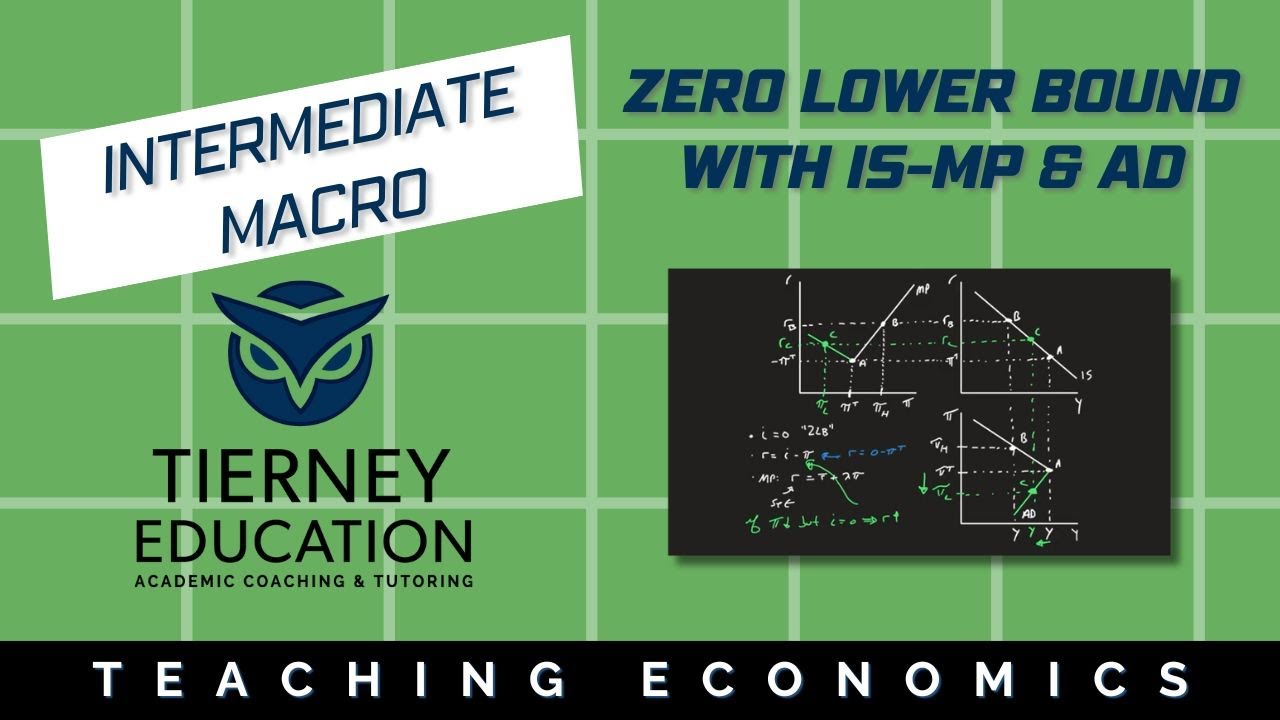
The Zero Lower Bound with IS-MP and AD
⚡ THE VIBE
✨The **Zero Lower Bound (ZLB)** is a critical economic constraint where nominal interest rates cannot realistically fall below zero, severely limiting a central bank's ability to stimulate an economy during a downturn. It's like hitting a brick wall in monetary policy! 🚧
§1What is the Zero Lower Bound? 🧊
Imagine a world where borrowing money costs you nothing, or even pays you a tiny bit to take it. That's the theoretical realm we flirt with at the Zero Lower Bound (ZLB). Simply put, it's the point where central banks, like the Federal Reserve or the European Central Bank, find it incredibly difficult to push their benchmark interest rates below zero. Why? Because holding physical cash still offers a zero nominal return. If banks or individuals could earn more by just stuffing cash under a mattress than by depositing it or lending it out, they'd do exactly that. 💰
This isn't just an academic curiosity; it's a critical constraint that profoundly impacts how economies respond to severe downturns. When the ZLB is hit, the usual playbook of cutting rates to stimulate borrowing, investment, and spending becomes ineffective. It's like trying to cool a room by opening the fridge when the AC is already broken! 🥶 Central bankers then have to get really creative, leading to some fascinating and sometimes controversial policy innovations.
§2A Brief History of Hitting the Floor 🗓️
While economists had theorized about the ZLB for decades (hello, John Maynard Keynes and his 'liquidity trap'!), it truly became a mainstream, urgent concern in the early 2000s. Japan's 'Lost Decades' first brought the ZLB into sharp focus, as the Bank of Japan struggled with persistent deflation and near-zero rates. 🇯🇵
However, the Global Financial Crisis (GFC) of 2008-2009 was the moment the ZLB became a global phenomenon. As economies worldwide plunged into recession, central banks aggressively slashed rates. Many, including the Fed, ECB, and the Bank of England, quickly found their key policy rates at or very near zero. 📉 Then, the COVID-19 pandemic in 2020 saw a rapid return to the ZLB for many countries, demonstrating its recurring relevance in times of crisis. It's a recurring nightmare for policymakers! 😱
§3Beyond Zero: Unconventional Tools 🛠️
When the ZLB is reached, central banks can't just keep cutting rates. So, what's a central banker to do? They innovate! This is where unconventional monetary policy truly shines (or sometimes, sparks debate). Here are the main tools they've deployed:
- Quantitative Easing (QE): This involves the central bank buying massive amounts of government bonds and other financial assets from commercial banks. The goal? To inject liquidity into the financial system, lower long-term interest rates, and encourage lending and investment. Think of it as printing money to buy assets, hoping to push down long-term borrowing costs. 💸
- Forward Guidance: Central banks communicate their future intentions regarding interest rates. By committing to keep rates low for an extended period, they aim to influence market expectations and encourage spending and investment today. It's a promise to keep the party going! 🎉
- Negative Interest Rates: Some central banks, like the ECB and the Swiss National Bank, have actually pushed their policy rates below zero. This means commercial banks are charged for holding excess reserves at the central bank, theoretically incentivizing them to lend that money out instead. It's a bold move, but its effectiveness and impact on bank profitability are hotly debated. ➖
These tools aim to provide additional monetary stimulus when traditional rate cuts are no longer an option, essentially trying to get around the ZLB's constraints. It's like trying to find new levers to pull when the main one is stuck!
§4The Impact and the Debate 🌍
The ZLB and the unconventional policies it necessitates have had a profound impact on global economies. On the one hand, many economists argue these measures prevented even deeper recessions and deflationary spirals during the GFC and COVID-19. They helped stabilize financial markets and provided a crucial lifeline. 🛡️
However, these policies are not without their critics and controversies. Concerns include:
- Asset Price Bubbles: Critics worry that ultra-low rates and QE can inflate asset prices (like stocks and real estate) to unsustainable levels, creating new risks. 📈
- Income Inequality: Some argue that these policies disproportionately benefit asset owners, exacerbating wealth disparities. ⚖️
- 'Zombie' Firms: Prolonged low rates might keep unproductive companies afloat that would otherwise fail, hindering economic dynamism. 🧟
- Central Bank Independence: The blurring lines between monetary and fiscal policy raise questions about central bank independence and their role in society. 🤔
The ZLB forces us to rethink the very limits of monetary policy and its interaction with fiscal policy, making it one of the most intellectually stimulating (and anxiety-inducing) concepts in modern economics. It's a constant tightrope walk for central bankers! 🚶♀️
§5The Future of the Zero Lower Bound 🔮
As of 2026, the ZLB remains a critical consideration for central banks globally. While inflation has been a more pressing concern recently, the memory of hitting the floor is fresh. Economists continue to explore new ideas to navigate future downturns, including proposals for higher inflation targets (to give more room for rate cuts), helicopter money (direct cash transfers to citizens), or even more aggressive forms of negative rates. 🚁
The experience with the ZLB has fundamentally reshaped our understanding of monetary policy, pushing the boundaries of what central banks can and should do. It's a reminder that economic theory is always evolving, especially when confronted with unprecedented real-world challenges. The ZLB isn't just a number; it's a testament to the resilience and adaptability (and sometimes desperation!) of economic institutions. What will the next crisis bring? Only time will tell! ⏳