The Xinhai Revolution
The seismic shift that toppled an empire and birthed a republic! 🐉💥
Featured partners and sponsors
New advertisers get $25 in ad credits
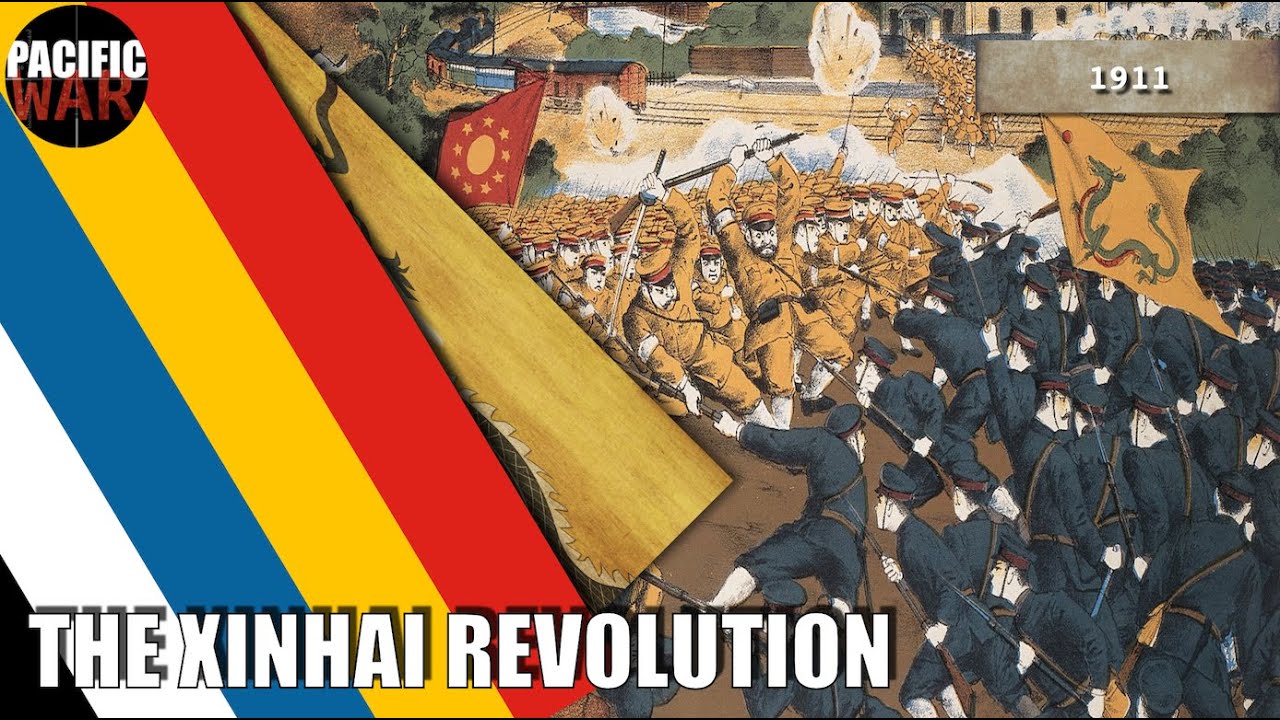
The Xinhai Revolution of 1911 🇹🇼 Fall of the Qing Dynasty
⚡ THE VIBE
✨The Xinhai Revolution wasn't just a rebellion; it was the dramatic, world-altering overthrow of China's last imperial dynasty, the Qing, ushering in the birth of Asia's first republic and forever reshaping the nation's destiny. It was a true 'out with the old, in with the new' moment on a colossal scale! 🌟
§1The Spark That Ignited a Nation 🔥
Imagine a China teetering on the brink, burdened by centuries of imperial tradition, yet yearning for modernity. That was the scene leading up to the Xinhai Revolution (辛亥革命, Xīnhài Gémìng), named after the xinhai year in the Chinese sexagenary cycle (1911). This wasn't a single, unified uprising but a series of revolts and political maneuvers that ultimately dismantled the 268-year-old Qing Dynasty and over 2,000 years of imperial rule. The catalyst? A seemingly minor incident in Wuchang. On October 10, 1911, an accidental explosion at a revolutionary safe house exposed a plot, forcing the local New Army units, who were secretly aligned with anti-Qing sentiments, to launch an immediate uprising. This spontaneous act, fueled by widespread discontent and nationalist fervor, quickly spiraled into a nationwide movement. 🚀
§2Roots of Rebellion: A Century of Discontent 💔
To understand the Xinhai Revolution, we need to rewind. The Qing Dynasty, though once mighty, had been severely weakened by the 19th century. Humiliating defeats in the Opium Wars, the devastating Taiping Rebellion, and the Boxer Rebellion exposed its fragility and inability to protect China from foreign encroachment. Intellectuals and reformers, inspired by Western ideas and Japanese modernization, began to advocate for radical change. Figures like Sun Yat-sen (孫中山), often hailed as the 'Father of Modern China,' tirelessly organized revolutionary societies abroad, promoting his 'Three Principles of the People' (三民主義) – nationalism, democracy, and the people's livelihood. These ideas resonated deeply with a populace tired of corruption, foreign domination, and an archaic political system. The Qing's attempts at reform were too little, too late, only further fueling the revolutionary fire. 💡
§3The Collapse of an Empire & Birth of a Republic 🏛️
Once the Wuchang Uprising began, provinces across China declared independence from the Qing court with astonishing speed. Within weeks, 15 of China's 18 provinces had joined the revolution. The imperial government, desperate, recalled Yuan Shikai (袁世凱), a powerful general, to suppress the revolt. However, Yuan, a shrewd political operator, saw an opportunity. He negotiated with both the Qing court and the revolutionaries, ultimately securing the abdication of the child emperor Puyi in February 1912. This marked the official end of the Qing Dynasty. Meanwhile, revolutionaries established the Provisional Government of the Republic of China in Nanjing, with Sun Yat-sen elected as its provisional president. However, to prevent further civil war and to secure the abdication, Sun Yat-sen reluctantly ceded the presidency to Yuan Shikai, believing Yuan could unite the country. This decision would have profound and complex consequences for the nascent republic. ⚖️
§4Legacy & Lingering Echoes reverberating through time ⏳
The Xinhai Revolution was a monumental turning point, a true game-changer for China. It abolished the imperial system, a structure that had defined Chinese civilization for millennia, and introduced the concept of a republic. While the early republic faced immense challenges – warlordism, political instability, and foreign interference – the revolution planted the seeds for modern Chinese nationalism and the pursuit of a strong, independent nation. It fundamentally altered China's self-perception and its place in the world. The ideals of democracy and national rejuvenation, though often deferred, continued to inspire generations of Chinese leaders and citizens. Its legacy is still debated and celebrated today, a testament to its enduring impact on one of the world's oldest civilizations. 🌍✨