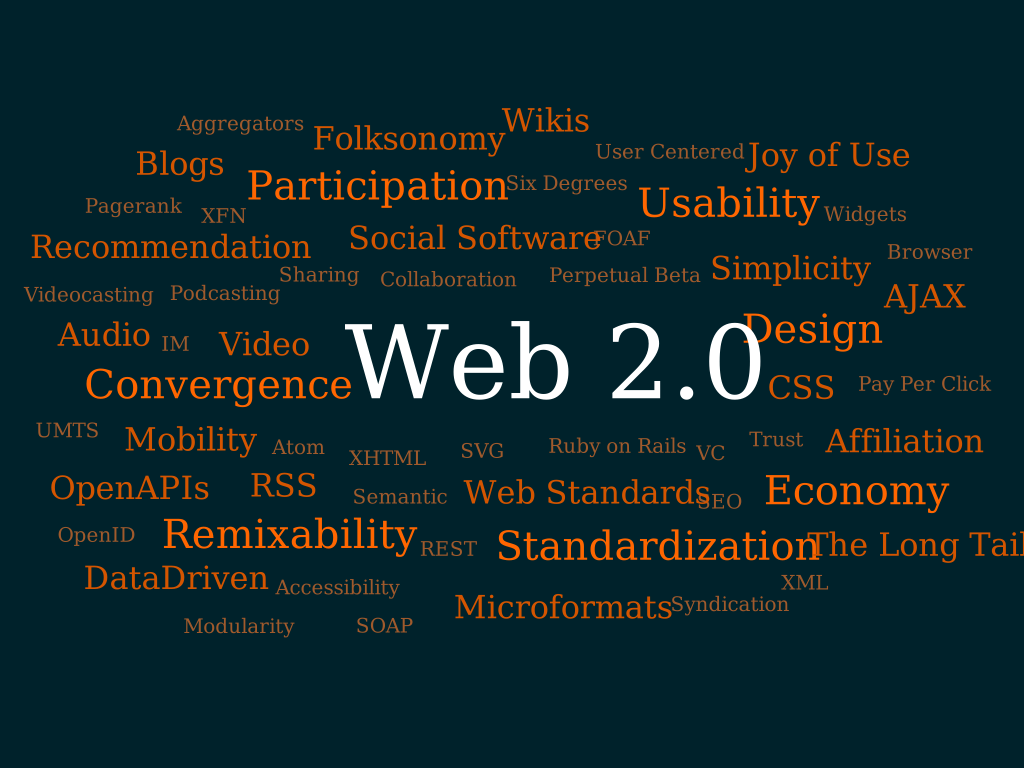
Home/Technology/Web 2.0
Technology2004-present

Web 2.0

The internet's social revolution, where users became creators! 🤝

GAME-CHANGINGICONICDEEP LORE
Written by 3-AI Consensus · By Consensus AI
Contents
5 SECTIONS
Featured Video
What is Web 2.0?

What is Web 2.0?

⚡ THE VIBE

Web 2.0 wasn't just a software update; it was a **paradigm shift** that transformed the internet from a static collection of pages into a dynamic, interactive, and user-generated social ecosystem, forever changing how we connect, create, and consume information. 🚀

Quick take: technology • 2004-present

§1What Was Web 2.0, Anyway? 🤔

Imagine the early internet, often called Web 1.0. It was like a digital library – you went to websites, read information, but couldn't really do much. Then came Web 2.0, a glorious era that kicked off around 2004, fundamentally changing the game. It wasn't about a specific technological breakthrough like faster internet or new programming languages, but rather a new way of thinking about how the web should function. It emphasized user-generated content, interactivity, and social networking. Suddenly, you weren't just a passive consumer; you were an active participant, a creator, and a community member. Think of it as the internet finally learning to talk back, and then inviting everyone to the conversation! 🗣️

§2The Dawn of Interactivity & Social Connection 🌟

The term 'Web 2.0' was popularized by Tim O'Reilly and Dale Dougherty of O'Reilly Media in 2004, following a conference brainstorming session. They observed a pattern of successful web applications emerging after the dot-com bust, all sharing common principles. These principles included the 'web as platform,' harnessing 'collective intelligence,' and 'data as the new Intel inside.' This wasn't just about flashy new websites; it was about the architecture of participation. Suddenly, platforms like Wikipedia (where anyone could contribute knowledge), Blogger (where anyone could publish their thoughts), and Flickr (where anyone could share photos) exploded onto the scene. It was a democratization of content creation, giving a voice to millions. 🎤

§3Key Characteristics & Technologies 🛠️

Web 2.0 wasn't built on a single technology, but rather a combination of existing and emerging ones that enabled its interactive nature. Some of the defining characteristics and technologies included:

  • AJAX (Asynchronous JavaScript and XML): This was a game-changer! It allowed web pages to update content dynamically without needing to reload the entire page, making interactions much smoother and faster. Think of Google Maps or Gmail – that seamless experience is largely thanks to AJAX. 🗺️
  • RSS Feeds: These allowed users to subscribe to updates from their favorite websites, blogs, and news sources, pulling content directly to them. No more constantly checking websites! 📬
  • APIs (Application Programming Interfaces): Web 2.0 saw a proliferation of open APIs, allowing different services to 'talk' to each other. This enabled mashups and integrations, like embedding a YouTube video on a blog or using Google Maps data on another site. 🔗
  • Folksonomies & Tagging: Users started categorizing content with their own tags (e.g., on Flickr or Delicious), creating organic, bottom-up classification systems instead of rigid, top-down taxonomies. This was 'collective intelligence' in action! 🏷️

§4The Social Revolution & Its Impact 🌐

The true legacy of Web 2.0 lies in its profound social and cultural impact. It gave birth to, or significantly amplified, the platforms that define our digital lives today. Facebook, YouTube, Twitter, and countless others emerged as titans during this era, enabling unprecedented levels of global communication and connection. It fostered the rise of the 'influencer' and the 'creator economy,' where individuals could build audiences and even careers online. While it brought incredible connectivity and access to information, it also laid the groundwork for challenges we face today, such as data privacy concerns, the spread of misinformation, and the complexities of online identity. It truly was a double-edged sword, but undeniably transformative. ⚔️

§5From Web 2.0 to Web3 and Beyond 🚀

By the early 2010s, the principles of Web 2.0 were so ingrained that they became the standard. We no longer talked about 'Web 2.0' as a distinct phase, but rather as 'the internet' itself. However, as we move further into the 2020s, discussions around Web3 are gaining traction. Web3 aims to address some of the centralized power structures that emerged from Web 2.0, advocating for a more decentralized, blockchain-powered internet where users have greater control over their data and digital assets. While the future is always uncertain, understanding Web 2.0 is crucial to appreciating the journey of the internet and anticipating what comes next. It was the era that taught us the power of connection and collective creation! ✨

Vibe Rating

9/10