Walter Baade
The Stellar Detective Who Rewrote the Universe's Scale 🔭
Featured partners and sponsors
New advertisers get $25 in ad credits
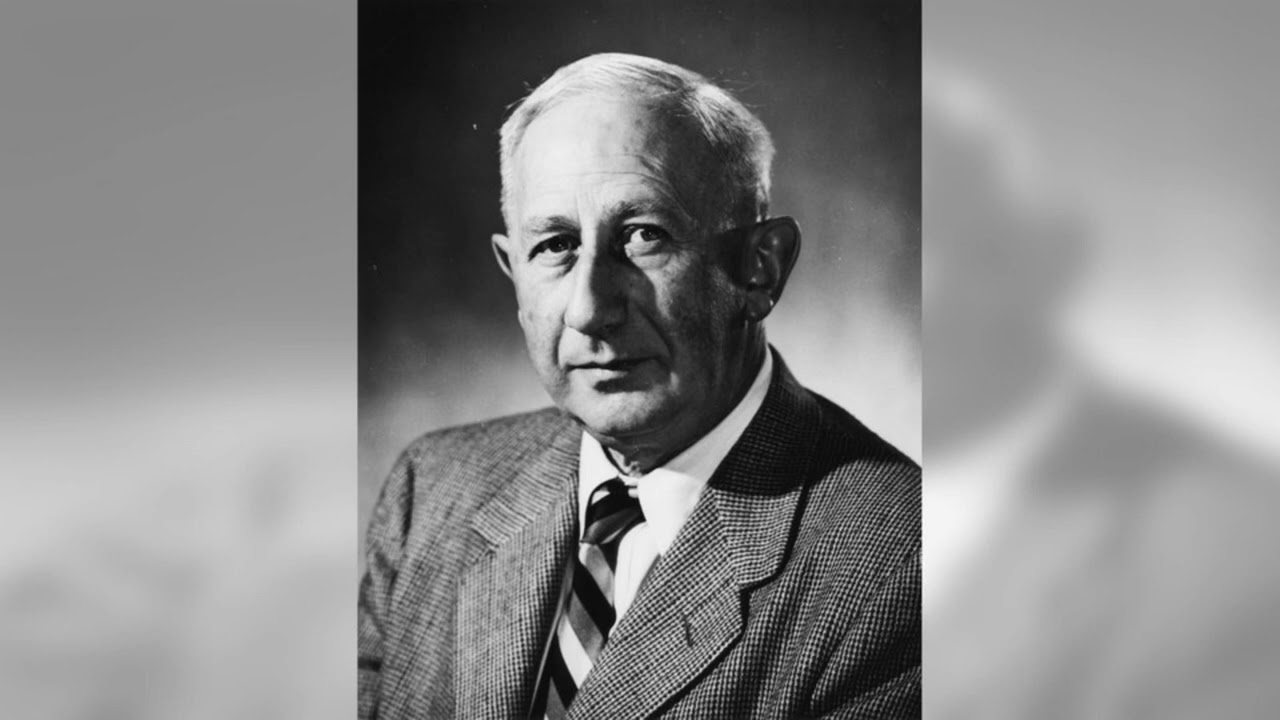
WDR 24. März 1893 - Der Astronom Walter Baade wird geboren
⚡ THE VIBE
✨Walter Baade was a brilliant German-American astronomer whose groundbreaking work on stellar populations and the recalibration of the cosmic distance ladder dramatically expanded our understanding of the universe's true scale and age. His insights were nothing short of revolutionary, peeling back layers of cosmic mystery! 🌌
§1Who Was Walter Baade? A Cosmic Visionary 🔭
Imagine a time when the universe felt a little... smaller. That's the cosmos Walter Baade inherited, but he didn't leave it that way! Born in 1893 in Germany, Baade was a meticulous observer and a sharp theoretical mind. His early career saw him contributing to the understanding of asteroids and comets, but it was his move to the United States in the 1930s, particularly to the legendary Mount Wilson Observatory and later Palomar Observatory, that truly set the stage for his most profound discoveries. He wasn't just looking at stars; he was seeing them differently, discerning patterns and distinctions that others had missed. His work was foundational, literally changing how we measure the universe. 🌟
§2The Two Populations: A Stellar Revolution 💫
Baade's most famous contribution, born during the wartime blackout of Los Angeles (which provided incredibly dark skies for observation!), was the identification of two distinct stellar populations. Before Baade, astronomers generally viewed stars as one homogenous group. But using the mighty 100-inch Hooker Telescope at Mount Wilson, he noticed that stars in the spiral arms of galaxies (like our own Milky Way) were different from those in the galactic bulges and globular clusters. He dubbed these:
- Population I: Young, blue, metal-rich stars found in spiral arms, often associated with dust and gas. Think of them as the 'new kids on the block' of the cosmos. 👶
- Population II: Old, red, metal-poor stars found in galactic halos, bulges, and globular clusters. These are the ancient, wise elders of the universe. 👴 This distinction, published in 1944, was a seismic shift in astrophysics, providing crucial insights into galactic evolution and star formation. It's almost impossible to overstate its importance! It's like discovering there are two completely different kinds of trees in a forest you thought was uniform. 🌳🌲
§3Recalibrating the Universe: The Cosmic Yardstick 📏
Perhaps Baade's most impactful discovery was its ripple effect on the cosmic distance ladder. Before him, astronomers used Cepheid variables – pulsating stars whose period of pulsation is directly related to their intrinsic luminosity – as 'standard candles' to measure distances to other galaxies. However, Baade realized that there were two types of Cepheids, corresponding to his Population I and Population II stars, and they had different period-luminosity relationships! 🤯
This meant that previous distance measurements, including those by Edwin Hubble, were based on an incorrect calibration. When Baade corrected this in 1952, he effectively doubled the estimated size and age of the universe! Suddenly, galaxies were twice as far away as we thought, and the universe was twice as old. This wasn't just a minor tweak; it was a complete overhaul of our cosmic address. This monumental correction paved the way for modern cosmology and our understanding of the Big Bang theory. 🚀
§4Legacy and Lasting Impact: Seeing Further 🌐
Walter Baade's work wasn't just about correcting numbers; it was about fundamentally changing our perception of the cosmos. His stellar population concept remains a cornerstone of astrophysics, essential for understanding how galaxies form, evolve, and interact. His recalibration of the cosmic distance scale was a critical step in establishing the age and expansion rate of the universe, directly influencing everything from the study of dark matter to the search for exoplanets. He also made significant contributions to the study of supernovae, identifying the Crab Nebula as a remnant of a supernova observed in 1054. Baade's meticulous observations and profound insights continue to echo through the halls of astronomical research, reminding us that sometimes, the biggest discoveries come from simply looking closer and asking the right questions. His legacy is etched across the vast canvas of the universe he helped us better understand. 🌠