Virtual Particles
The quantum realm's fleeting phantoms that make the universe tick! 👻✨
Featured partners and sponsors
New advertisers get $25 in ad credits
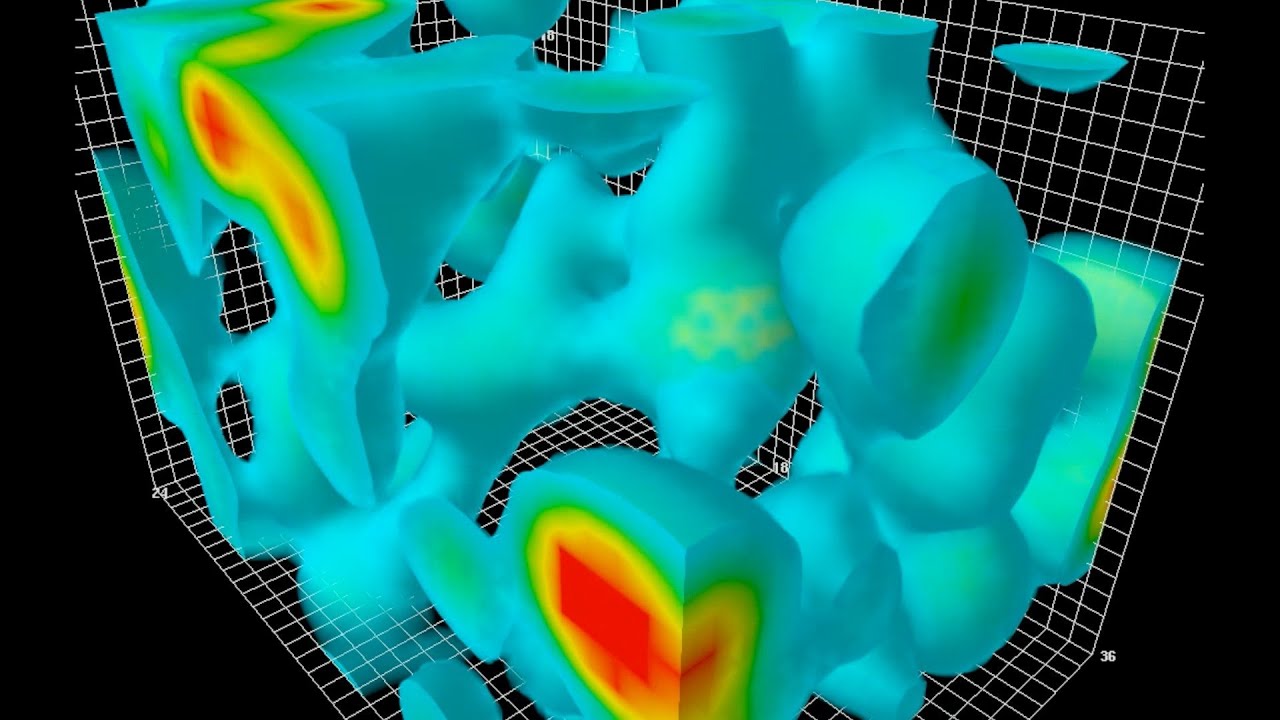
Empty Space is NOT Empty
⚡ THE VIBE
✨Imagine the vacuum of space isn't empty, but a bustling, effervescent foam of particles popping in and out of existence faster than you can blink! That's the mind-bending reality of **virtual particles**, the invisible workhorses of the quantum world that mediate all fundamental forces. 🤯
§1What in the Quantum Foam Are They?! 🌌
So, what exactly are these elusive virtual particles? Think of them as quantum realm 'ghosts' – they're not real in the sense that you can directly observe them or measure their properties like mass and energy independently. Instead, they are ephemeral excitations in quantum fields that exist for incredibly brief moments, borrowing energy from the vacuum itself, thanks to Heisenberg's Uncertainty Principle. They pop into existence, do their job, and vanish back into the quantum foam, all without violating the laws of physics over the long run. It's like a cosmic 'borrow now, pay later' scheme, but on an infinitesimally small scale! 💫
§2The Force Behind the Forces 💪
The true magic of virtual particles lies in their role as the mediators of all fundamental forces. When two 'real' particles interact, they don't just magically influence each other across space. Instead, they exchange virtual particles! For example, two electrons repel each other because they're constantly swapping virtual photons – the force carriers of the electromagnetic force. Similarly, the strong nuclear force, which binds atomic nuclei together, is mediated by virtual gluons. Even gravity, in quantum theories, is hypothesized to be carried by virtual gravitons (though these are still theoretical). Without these fleeting messengers, the universe as we know it—from atoms to galaxies—simply wouldn't hold together! It's a cosmic game of catch, but with invisible balls. ⚾⚛️
This concept is central to Quantum Field Theory (QFT), especially Quantum Electrodynamics (QED), which describes how light and matter interact. QED is one of the most successful scientific theories ever, making predictions with astonishing accuracy, all thanks to the dance of virtual particles. You can learn more about the foundational principles of QFT from resources like CERN.
§3Born from the Vacuum: A Quantum Loan 💰
The existence of virtual particles is a direct consequence of the Heisenberg Uncertainty Principle, specifically the energy-time uncertainty relation (ΔEΔt ≥ ħ/2). This principle allows for a temporary 'violation' of energy conservation, provided the energy is 'paid back' within a very short time. This means that for a fleeting moment, the vacuum can spontaneously produce particle-antiparticle pairs (like a virtual electron and a virtual positron) out of pure energy, as long as they annihilate each other before their energy debt becomes too large. 💥
These tiny energy fluctuations in the vacuum are not just theoretical curiosities; they have measurable effects! One famous example is the Casimir effect, where two uncharged, parallel metal plates placed very close together experience an attractive force. This force arises because the plates restrict the types of virtual particles that can pop into existence between them, leading to a pressure differential. It's a tangible proof that the vacuum is far from empty! You can explore more about this fascinating phenomenon on sites like NASA's Scientific Visualization Studio.
§4Why They Matter: From Atoms to Black Holes 🌟
The concept of virtual particles isn't just an abstract theoretical construct; it's fundamental to our understanding of reality. They explain phenomena ranging from the stability of atoms (via the electromagnetic force) to radioactive decay (mediated by virtual W and Z bosons of the weak nuclear force). They even play a crucial role in the theoretical understanding of Hawking Radiation, where virtual particle pairs near a black hole's event horizon can become 'real,' leading to the black hole's eventual evaporation. 🔭
Their significance extends beyond fundamental physics. Understanding these quantum interactions is vital for developing technologies like quantum computing and advanced materials. While we can't 'see' them directly, their indirect effects are all around us, constantly shaping the universe. It's a testament to the wild, counter-intuitive, and utterly brilliant nature of the quantum world! 🚀