Usability Testing
Unlocking user delight by watching humans interact with your creations. 🕵️♀️✨
Featured partners and sponsors
New advertisers get $25 in ad credits
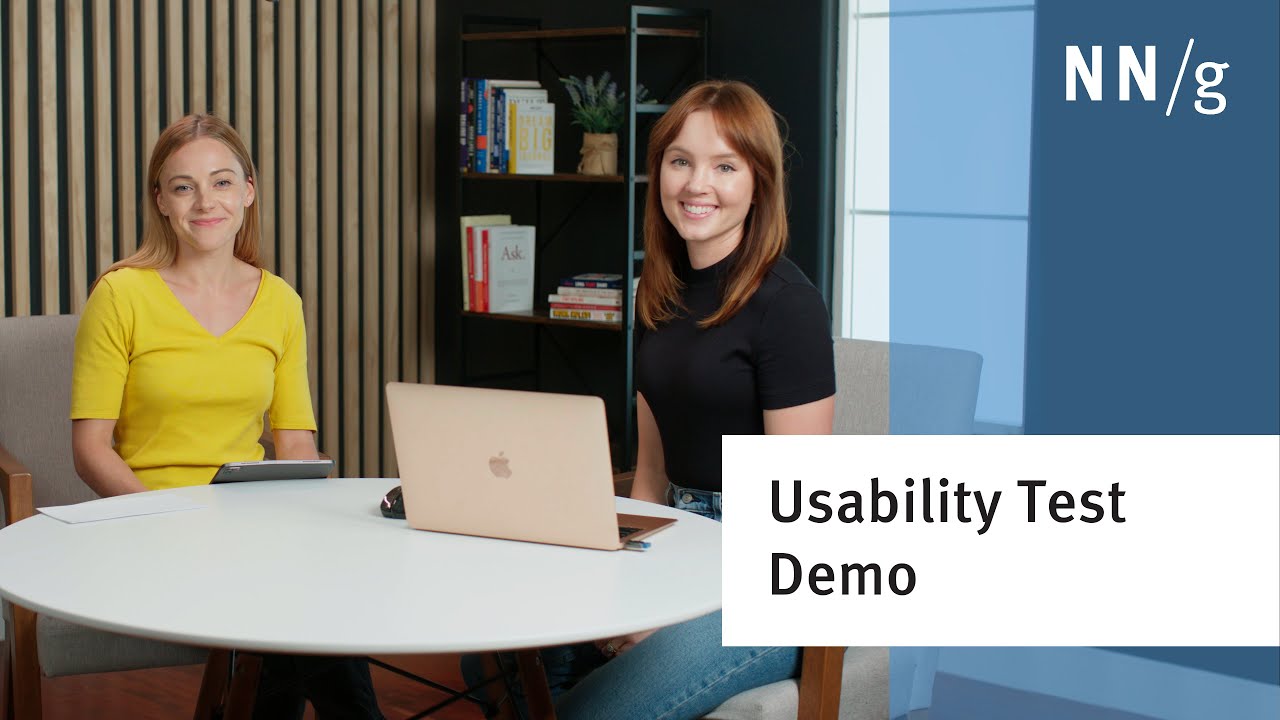
Introducing a Participant to a Usability Test: A Demonstration
⚡ THE VIBE
✨Usability testing is the **indispensable process** of evaluating a product or system by testing it directly with *representative users*, revealing critical insights into its ease of use, learnability, and overall user satisfaction. It's where the rubber meets the road for design, ensuring that what we build actually *works* for the people it's built for. 🚀
§1What is Usability Testing, Anyway? 🤔
Imagine spending months crafting a magnificent digital masterpiece – an app, a website, a new piece of software. You launch it, brimming with pride, only to find users are utterly baffled, frustrated, or simply can't complete basic tasks. That's where usability testing swoops in like a superhero! 🦸♀️ It's a systematic method for evaluating how easy a product is to use by observing actual users as they attempt to complete tasks. It's not about testing the user; it's about testing the product. This crucial feedback loop helps designers and developers identify pain points, uncover unexpected behaviors, and ultimately refine their creations into something truly intuitive and enjoyable. Without it, even the most brilliant ideas can fall flat. 📉
§2The Genesis of User-Centric Design 💡
While the principles of understanding human interaction have roots in fields like Cognitive Psychology and Ergonomics, formal usability testing as we know it began to crystalize in the 1980s with the rise of personal computing and the burgeoning field of Human-Computer Interaction (HCI). Pioneers like Don Norman, author of The Design of Everyday Things, championed the idea of user-centered design, emphasizing that products should be designed around the user's needs and capabilities, not just technical specifications. Early usability labs, often equipped with one-way mirrors and video cameras, became the proving grounds for software and hardware. Today, with remote testing tools and sophisticated analytics, usability testing is more accessible and powerful than ever. 🌐
§3How the Magic Happens: Types & Techniques ✨
Usability testing isn't a one-size-fits-all endeavor; it comes in many flavors, each suited for different stages and goals. The core idea, however, remains: observe, listen, analyze. Here are some common approaches:
- Moderated Testing: A facilitator guides users through tasks, asking questions and probing their thoughts in real-time. This can be done in-person or remotely via video conferencing. It's great for deep qualitative insights. 🗣️
- Unmoderated Testing: Users complete tasks independently, often recorded, with their screen and voice captured. This allows for testing with a larger number of participants quickly and cost-effectively. 📊
- Guerrilla Testing: Quick, informal tests conducted in public places (e.g., a coffee shop) with random participants. It's fast and cheap, offering quick gut checks. 🏃♀️
- A/B Testing: While not strictly usability testing, it's a related method where two versions of a design are shown to different user segments to see which performs better on specific metrics. Often used in conjunction with qualitative usability insights. 🧪
Regardless of the method, the goal is always to identify usability issues – anything that makes a product difficult, confusing, or frustrating to use. These issues are then prioritized and addressed in subsequent design iterations. It's an iterative dance of design, test, refine, repeat! 🔄
§4The Unseen Impact: Why It Matters So Much 🌟
The significance of usability testing extends far beyond just making a product 'easier to use.' It's a cornerstone of successful product development, influencing everything from user adoption to business bottom lines. A truly usable product:
- Boosts User Satisfaction: Happy users are loyal users. When a product is intuitive, users feel competent and enjoy their experience. 😊
- Increases Efficiency: For internal tools or complex software, good usability can drastically reduce training time and operational errors, saving organizations immense resources. 💰
- Reduces Development Costs: Catching critical design flaws before launch is infinitely cheaper than fixing them after. Rework post-launch can be astronomically expensive. 💸
- Enhances Accessibility: By observing diverse users, usability testing helps identify barriers for people with disabilities, leading to more inclusive designs. ♿
- Drives Innovation: Understanding why users struggle can spark entirely new solutions and features, pushing the boundaries of what's possible. 🚀
In an increasingly competitive digital landscape, a superior user experience is often the ultimate differentiator. Companies like Apple and Google have built empires on the back of exceptional usability, proving that a user-first approach isn't just good design – it's good business. 📈
§5Usability Testing in 2026: The Future is Bright 🔮
As we navigate 2026, usability testing continues to evolve, embracing new technologies and methodologies. The rise of Artificial Intelligence (AI) and Machine Learning (ML) is beginning to automate aspects of user behavior analysis, predicting potential pain points even before human observation. Tools for remote testing are more sophisticated than ever, allowing for global participant recruitment and rapid iteration cycles. Furthermore, the integration of Virtual Reality (VR) and Augmented Reality (AR) in product design means that usability testing is expanding into entirely new immersive environments. The focus remains, however, on the human element. No algorithm can fully replicate the nuanced insights gained from watching a person genuinely interact with a product, expressing their frustrations and triumphs. The future of usability testing is a thrilling blend of cutting-edge tech and timeless empathy, ensuring that technology truly serves humanity. 💖