Toyotomi Hideyoshi
From humble beginnings to unifying Japan: The ultimate rags-to-riches warlord!
Featured partners and sponsors
New advertisers get $25 in ad credits
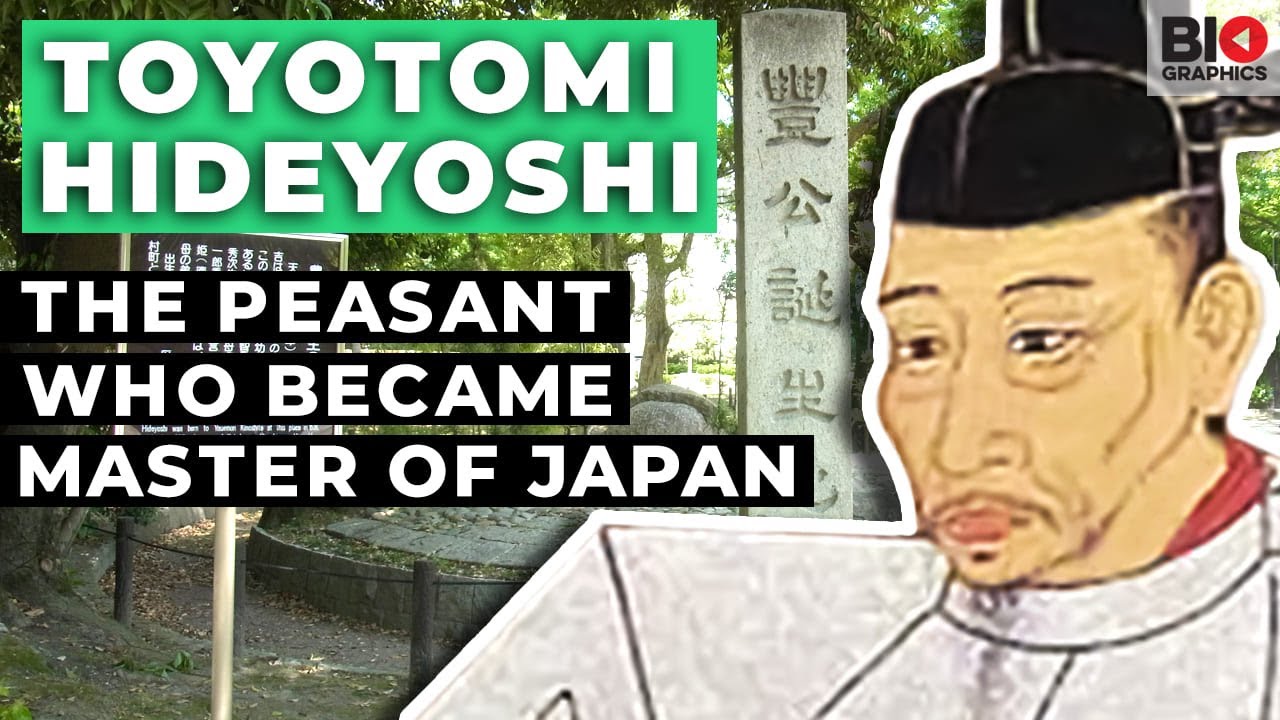
Toyotomi Hideyoshi: The Peasant Who Became Master of Japan
⚡ THE VIBE
✨Toyotomi Hideyoshi, born a peasant, defied all odds to become the second 'Great Unifier' of Japan, ending a century of brutal civil war and laying the groundwork for the [Tokugawa Shogunate](tokugawa-shogunate). His audacious rise and ambitious vision forever etched his name into the annals of Japanese history. 🌟
§1The Rise of the 'Monkey Regent' 🚀
Imagine a world where social mobility was virtually nonexistent, yet a man born to a peasant family, possibly even a foot soldier, could ascend to absolute power. That's the electrifying story of Toyotomi Hideyoshi (豊臣 秀吉). Born Hiyoshi-maru in 1537, he was often nicknamed Saru (猿) or 'monkey' due to his appearance, a moniker he reportedly embraced with humor. His early life was a whirlwind of odd jobs and petty thievery, a far cry from the opulent halls of power he would eventually command. He didn't come from a samurai lineage, nor did he possess the refined education of the nobility. What he had was an unparalleled intellect, a cunning strategic mind, and an almost superhuman ability to inspire loyalty and execute plans. His journey from obscurity to the pinnacle of power is a testament to sheer willpower and brilliant opportunism. ✨
§2Serving the Demon King: Oda Nobunaga's Right Hand ⚔️
Hideyoshi's true ascent began when he entered the service of Oda Nobunaga (織田 信長), the first of Japan's three great unifiers. Starting as a sandal-bearer, Hideyoshi quickly proved his worth through his unwavering loyalty, shrewd battlefield tactics, and exceptional administrative skills. Nobunaga, known for his ruthless ambition and keen eye for talent, recognized Hideyoshi's genius. Hideyoshi excelled in tasks ranging from castle construction – famously building Sunomata Castle overnight – to complex logistical operations and daring military maneuvers. His most celebrated feat under Nobunaga was the siege of Tottori Castle, where he starved out the defenders, and the 'Great Return' after Nobunaga's assassination in the Honno-ji Incident of 1582. This swift revenge cemented his position as Nobunaga's legitimate successor. 🎯
§3Unification & Reform: Forging a New Japan ⚖️
After consolidating power following Nobunaga's death, Hideyoshi embarked on his grand project: the complete unification of Japan. Through a masterful blend of diplomacy, intimidation, and overwhelming military force, he brought the powerful daimyo under his sway. Key campaigns included the subjugation of Shikoku (1585) and Kyushu (1587), culminating in the siege of Odawara Castle against the Hojo clan in 1590, which marked the end of the Sengoku period. But Hideyoshi wasn't just a conqueror; he was a visionary reformer. He implemented the 'Sword Hunt' (刀狩, Katanagari) in 1588, disarming the peasantry to prevent future rebellions and solidify the samurai class's monopoly on warfare. He also conducted a nationwide land survey, the 'Cadastral Survey' (太閤検地, Taiko Kenchi), which standardized land measurements and taxation, boosting central authority and national revenue. These reforms laid the institutional bedrock for centuries of peace under the Tokugawa. 📜💰
§4Grandeur, Ambition, and the Korean Invasions 🌏
At the height of his power, Hideyoshi adopted the title of Kampaku (Regent) and later Taiko (Retired Regent), as his humble birth prevented him from becoming Shogun. He indulged in lavish displays of wealth and power, constructing magnificent structures like Osaka Castle and the opulent Jurakudai Palace. He also hosted grand tea ceremonies, famously the Grand Kitano Tea Ceremony, to showcase his cultural sophistication. However, his ambition soared beyond Japan's shores. In a move that would prove to be his greatest miscalculation, Hideyoshi launched two disastrous invasions of Korea (1592-1593 and 1597-1598), aiming to conquer China. These campaigns, known as the Imjin War, drained Japan's resources, cost countless lives, and ultimately failed, leaving a bitter legacy in East Asia. 💔
§5Legacy and the End of an Era 🌅
Toyotomi Hideyoshi passed away in 1598, leaving behind a young heir, Hideyori, and a council of regents. His death plunged Japan back into uncertainty, leading directly to the rise of Tokugawa Ieyasu (徳川 家康) and the decisive Battle of Sekigahara in 1600. Despite the tragic end of his lineage, Hideyoshi's impact on Japan is undeniable. He unified a fractured nation, implemented crucial administrative reforms, and fostered a period of cultural flourishing. His rags-to-riches story continues to inspire, a vivid reminder that even in the most rigid societies, an extraordinary individual can bend the arc of history. He remains a pivotal figure, a bridge between the chaos of the Sengoku period and the long peace of the Edo era. 🌉