TESS Space Telescope
Hunting for Exoplanets by Starlight Dips 🌟
Featured partners and sponsors
New advertisers get $25 in ad credits
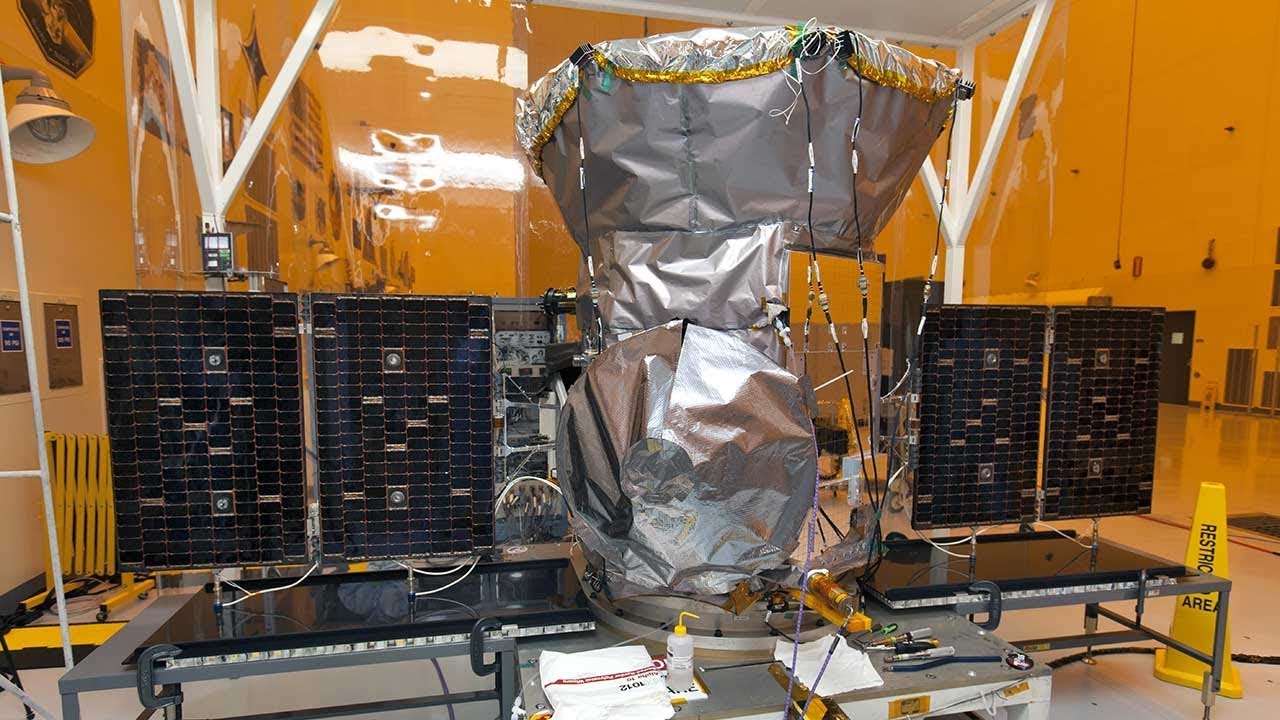
TESS - NASA’s Transiting Exoplanet Survey Satellite explained (4K)
⚡ THE VIBE
✨The Transiting Exoplanet Survey Satellite (TESS) is NASA's groundbreaking planet hunter, scanning nearly the entire sky to find exoplanets, especially those orbiting bright, nearby stars. It's revolutionizing our understanding of planetary systems beyond our own. 🚀
§1An Eye on the Cosmic Neighborhood 👀
Imagine a cosmic detective, patiently watching hundreds of thousands of stars, waiting for a tiny flicker – a wink – that signals a planet passing in front of it. That's TESS! Launched by NASA in 2018, the Transiting Exoplanet Survey Satellite is on a mission to discover exoplanets using the transit method. This ingenious technique involves observing slight, periodic dips in a star's brightness as a planet crosses its face from our perspective. Unlike its predecessor, the Kepler Space Telescope, TESS focuses on brighter, closer stars, making its discoveries prime candidates for follow-up studies with other powerful instruments like the James Webb Space Telescope. It's essentially creating a comprehensive map of the closest and brightest planetary systems, giving us an unprecedented look at our galactic neighborhood. 🌌
§2The Ingenious Design & Mission 💡
TESS isn't just one big camera; it's a quartet of wide-field cameras, each equipped with a massive 16.8-megapixel CCD detector. These cameras work in concert, observing vast swathes of the sky. The mission divides the sky into 26 sectors, each observed for approximately 27 days. This systematic approach allows TESS to cover almost the entire celestial sphere over its initial two-year primary mission, and now, its extended mission. Its unique highly elliptical orbit, designed to be stable for decades, keeps it away from Earth's light pollution and ensures long, uninterrupted observations. The data TESS collects, specifically the precise light curves of stars, is a treasure trove for astronomers, revealing not just planets but also fascinating stellar phenomena like stellar flares and binary stars. ✨
§3Unveiling New Worlds & Their Secrets 🌍
TESS has been incredibly successful, discovering thousands of exoplanet candidates, many of which have been confirmed as bona fide planets. Its discoveries range from scorching hot 'super-Earths' to gas giants, and crucially, it's found several planets within their stars' habitable zones – the region where liquid water could exist on a planet's surface. These discoveries are vital because they provide targets for further characterization, allowing scientists to study their atmospheres, estimate their masses, and even search for biosignatures – potential signs of life. The data from TESS is publicly available, empowering scientists worldwide to join the hunt for new worlds and unravel the mysteries of planetary formation and evolution. Every new planet found brings us closer to answering the age-old question: Are we alone? 👽
§4Impact and Future Explorations 🔭
The legacy of TESS is already profound. It's not just about finding planets; it's about building a statistical understanding of planetary systems. By focusing on nearby, bright stars, TESS provides targets that are much easier to study in detail with ground-based telescopes and next-generation space observatories like JWST. For instance, the discovery of TOI 700 d, an Earth-sized planet in the habitable zone of a quiet M-dwarf star, was a direct result of TESS's meticulous observations. This makes it an exciting candidate for atmospheric studies. The mission continues to operate, continuously scanning the sky and adding to its ever-growing catalog of exoplanets. The insights gained from TESS will guide future missions, helping us to design telescopes specifically tailored to detect and characterize potentially habitable worlds. The exoplanet revolution is in full swing, and TESS is leading the charge! 🚀🌠