TensorFlow
The open-source powerhouse that's shaping the future of AI. 🚀
Featured partners and sponsors
New advertisers get $25 in ad credits
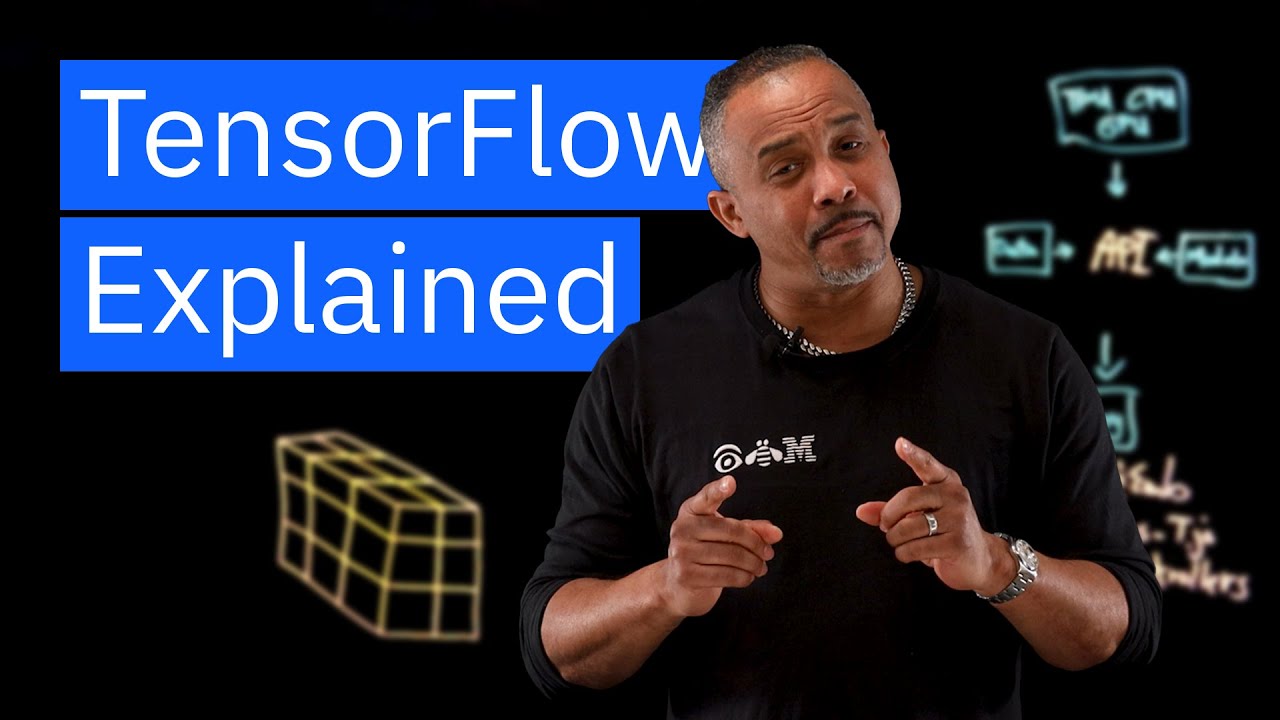
What is TensorFlow?
⚡ THE VIBE
✨TensorFlow is an **open-source machine learning framework** developed by Google, designed to make building and deploying complex AI models, from image recognition to natural language processing, accessible to everyone. It's the digital bedrock for countless innovations, turning abstract algorithms into tangible, world-changing applications. 💡
§1What is TensorFlow? The AI Engine Under the Hood ⚙️
Imagine a super-flexible, incredibly powerful toolkit for building brains – artificial ones, that is! That's essentially TensorFlow. At its core, TensorFlow is a software library for numerical computation using data flow graphs. What does that mean? Think of it like a flowchart where data ('tensors') flows through a series of operations (nodes). These operations can be anything from simple arithmetic to complex neural network layers. This graph-based approach allows for incredible flexibility, distributed computing, and efficient execution, especially on specialized hardware like GPUs and TPUs. It’s not just for researchers; developers worldwide use it to craft intelligent systems that learn and adapt. 🌐
§2From Google Brain to Global Impact: A Brief History 🕰️
TensorFlow didn't just appear out of nowhere; it evolved from Google's internal deep learning project, DistBelief, which was already powering many of Google's services. Recognizing the potential for a more robust, flexible, and open platform, Google Brain engineers launched TensorFlow in November 2015. The goal was clear: democratize AI development. Its open-source nature quickly fostered a massive community, leading to rapid improvements and widespread adoption. It became a cornerstone for everything from Google Search to self-driving cars, proving that collaborative innovation can truly accelerate progress. 🌟 This move was a game-changer, putting advanced AI tools into the hands of millions.
§3How It Works: Tensors, Graphs, and Neural Nets 📈
The name 'TensorFlow' itself offers a clue: Tensors are multi-dimensional arrays (like vectors or matrices) that represent all data in the system – from raw images to model parameters. Flow refers to how these tensors move through a computational graph. When you build a model in TensorFlow, you're essentially defining this graph. Once defined, TensorFlow can then execute it, often optimizing the process for speed and efficiency. Key components include: 🛠️
- Keras API: A high-level, user-friendly interface built on top of TensorFlow, making model creation much simpler for beginners. It's like the easy-mode button for deep learning! ✨
- TensorBoard: A powerful visualization tool that helps developers understand, debug, and optimize their machine learning models. Seeing is believing, especially when debugging complex neural networks. 📊
- TensorFlow Lite: An optimized version for mobile and embedded devices, bringing AI directly to your smartphone or IoT gadget. 📱
- TensorFlow.js: Allows developers to run machine learning models directly in web browsers and Node.js. Bringing AI to the web! 🕸️ This modularity and extensive toolkit make it incredibly versatile for various machine learning tasks.
§4The Real-World Resonance: AI Everywhere You Look 🌍
The impact of TensorFlow is hard to overstate. It's the silent engine behind countless applications that touch our daily lives. Think about the personalized recommendations you get on streaming services, the spam filter in your email, or even medical diagnoses assisted by AI – chances are, TensorFlow played a role. 🩺 Its ability to handle massive datasets and complex models makes it ideal for cutting-edge research in fields like genomics, robotics, and climate modeling. It's not just about making things smarter; it's about enabling entirely new possibilities, pushing the boundaries of what computers can do and how they interact with our world. It empowers developers to turn ambitious ideas into functional, intelligent systems. 🚀
§5Challenges, Evolution, and the Future of AI Development 🔮
While TensorFlow is a giant in the ML world, it's not without its challenges or competitors (like PyTorch). Early versions were sometimes criticized for their steep learning curve, leading to the integration of Keras as its primary high-level API. The framework is constantly evolving, with new versions focusing on ease of use, performance, and deployment across diverse platforms. The future of TensorFlow looks bright, with continued emphasis on responsible AI development, robust deployment tools (like TensorFlow Extended (TFX)), and fostering an even more inclusive global community. As AI becomes more integrated into society, tools like TensorFlow will be crucial for ensuring these powerful technologies are developed ethically and effectively. The journey of AI is just beginning, and TensorFlow is certainly one of its main vehicles. 🌠