Technology Adoption Curve
Charting the journey from niche novelty to mainstream marvel! 🚀
Featured partners and sponsors
New advertisers get $25 in ad credits
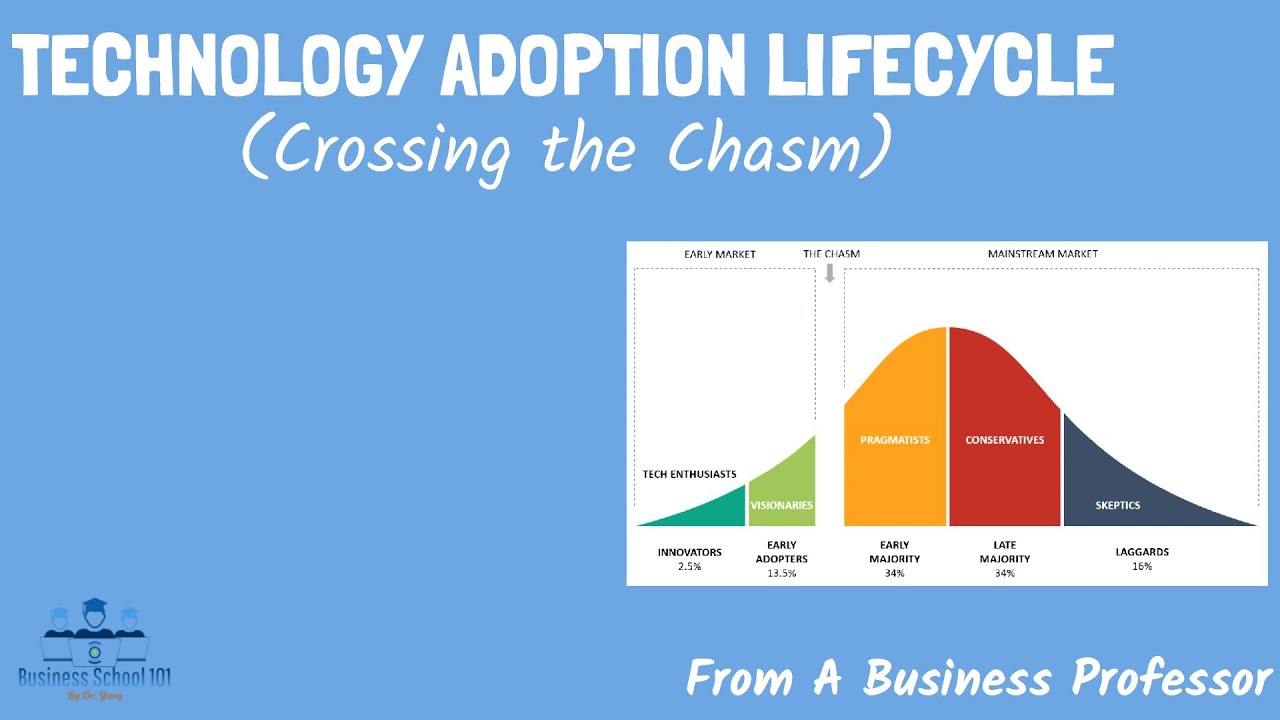
Technology Adoption Lifecycle: Cross the Chasm | Strategic Management | From A Business Professor
⚡ THE VIBE
✨The **Technology Adoption Curve** is a foundational model illustrating how new ideas and technologies spread through a population, categorizing adopters into distinct groups based on their willingness to embrace innovation. It's the secret map to understanding why some tech takes off like a rocket and others fizzle out. 💡
§1What is the Technology Adoption Curve?
Imagine a new gadget hits the market – say, a self-driving car 🚗. Who buys it first? Who waits? The Technology Adoption Curve, famously popularized by sociologist Everett M. Rogers in his 1962 book Diffusion of Innovations, provides a powerful framework for understanding this phenomenon. It's a bell-shaped curve that segments the population into five distinct groups based on their propensity to adopt a new technology or idea. This isn't just academic theory; it's a critical tool for product developers, marketers, and policymakers trying to predict and influence the success of innovations. Understanding where a technology sits on this curve can dictate everything from marketing strategy to investment decisions. It's a dynamic model, constantly at play in our fast-paced, innovation-driven world. 🌍
§2The Five Tribes of Tech Adoption
Rogers identified five key categories of adopters, each with unique characteristics and motivations. Think of them as different personality types when it comes to trying new things:
- Innovators (2.5%): These are the pioneers 🌟, the risk-takers who are obsessed with new ideas. They're often highly educated, have multiple information sources, and are willing to accept setbacks. They're the ones camping out for the latest VR headset or beta-testing experimental AI. Their adoption is crucial for getting a technology off the ground.
- Early Adopters (13.5%): The visionaries and opinion leaders of their communities. They're respected, influential, and often act as role models for others. They don't just try new tech; they evaluate it and share their positive experiences, effectively becoming unpaid evangelists. Think of the tech reviewer who shapes public perception. Their endorsement is vital for crossing the chasm to mainstream adoption.
- Early Majority (34%): The pragmatists 🧐. They're deliberate, risk-averse, and won't jump into a new technology until they see it proven and adopted by others. They need evidence of utility and reliability. They'll buy the self-driving car once their early adopter friends rave about it and it's been on the market for a bit.
- Late Majority (34%): The skeptics 🐢. They adopt new technologies only after the majority of society has already done so, often due to peer pressure, economic necessity, or because the old way is no longer viable. They're often uncomfortable with uncertainty and prefer established norms. They might get a smartphone only when flip phones are no longer supported.
- Laggards (16%): The traditionalists 🕰️. These are the last to adopt, often resistant to change and tied to traditional ways. They may only adopt a technology when it becomes absolutely unavoidable or when their existing options cease to exist. They represent the tail end of the adoption cycle, often with limited resources and social interactions. They might still be using dial-up internet in 2026! 💾
§3Crossing the Chasm: The Critical Juncture
While Rogers' original curve is smooth, Geoffrey Moore, in his influential book Crossing the Chasm, highlighted a crucial gap between the Early Adopters and the Early Majority. This 'chasm' represents a significant challenge for many innovations. Early adopters are often looking for revolutionary change, while the early majority seeks evolutionary improvements and practical solutions. Many promising technologies fail to 'cross the chasm' because they can't bridge this gap in expectations and needs. Companies must strategically pivot their marketing and product development to appeal to the more pragmatic early majority, often by focusing on specific use cases and demonstrating clear value. This transition is where many startups either soar or crash. 💥 For a deeper dive into this concept, check out Crossing the Chasm.
§4Impact and Relevance in 2026
The Technology Adoption Curve remains incredibly relevant in 2026, perhaps more so than ever. From the rapid spread of AI tools like Generative AI and advanced robotics to the slower integration of quantum computing ⚛️, this model helps us understand market dynamics. Businesses use it to segment their customers, tailor marketing messages, and time product launches. Governments and NGOs apply it to public health initiatives, like vaccine adoption or sustainable energy solutions. For instance, understanding the laggards' resistance to electric vehicles helps policymakers design better incentives. The curve also helps us anticipate the societal impact of emerging technologies, predicting which groups will benefit first and where resistance might arise. It's a timeless lens through which to view the ebb and flow of progress. 📈
For businesses navigating the digital landscape, resources like the U.S. Small Business Administration offer guidance on market analysis, while academic institutions like Stanford University continue to research diffusion theory. Understanding this curve is key to innovation success. 🔑
§5Local Tips & Further Exploration
While the Technology Adoption Curve is a global concept, its manifestation can vary regionally. In tech hubs like Silicon Valley, the 'innovator' and 'early adopter' segments might be larger and more concentrated. In more traditional communities, the curve might be stretched, with slower adoption rates for the early and late majority. To truly grasp its nuances, consider:
- Observing Local Trends: Pay attention to how new apps, smart home devices, or even local community initiatives are adopted in your own area. Who are the first to try? Who waits?
- Business Case Studies: Many companies openly discuss their strategies for 'crossing the chasm.' Look for case studies from companies like Apple, Tesla, or even early internet providers.
- Academic Resources: Explore the work of Everett M. Rogers directly, or delve into modern interpretations by authors like Geoffrey Moore. Many universities offer courses on innovation and technology management, often referencing this curve.
Understanding this curve isn't just about predicting the future; it's about actively shaping it. What new technology will you be an innovator for? 🤔