Semiotics
Unpacking the universe of signs, symbols, and the meaning we make!
Featured partners and sponsors
New advertisers get $25 in ad credits
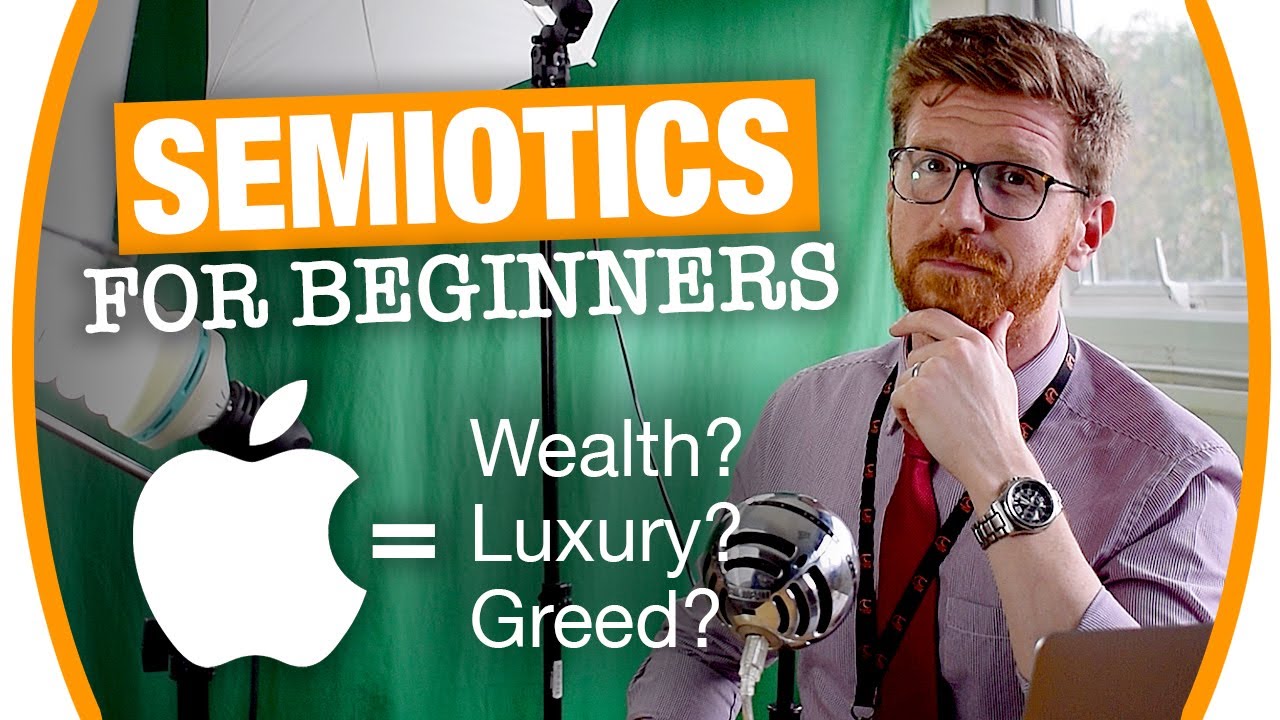
Semiotics analysis for beginners! | How to read signs in film | Roland Barthes Media Theory
⚡ THE VIBE
✨Semiotics is the fascinating study of **signs and symbols** and their interpretation, revealing how meaning is created and understood across every facet of human experience, from language to fashion to digital interfaces. 💡 It's the secret code behind our world!
§1What in the World is a Sign? 🧐
At its core, semiotics is the academic discipline dedicated to understanding how meaning is made. It delves into the nature of signs, which are anything that stands for something else. Think about it: a red traffic light isn't just a piece of colored glass; it signifies 'stop'. A 'thumbs up' isn't just a hand gesture; it means 'good' or 'okay'. Semiotics explores these relationships, dissecting the intricate ways we communicate and interpret the world around us, often without even realizing it. It's like having X-ray vision for meaning! 👁️🗨️
§2The Founding Fathers of Meaning: Saussure & Peirce 👨🏫
While humans have always interpreted signs, semiotics as a formal field really took off in the late 19th and early 20th centuries, largely thanks to two intellectual giants: Ferdinand de Saussure and Charles Sanders Peirce. Saussure, a Swiss linguist, proposed that a sign is made of two inseparable parts: the signifier (the form the sign takes, like the sound of a word or an image) and the signified (the concept it represents). Together, they form the sign. 🗣️
Meanwhile, the American philosopher Peirce developed a more complex model, categorizing signs into three types: icons (resemble their object, like a photo), indices (directly connected to their object, like smoke indicating fire), and symbols (arbitrary connection, like most words). His work laid the groundwork for understanding the diverse ways signs function. Both their contributions are foundational to understanding Structuralism and Post-Structuralism.
§3Decoding the Everyday: Semiotics in Action 🌐
Semiotics isn't just abstract philosophy; it's profoundly practical! It helps us understand everything from advertising campaigns to political rhetoric, from fashion trends to user interface design. Every brand logo, every meme, every emoji (like this one! 😉) is a sign loaded with meaning. Designers use semiotic principles to ensure their products are intuitive, advertisers craft messages that resonate deeply, and cultural critics unpack the hidden ideologies within media. It's the ultimate tool for cultural analysis. 🎬
Consider the simple act of choosing clothes: your attire sends a complex array of signs about your identity, mood, and social group. Or think about a website's layout: the placement of buttons, the choice of colors, the font – all are carefully chosen signs designed to guide your behavior and convey trustworthiness or excitement. Semiotics helps us see these invisible forces at play. 🚀
§4Beyond Words: Non-Verbal Semiotics & Cultural Nuances 🌍
While language is a huge part of semiotics, the field extends far beyond spoken or written words. It encompasses non-verbal communication like body language, gestures, facial expressions, and even silence. A shrug, a nod, or a prolonged stare can convey volumes without a single word. Moreover, semiotics highlights how the interpretation of signs is deeply embedded in culture. What might be a sign of respect in one culture could be offensive in another! 🤯
This cultural relativity means that understanding semiotics is crucial for effective cross-cultural communication and avoiding misunderstandings. It's why global brands spend fortunes researching how their symbols and messages will be received in different markets. From the architecture of a city to the rituals of a community, semiotics offers a lens to understand the rich tapestry of human meaning-making. 🎭
§5The Future of Signs: AI, Digital Worlds, and Hyperreality 🔮
In 2026, semiotics is more relevant than ever. With the rise of Artificial Intelligence, virtual realities, and increasingly complex digital interfaces, the study of signs is undergoing a thrilling evolution. How do AI models interpret and generate meaning? What new semiotic systems are emerging in the Metaverse? How do algorithms use signs to influence our perceptions and choices? 🤔
Semiotics provides the critical framework to analyze these new frontiers, helping us understand the construction of digital identities, the persuasive power of algorithms, and the very nature of truth in an age of 'deepfakes' and 'hyperreality'. It's a vital discipline for navigating our increasingly sign-saturated world and understanding the future of human-computer interaction. The quest to understand meaning continues! 🌟