Quantum To Classical Transition
Where the weirdness of the quantum world meets our everyday reality! 🤯
Featured partners and sponsors
New advertisers get $25 in ad credits
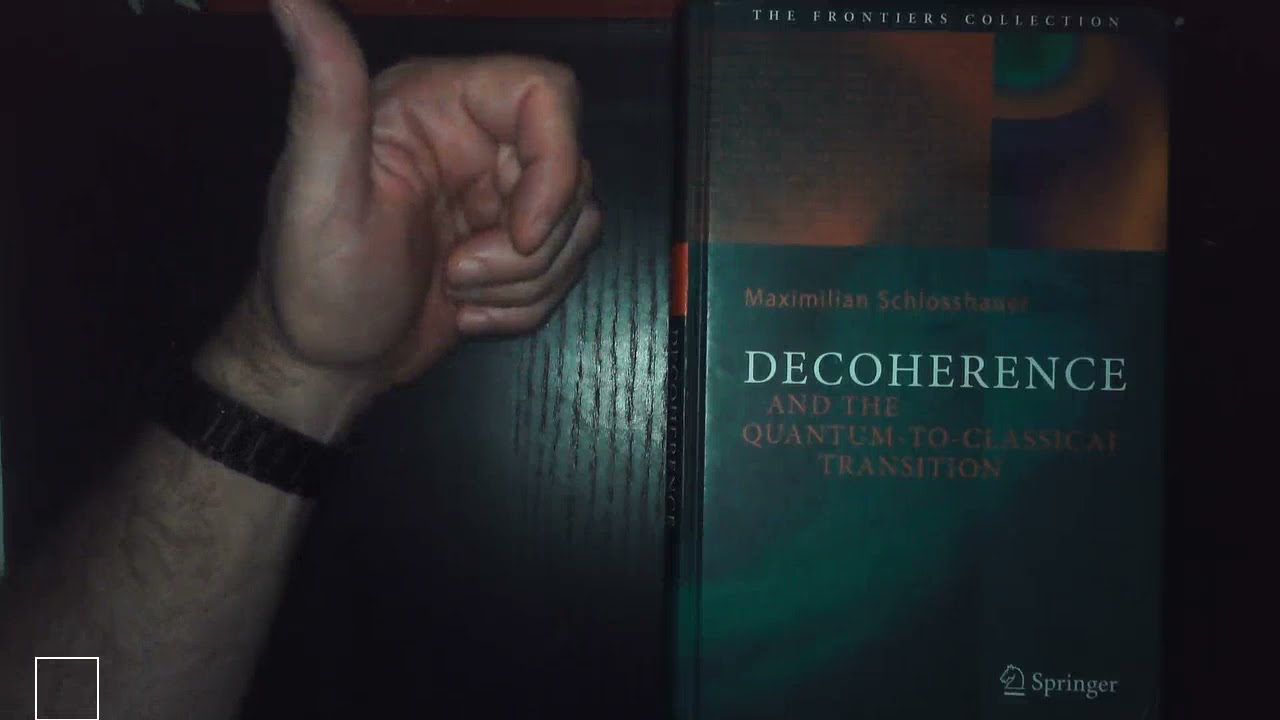
Review: Decoherence and the Quantum-to-Classical Transition
⚡ THE VIBE
✨The Quantum-to-Classical Transition is the mind-bending process by which the fuzzy, probabilistic, and superposition-filled quantum realm gives way to the concrete, predictable, and definite classical world we experience every day. It's the ultimate cosmic magic trick! ✨
§1The Great Divide: Quantum vs. Classical 🌌
Imagine a world where a cat can be both alive and dead simultaneously, or where a particle can be in two places at once. Welcome to the quantum realm! 🐈⬛ Schrödinger's famous thought experiment perfectly illustrates the bizarre nature of quantum mechanics, where objects exist in a state of superposition until observed. But then, there's our world – the classical world – where cats are definitively alive or dead, and objects have clear positions and properties. The Quantum-to-Classical Transition (QCT) is the profound mystery at the heart of physics: how does the universe switch from one rulebook to another? It's not a sudden, sharp line, but a gradual, fascinating process that's still unraveling. 🕵️♀️
§2Decoherence: The Quantum Eraser ✍️
The leading explanation for the QCT is decoherence. Think of it like this: quantum systems are incredibly fragile. When a quantum system (like an electron or an atom) interacts with its environment – even a single stray photon or air molecule – it 'leaks' its quantum information into that environment. This interaction effectively 'measures' the system, forcing it to choose a definite state. 💡 It's not about a conscious observer, but about any interaction that entangles the quantum system with its surroundings. This entanglement rapidly spreads the quantum superposition across the environment, making it practically impossible to observe the original superposition. The quantum 'vibe' gets diluted and lost, leaving behind a classical, definite outcome. It's like trying to keep a secret in a crowded room – eventually, everyone knows! 🗣️ For a deeper dive, check out the Stanford Encyclopedia of Philosophy on Decoherence.
Decoherence happens incredibly fast for macroscopic objects. A dust motes' quantum coherence would vanish in femtoseconds due to constant interactions with air molecules and thermal radiation. This rapid loss of quantum properties is why we don't see cars existing in multiple places at once! 🚗💨
§3Why It Matters: Bridging the Micro and Macro 🌉
Understanding the Quantum-to-Classical Transition isn't just an academic exercise; it's fundamental to our comprehension of reality itself! It helps us reconcile the seemingly contradictory laws governing the smallest particles with the everyday physics of planets and people. 🌍 This knowledge is absolutely crucial for the advancement of quantum technologies. For instance, the biggest challenge in building robust Quantum Computers is maintaining coherence – preventing the qubits from decohering too quickly and losing their quantum properties. 💻 Researchers at institutions like IBM Quantum and Google AI Quantum are constantly battling decoherence to make these powerful machines a reality. Unlocking the secrets of QCT could pave the way for stable quantum computers, ultra-precise sensors, and even new forms of communication. It's the ultimate frontier where physics, engineering, and philosophy collide! 💥
§4Beyond Decoherence: Other Perspectives & Future Frontiers 🔭
While decoherence is the reigning champion, it's not the only contender in explaining the QCT. Other theories, like objective collapse models (e.g., the Ghirardi–Rimini–Weber, or GRW, model), propose that quantum mechanics itself needs modification. These models suggest that quantum superpositions spontaneously collapse, with the probability of collapse increasing with the size of the object. It's like the universe has a built-in 'quantum police' that enforces classicality for larger systems! 👮♀️
The future of QCT research is incredibly exciting. Scientists are pushing the boundaries, trying to observe quantum phenomena in increasingly large and complex systems, even biological ones! 🧬 Experiments with levitated nanoparticles and supercooled molecules are designed to test the limits of quantum coherence and probe the exact mechanisms of the transition. The European Union's Quantum Flagship initiative, for example, is pouring resources into exploring these fundamental questions. What we discover next could fundamentally reshape our understanding of the universe and our place within it. The journey from the quantum fuzz to classical clarity continues! 🚀