Mirror Neurons
The mind's secret mimicry maestros! 🧠✨
Featured partners and sponsors
New advertisers get $25 in ad credits
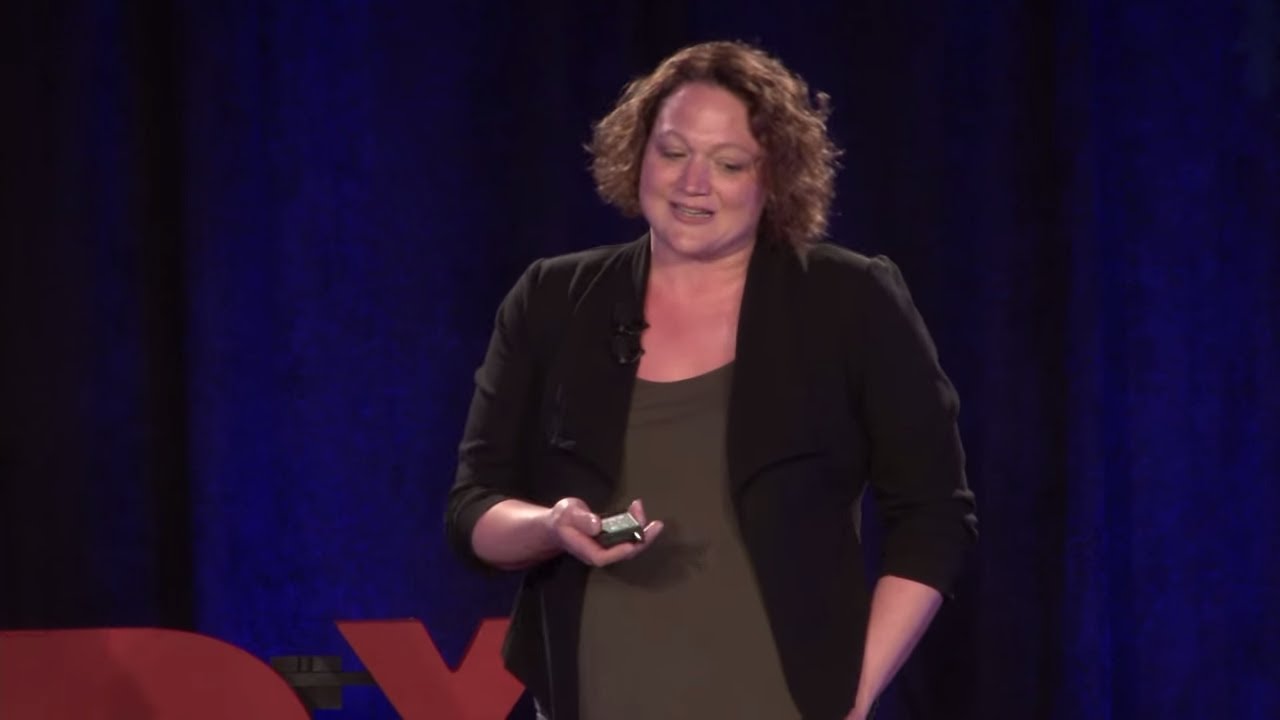
Mirror Neurons: Causing Change Within Others | Shelly Richardson | TEDxGullLake
⚡ THE VIBE
✨Imagine feeling someone else's joy or wincing when they stub their toe – that's the magic of **mirror neurons**, a fascinating class of brain cells that fire both when we perform an action and when we *observe* someone else performing the same action, offering a profound glimpse into empathy, learning, and social cognition. 🧠✨
§1The Brain's Empathy Engine: What Are They?
Picture this: you're watching a friend reach for a coffee cup. Suddenly, a specific set of neurons in your brain lights up, as if you yourself were reaching for that cup. This isn't telepathy, it's the incredible work of mirror neurons! 🤩 Discovered accidentally in the early 1990s by a team of neuroscientists in Parma, Italy, these specialized brain cells are the rockstars of our social world. They form a unique neural system that seems to blur the lines between doing and observing, allowing us to simulate the actions, intentions, and even emotions of others within our own minds. It's like having a built-in neural simulator for understanding the world around us. 🌍
§2An Accidental Discovery: The Primate Origins
The story of mirror neurons is pure scientific serendipity! 🐒 In the early 1990s, Professor Giacomo Rizzolatti and his team at the University of Parma were studying the motor cortex of macaque monkeys, specifically looking at neurons that fired when the monkeys performed hand-to-mouth actions, like grasping food. One fateful day, a researcher reached for a peanut, and to their astonishment, the monkey's motor neurons fired – even though the monkey wasn't moving! 🤯 This wasn't a fluke; it was the birth of a revolutionary concept. They quickly realized these neurons responded to both the execution and observation of actions. This initial discovery in primates paved the way for decades of research into their existence and function in humans, forever changing our understanding of social interaction. 🐒➡️🧑🤝🧑
§3Beyond Imitation: The Deeper Meaning
While often simplified to 'imitation neurons,' the true power of mirror neurons goes far deeper. They are thought to be fundamental to our ability to understand the intentions behind actions. When you see someone pick up a hammer, your mirror neurons don't just register the action; they might also activate the neural pathways associated with why they're picking it up – to hammer a nail, perhaps? 🔨 This 'mind-reading' capability is crucial for social learning, language acquisition, and even the development of Empathy. They help us predict what others will do next, infer their feelings, and even learn complex skills just by watching. It's how we absorb culture and connect on a profound, non-verbal level. 🤝🗣️
§4Impact & Controversies: The Mirror Neuron Debate
The mirror neuron system has been implicated in a vast array of human behaviors, from learning new skills through observation to understanding emotions and even language development. Some researchers, like V.S. Ramachandran, have famously called them 'Gandhi neurons' for their potential role in empathy and compassion. ❤️ However, the field isn't without its debates. While their existence in humans is widely accepted, the exact extent of their role and whether they are a cause or a consequence of social cognition is still a hot topic. Some critics argue that too much has been attributed to them, advocating for a more nuanced view that includes other neural systems. Nevertheless, the concept has profoundly influenced our understanding of Neuroscience and Cognitive Psychology, sparking countless studies into conditions like Autism Spectrum Disorder, where atypical mirror neuron activity has been observed. 🤔🔬
§5The Future of Reflection: Why They Still Matter in 2026
In 2026, the study of mirror neurons continues to evolve, pushing the boundaries of what we know about the human brain. Advanced neuroimaging techniques, like fMRI and MEG, are allowing scientists to map their activity with unprecedented precision, moving beyond the initial single-neuron recordings. 🚀 We're seeing exciting research into how mirror neurons might be leveraged in rehabilitation for stroke patients, helping them 're-learn' movements by observing others. Furthermore, their role in the burgeoning field of Artificial Intelligence and social robotics is gaining traction, as engineers seek to build machines that can truly understand and interact with human intentions. The 'mirror' in our minds continues to reflect new possibilities, promising deeper insights into what makes us uniquely human. 🤖💡