Microscope
Unlocking the Universe Beyond Our Eyes, One Tiny Detail at a Time! 🔬
Featured partners and sponsors
New advertisers get $25 in ad credits
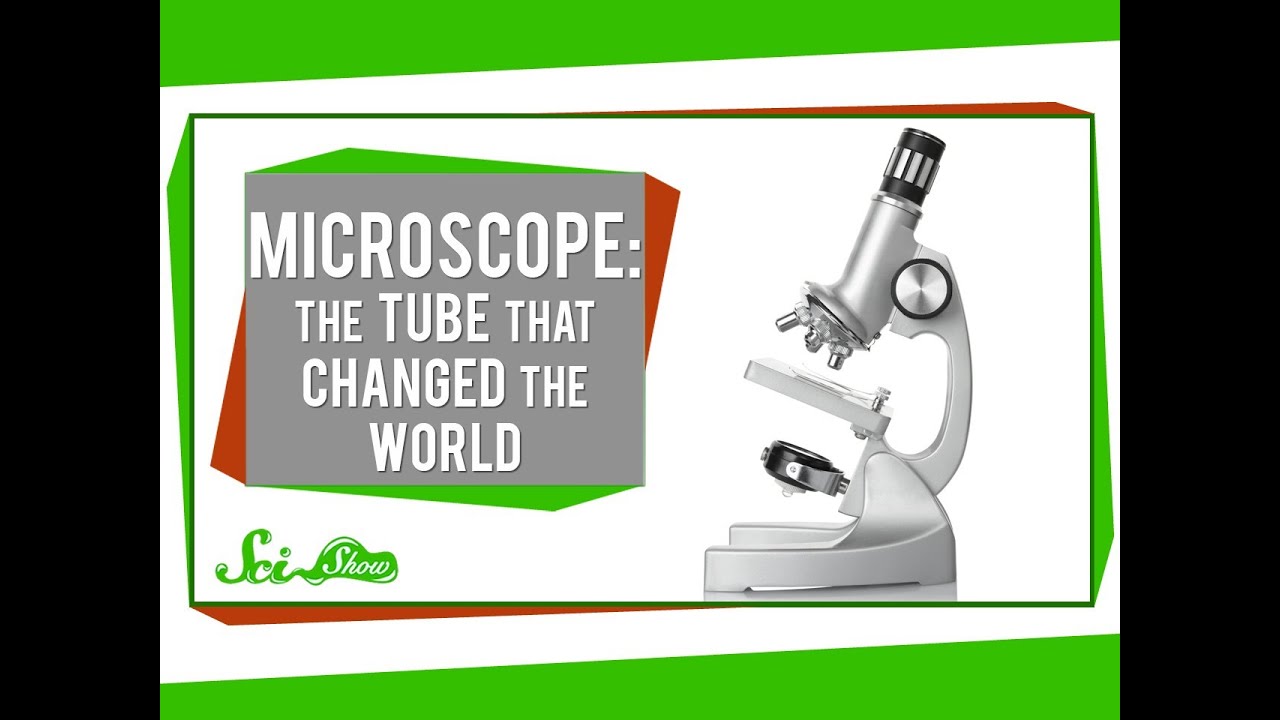
Microscope: The Tube That Changed the World
⚡ THE VIBE
✨The microscope is humanity's ultimate peeping tom, a revolutionary optical instrument that magnifies the minuscule, revealing entire hidden worlds from the intricate dance of cells to the bizarre beauty of microorganisms, forever changing our understanding of life itself. It's not just a tool; it's a portal to the unseen! 🌌
§1The Invisible Made Visible: A Grand Overview
Imagine a world teeming with life, structures, and processes, all happening right under our noses, yet completely invisible to the naked eye. That's the world the microscope flung open for us! 🤯 From the first crude lenses that barely offered a glimpse, to today's electron marvels that image individual atoms, this incredible device has been a constant companion on our journey to understand the fundamental building blocks of existence. It's more than just a magnifier; it's an extension of human curiosity, allowing us to delve into the microcosm and uncover secrets that have shaped medicine, biology, materials science, and beyond. Every time you hear about a new virus, a groundbreaking drug, or a revolutionary material, chances are a microscope played a starring role in its discovery. 🌟
§2From Humble Lenses to Scientific Superpowers: The Origin Story
The true origin of the microscope is a bit like a blurry historical slide – debated and a little fuzzy! 🧐 While the ancient Romans experimented with magnifying glasses, the first compound microscope (one with multiple lenses) is generally attributed to Dutch spectacle-makers, likely Zacharias Janssen or his father, Hans, around the late 1590s. Their early devices were more curiosities than scientific instruments, offering limited magnification. However, the real game-changer came with Antonie van Leeuwenhoek in the 17th century. This self-taught Dutch draper, with his meticulously crafted single-lens microscopes, achieved magnifications up to 200x! He was the first to observe and describe bacteria, protozoa, sperm, and blood cells, famously calling his tiny discoveries 'animalcules.' Talk about a mic-drop moment! 🎤 His pioneering work laid the foundation for Microbiology and forever altered our perception of life. For more on these early pioneers, check out resources from the Royal Society. 📜
§3How They Work: Peeking at the Pipsqueaks
At its heart, a microscope works by bending light (or other particles) to make tiny objects appear larger. The most common type, the optical microscope, uses a system of lenses: the objective lens near the sample gathers light and creates a magnified intermediate image, which is then further magnified by the eyepiece lens for the observer. It's like a visual relay race! 🏃♀️ But that's just the beginning. Modern microscopy has evolved into a dazzling array of techniques:
- Compound Light Microscopes: The workhorse of biology labs, using visible light to magnify samples up to 1000x.
- Electron Microscopes (EMs): Instead of light, these use beams of electrons to achieve incredibly high resolution, revealing details down to the atomic level. Think Scanning Electron Microscope (SEM) for stunning 3D surface images and Transmission Electron Microscope (TEM) for peering through samples. ⚡
- Fluorescence Microscopes: Use specific wavelengths of light to excite fluorescent molecules within a sample, making particular structures 'glow' and stand out. Perfect for tracking cellular processes! 💡
- Atomic Force Microscopes (AFMs): Don't use light or electrons, but a tiny, sharp probe that 'feels' the surface of a sample, creating incredibly detailed topographical maps. It's like Braille for atoms! 🤏 Each type offers a unique window into the micro-world, pushing the boundaries of what we can see and understand. For deep dives into microscopy techniques, the Microscopy Society of America is an excellent resource.
§4Impact & Legacy: Reshaping Our World, Atom by Atom
The impact of the microscope is nothing short of colossal. It's not an exaggeration to say it has fundamentally reshaped our understanding of everything. In medicine, it led to the Germ Theory of Disease, revolutionizing public health and paving the way for vaccines and antibiotics. We could finally see the pathogens causing illness! 🦠 In biology, it unveiled the intricate world of cells, tissues, and organelles, forming the bedrock of modern Cell Biology and Genetics. Materials science relies on microscopes to design new alloys, semiconductors, and nanomaterials. Forensics uses them to analyze evidence, and geology uses them to study rock formations. 🌍 Even art and conservation benefit, allowing detailed analysis of pigments and historical artifacts. The microscope didn't just expand our vision; it expanded our knowledge, leading to countless innovations and saving untold lives. It's a testament to human ingenuity and our insatiable desire to explore. 🚀
§5The Future is Tiny: What's Next for Microscopy?
As we hurtle into the mid-2020s, the microscope continues its relentless evolution. We're seeing incredible advancements in super-resolution microscopy, breaking the theoretical limits of light to image structures smaller than the wavelength of light itself. Think seeing individual proteins moving within a living cell! 🤯 There's also a huge push towards cryo-electron microscopy (cryo-EM), which allows scientists to image biological molecules in their native, unfrozen state, revealing their true 3D structures with unprecedented detail. This has been a game-changer for drug discovery and understanding complex biological machinery. Furthermore, the integration of Artificial Intelligence (AI) and machine learning is transforming how microscopes acquire, process, and analyze data, making discoveries faster and more precise. The future promises even more powerful, precise, and user-friendly microscopes that will continue to push the boundaries of human knowledge, allowing us to explore the nano-verse with ever-increasing clarity. The best is yet to come! ✨