Mesopotamia
Where civilization first bloomed, between two mighty rivers! 🏞️
Featured partners and sponsors
New advertisers get $25 in ad credits
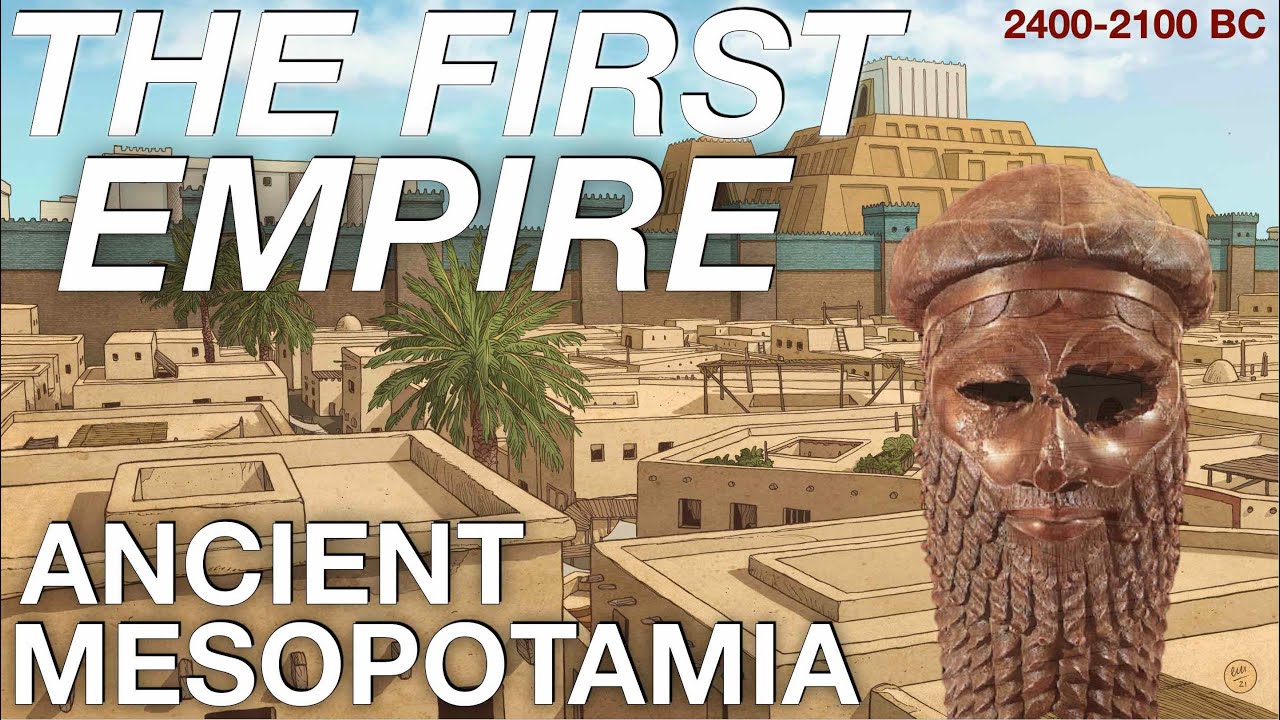
The Entire History of the Akkadians // Ancient Mesopotamia Documentary
⚡ THE VIBE
✨Mesopotamia, often hailed as the 'Cradle of Civilization,' was the ancient land nestled between the Tigris and Euphrates rivers, where humanity took its first monumental steps towards organized society, inventing everything from writing to the wheel. It's the birthplace of cities, laws, and epic tales that still resonate today! 📜🏙️
§1The Land Between Two Rivers: A Fertile Crescent's Genesis 🌾
Imagine a lush, fertile strip of land emerging from arid plains, watered by two mighty rivers – the Tigris and the Euphrates. This was Mesopotamia, a name derived from Greek meaning 'land between the rivers.' It wasn't a single empire, but a dynamic region that hosted a succession of powerful civilizations, each building upon the last. From the earliest settlements around 10,000 BCE, this area became a magnet for innovation, driven by the sheer necessity and opportunity presented by its unique geography. The regular, albeit sometimes unpredictable, flooding of these rivers deposited rich silt, creating incredibly fertile soil perfect for early agriculture. This abundance allowed communities to grow, specialize, and eventually, build the world's first cities. It's the ultimate origin story for urban life! 🏞️
§2A Symphony of Firsts: Inventions That Shaped Our World 💡
Mesopotamia wasn't just a place; it was a laboratory for human ingenuity. The sheer number of 'firsts' attributed to its various cultures is mind-boggling. Think about it: where would we be without these foundational innovations?
- Writing (Cuneiform): Developed by the Sumerians around 3500 BCE, this wedge-shaped script was initially used for accounting, then for literature and law. It literally allowed history to be written down! ✍️
- The Wheel: Not just for pottery, but for chariots and transportation, revolutionizing trade and warfare. ⚙️
- Urbanization: Uruk, one of the earliest cities, housed tens of thousands, complete with complex social structures and monumental architecture. 🏘️
- Law Codes: The Code of Hammurabi (c. 1754 BCE) is one of the oldest deciphered legal codes, laying down principles of justice and punishment. ⚖️
- Astronomy & Mathematics: Early Mesopotamians developed sophisticated systems, including a base-60 numerical system (which is why we have 60 seconds in a minute and 360 degrees in a circle!). They tracked celestial bodies with impressive accuracy. 🔭
- Irrigation Systems: To harness the rivers' power, they engineered complex canals, a testament to early civil engineering. 💧 These weren't just random inventions; they were interconnected breakthroughs that collectively propelled humanity forward into a new era of civilization. 🚀
§3Empires Rise and Fall: A Dynamic Tapestry of Power 👑
The history of Mesopotamia is a thrilling saga of empires rising, clashing, and eventually fading, leaving behind indelible marks. It began with the Sumerians, who established the first city-states like Ur and Lagash, giving us the first written language and monumental ziggurats. Then came the Akkadians under Sargon the Great, who forged the world's first empire, uniting the region under a single ruler. After a period of Sumerian resurgence, the Babylonians emerged, most famously under Hammurabi, who codified laws and built a powerful state. Later, the fearsome Assyrians dominated, known for their military prowess and vast, brutal empire, before Babylon had a brief, glorious revival under Nebuchadnezzar II, famous for the Hanging Gardens. Each civilization contributed unique cultural, political, and technological advancements, creating a rich, layered history that continues to fascinate archaeologists and historians alike. It's a real-life Game of Thrones, but with more clay tablets! ⚔️
§4Legacy and Echoes: Why Mesopotamia Still Matters Today reverberates into the 21st Century 🕰️
Though ancient Mesopotamia ceased to exist as a distinct political entity after its conquest by the Achaemenid Persian Empire in 539 BCE, its influence is anything but ancient history. The foundational concepts developed there are woven into the fabric of modern society. Our legal systems, our understanding of time, our architectural ambitions, even the very idea of a 'city' – all have roots in this fertile crescent. The epic tales, like the Epic of Gilgamesh, are among the world's oldest surviving works of literature, exploring universal themes of friendship, mortality, and the search for meaning. Mesopotamia also profoundly influenced later civilizations, including the Greeks, Romans, and Abrahamic religions. Studying Mesopotamia isn't just about dusty artifacts; it's about understanding the very blueprint of human civilization and appreciating the incredible journey we've taken from those first urban experiments to our globalized world. It's a reminder that even the grandest achievements start with a single, brilliant idea. ✨