Home/History/The Manchuria Crisis (1931-1932)
History1931-1932

The Manchuria Crisis (1931-1932)

The spark that ignited a global inferno, revealing the fragility of peace. 💥

GAME-CHANGINGCONTROVERSIALDEEP LORE
AI-Generated · By Consensus AI
Contents
6 SECTIONS
Featured Video
The Japanese Invasion of Manchuria 1931-1932 | Full Documentary

The Japanese Invasion of Manchuria 1931-1932 | Full Documentary

⚡ THE VIBE

The Manchuria Crisis was a pivotal moment in the lead-up to World War II, where Japan's calculated invasion of China's resource-rich Manchuria exposed the fatal weaknesses of international diplomacy and the League of Nations. It was a stark preview of the aggressive expansionism that would soon engulf the world. 🌍

Quick take: history • 1931-1932

§1The Stage is Set: A Powder Keg in the East 🎭

Imagine the world in the early 1930s: still reeling from the Great Depression, nations were grappling with economic turmoil and rising nationalism. In this volatile atmosphere, Manchuria, a vast, resource-rich region in Northeast China, was a geopolitical prize. It was officially Chinese territory, but Japan, through its Kwantung Army, had significant economic interests and military presence there, particularly along the South Manchuria Railway. Think of it as a tinderbox, just waiting for a spark. Japan, feeling the pinch of the Depression and driven by a potent mix of militarism and a desire for raw materials, saw Manchuria as its destiny – a lifeline for its burgeoning empire. 🌟

§2The Mukden Incident: A Fabricated Fuse 🚂

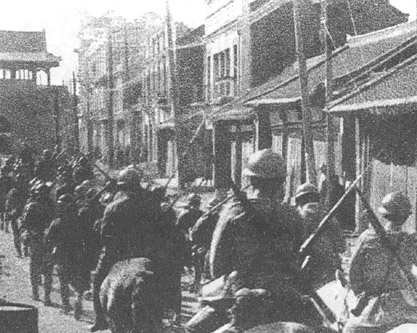
On the night of September 18, 1931, a small explosion occurred on a section of the Japanese-owned South Manchuria Railway near Mukden (modern-day Shenyang). The damage was minimal, barely enough to delay a train, but the Kwantung Army immediately blamed Chinese dissidents. This 'Mukden Incident' was, in reality, a meticulously planned false flag operation orchestrated by junior officers within the Kwantung Army, without the full knowledge or approval of the civilian government in Tokyo. It was their pretext, their casus belli, to launch a full-scale invasion. Within hours, Japanese forces were on the move, seizing key Chinese garrisons and cities. The audacity was breathtaking. 🚀

§3From Invasion to 'Manchukuo': A Puppet State Emerges 🎭

The speed and scale of the Japanese advance were staggering. Within months, Manchuria was under Japanese control. The international community, particularly the fledgling League of Nations, was aghast but largely paralyzed. In March 1932, Japan declared the establishment of Manchukuo, a 'new state' ostensibly independent but in reality a puppet regime controlled entirely by Tokyo. To add a bizarre twist, they installed Puyi, the last emperor of China, as its nominal head. This move was a brazen defiance of international law and a direct challenge to global peace, showcasing a new era of aggressive expansionism. 👑

§4The World Reacts: Diplomacy's Failed Test 💬

The League of Nations, the grand experiment in collective security born from the ashes of World War I, faced its first major test. China appealed for help, and the League responded by sending the Lytton Commission to investigate. Their report, published in October 1932, condemned Japan's actions, stating that Manchukuo was not a genuine expression of self-determination. However, the League's response was ultimately toothless: it voted to condemn Japan but took no meaningful action, such as sanctions or military intervention. Japan, in a defiant act, simply withdrew from the League in 1933. This failure to act decisively sent a clear message to other revisionist powers like Nazi Germany and Fascist Italy: the world wouldn't stop them. 💔

§5Legacy and Echoes: The Road to War 🛣️

The Manchuria Crisis wasn't just a regional conflict; it was a watershed moment in 20th-century history. It fundamentally undermined the principles of collective security and international law. It emboldened aggressive regimes and demonstrated that territorial conquest could be achieved with minimal international repercussions. For Japan, it solidified the military's power and set the stage for further expansion into China, leading directly to the Second Sino-Japanese War in 1937 and eventually, World War II in the Pacific. The crisis serves as a stark reminder of how unchecked aggression, even in a seemingly 'distant' conflict, can have devastating global consequences. It's a history lesson we continue to grapple with today. ⏳

§6Official Sources & Further Reading 📚

To delve deeper into this critical period, explore resources from reputable historical institutions. The archives of the League of Nations provide invaluable primary documents. For academic perspectives, institutions like the National Archives and Records Administration (NARA) and university history departments offer extensive research. Consider works by historians such as Akira Iriye and Christopher Thorne for comprehensive analyses of Japan's foreign policy and the international response. 📖

Vibe Rating

9/10