Johannes Gutenberg
The printing press pioneer who ignited a revolution of knowledge! 🚀
Featured partners and sponsors
New advertisers get $25 in ad credits
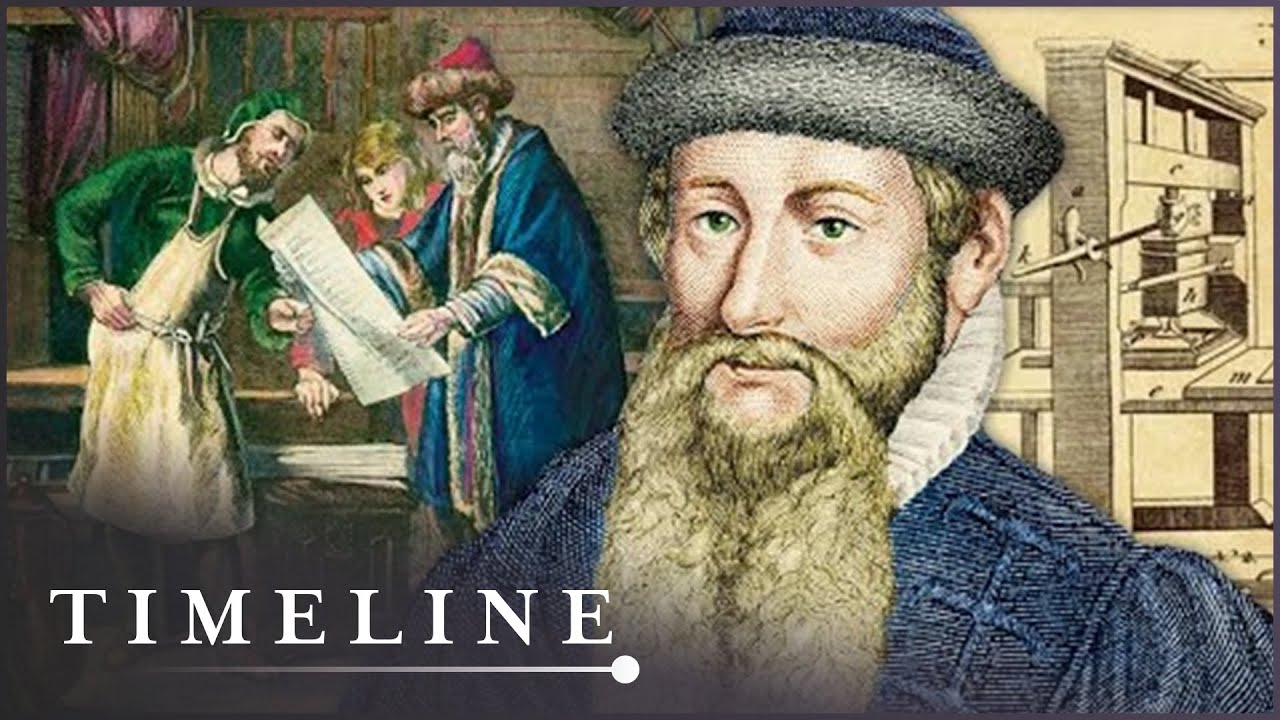
The Medieval Invention That Changed The Course Of History | The Machine That Made Us | Timeline
⚡ THE VIBE
✨Johannes Gutenberg, a German inventor and craftsman, forever changed the course of human history by introducing **movable type printing** to Europe, unleashing a torrent of information that shattered old paradigms and ignited the Renaissance. His innovation didn't just print books; it printed *ideas*.
§1The Man Behind the Masterpiece 🛠️
Born in Mainz, Germany, around the turn of the 15th century, Johannes Gensfleisch zur Laden zum Gutenberg was a true enigma. We know surprisingly little about his early life, but what we do know paints a picture of an ambitious, perhaps even obsessive, entrepreneur. He was a goldsmith by trade, a skill that would prove crucial in developing the intricate metalwork required for his groundbreaking invention. Imagine the meticulous precision, the keen eye for detail, and the sheer patience needed to craft individual letterforms that would then be assembled into entire pages! Gutenberg wasn't just an inventor; he was a visionary who saw the potential for mass communication long before anyone else. His journey was fraught with financial peril and legal battles, a testament to the high stakes and revolutionary nature of his work. 💰
§2The Spark of Innovation: Movable Type 💡
Before Gutenberg, books were painstakingly copied by hand by scribes, making them incredibly rare, expensive, and prone to errors. Block printing existed, but it was slow and each page required a new carved block. Gutenberg's genius lay in combining several existing technologies and adding his own crucial innovations to create a truly efficient system. His key contributions included:
- Movable metal type: Individual letters cast from an alloy of lead, tin, and antimony, durable enough for repeated use.
- Oil-based ink: A new formulation that adhered beautifully to metal type and paper, unlike the water-based inks used in woodblock printing.
- The printing press: Adapted from wine presses, this machine applied even pressure to transfer ink from type to paper quickly and consistently.
- A method for mass production: A systematic approach to casting type, setting pages, and printing rapidly. This wasn't just a single invention; it was an entire system for printing that was robust, repeatable, and revolutionary. It was the original industrial revolution for information! 🚀
§3The Gutenberg Bible: A Masterpiece Unveiled 📖
Gutenberg's magnum opus, the Gutenberg Bible (also known as the 42-line Bible), completed around 1455, wasn't just the first major book printed using movable type in the West; it was a work of art. Printed in Latin, it mimicked the aesthetic of handwritten manuscripts, complete with elaborate initial letters added by hand after printing. Its quality was so high that many initially believed it was still hand-copied! Only about 180 copies were printed, and today, fewer than 50 complete or near-complete copies survive, making them some of the most valuable books in the world. Each page of this Bible whispers tales of a bygone era, yet its very existence screams of a future transformed. It's a tangible link to the dawn of the information age. 🌟
§4An Unstoppable Tide: Cultural & Societal Impact 🌊
The impact of Gutenberg's printing press is almost impossible to overstate. It didn't just make books cheaper and more accessible; it fundamentally reshaped society:
- Spread of Knowledge: Information, once hoarded by the elite, began to disseminate widely, fueling the Renaissance and the Scientific Revolution.
- Literacy Boom: As books became more available, literacy rates soared, empowering individuals with direct access to texts.
- Religious Reformation: The ability to print Bibles and theological tracts in vernacular languages played a critical role in the Protestant Reformation, challenging established religious authority.
- Standardization of Language: Printing helped standardize languages, leading to the development of national identities.
- Rise of Public Discourse: Pamphlets and broadsides fostered public debate and the exchange of ideas, laying groundwork for modern journalism. From the scientific breakthroughs of Galileo to the political treatises of the Enlightenment, none would have been possible without the printing press. It truly was a game-changer that continues to echo in our digital age. 🌐
§5Legacy in the Digital Age 💻
Even in 2026, surrounded by screens and instant information, Gutenberg's legacy remains profoundly relevant. The internet, in many ways, is the ultimate evolution of his vision: a global network for the rapid dissemination of information. While the medium has changed from lead type to pixels, the core principle—making knowledge accessible to the masses—endures. Gutenberg's work laid the foundation for everything from newspapers and magazines to Wikipedia and social media. He democratized information, and we are still living in the world he helped create. His story is a powerful reminder that a single, ingenious invention can ripple through centuries, altering the very fabric of human civilization. What a vibe! 🤯