Jack Nilles
The visionary who brought the office home 🏡
Featured partners and sponsors
New advertisers get $25 in ad credits
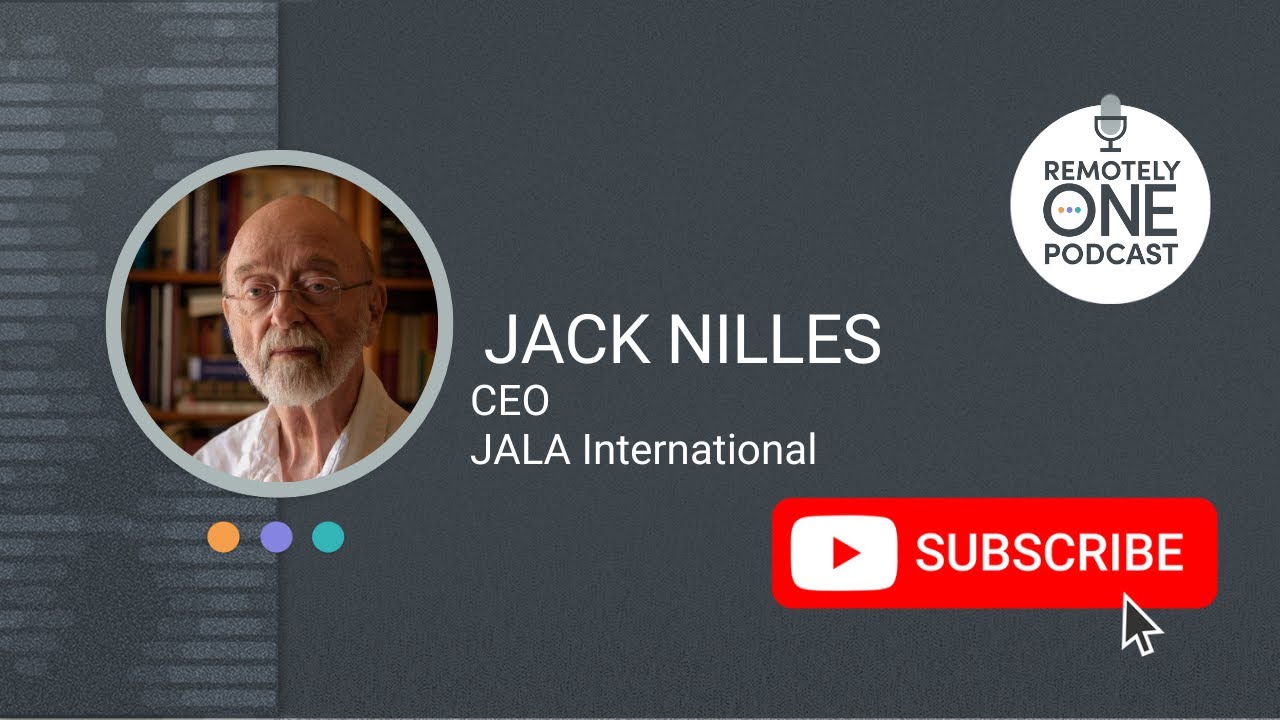
Back to the Future: The Origin of 'Telework' with Jack Nilles in 1973 - ep. 081
⚡ THE VIBE
✨Jack Nilles, often hailed as the 'Father of Telecommuting,' didn't just predict remote work; he meticulously engineered its theoretical and practical foundations in the 1970s, forever altering how we conceive of the office. His foresight continues to resonate powerfully in our hybrid work world. 💡
§1The Genesis of a Revolution: From Space to Office 🌌
Imagine the early 1970s: offices were physical places, commutes were a given, and the internet was a nascent concept. Enter Jack Nilles, a brilliant physicist and engineer who had worked on missile defense systems and at NASA. His background in complex systems thinking was about to be applied to a seemingly mundane problem: traffic congestion in Los Angeles and the energy crisis. At the University of Southern California (USC), Nilles began to ponder a radical idea: what if work didn't have to happen at the office? What if information could travel instead of people? This wasn't just a casual thought; it was the birth of what he would famously coin 'telecommuting' and 'teleworking'. His initial research, funded by the National Science Foundation, aimed to prove that moving data, not bodies, was a viable, efficient, and environmentally sound alternative to the daily grind. It was a true 'aha!' moment that would ripple through decades. 🌍
§2Defining the Future: The USC Experiment & Beyond 🔬
Nilles's seminal 1976 book, The Telecommunications-Transportation Tradeoff: Options for Tomorrow, laid out the blueprint for a new paradigm. He didn't just theorize; he conducted groundbreaking experiments. One of the most famous was with the Insurance Company of North America (INA) in the late 1970s, where employees were equipped with terminals to work from a satellite office closer to their homes, effectively creating one of the first documented 'telecommuting' hubs. This wasn't just about convenience; it was about proving the economic, social, and environmental benefits. Nilles highlighted key advantages: reduced energy consumption, decreased traffic, increased employee satisfaction, and access to a wider talent pool. He meticulously detailed the technological requirements, organizational changes, and management strategies needed for successful remote work, essentially writing the manual for a future that many couldn't yet imagine. His work at the Center for Futures Research at USC was pivotal in establishing this new field. 📈
§3Why It Matters: The Enduring Legacy of Telework 🌐
Fast forward to 2026, and Jack Nilles's influence is undeniable. The COVID-19 pandemic forced a global, unplanned experiment in remote work, validating many of his decades-old predictions on an unprecedented scale. Suddenly, 'telecommuting' wasn't a niche concept; it was a global necessity. Nilles's work provided the foundational understanding for navigating this shift, from the importance of reliable telecommunications infrastructure to the psychological aspects of working from home. He championed the idea that work is an activity, not a place, a philosophy that now underpins the operations of countless organizations worldwide. His insights continue to guide discussions around hybrid work models, digital nomadism, and the future of urban planning, proving that his ideas were not just ahead of their time, but truly timeless. 🌟
§4Beyond the Buzzword: The Nuances and Challenges ⚖️
While Nilles was a staunch advocate for telecommuting, he was also keenly aware of its complexities. He understood that successful implementation required more than just technology; it demanded a shift in management philosophy, trust in employees, and careful consideration of social dynamics. He addressed potential pitfalls like isolation, the need for clear communication, and the importance of maintaining a strong company culture even when geographically dispersed. His research wasn't just about can we do it, but how can we do it well? This holistic approach is why his work remains so relevant today, as companies grapple with the long-term implications of remote and hybrid models. He emphasized that the 'tradeoff' between telecommunications and transportation was not just about efficiency, but about creating a more sustainable and human-centric way of working. ♻️
§5The Man Behind the Movement: A Visionary's Impact 👤
Jack Nilles isn't just a name associated with a buzzword; he's a testament to the power of interdisciplinary thinking and foresight. His ability to connect seemingly disparate fields—transportation, energy, telecommunications, and organizational behavior—resulted in a paradigm shift that continues to unfold. He didn't just invent a term; he provided the intellectual scaffolding for a global transformation in how we live and work. His contributions have saved untold hours of commuting, reduced carbon emissions, and opened up new avenues for employment and lifestyle flexibility for millions. His legacy is a vibrant, evolving landscape of remote teams, virtual offices, and a fundamentally reimagined relationship with the workplace. He truly is a game-changer in the history of modern work. 👏