History of Psychology
From Ancient Whispers to Modern Minds: Unraveling the Soul's Story 🧠✨
Featured partners and sponsors
New advertisers get $25 in ad credits
A Brief History of Psychology: From Plato to Pavlov
⚡ THE VIBE
✨The History of Psychology is a captivating saga tracing humanity's relentless quest to understand its own mind, evolving from philosophical musings into a rigorous scientific discipline that profoundly impacts our world. It's a tale of introspection, experimentation, and revolutionary insights! 🚀
§1The Philosophical Roots: Where It All Began 🌳
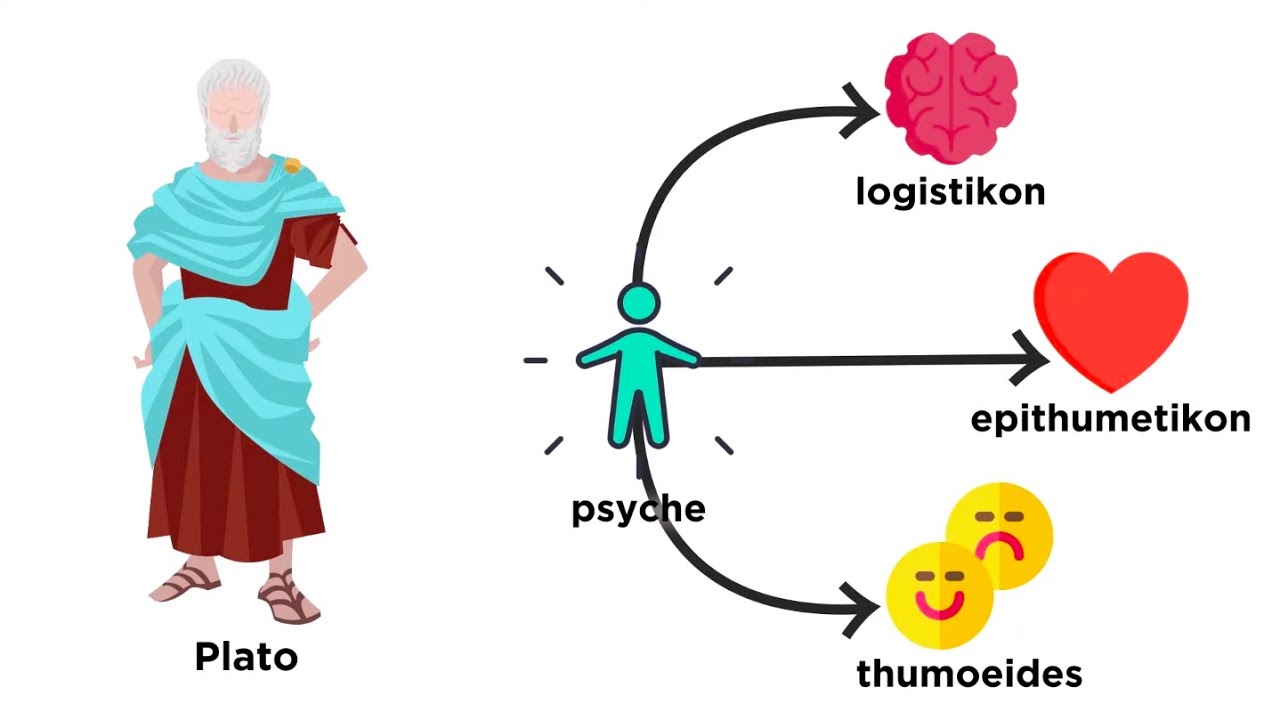
Before psychology became a science, it was a profound branch of philosophy. Thinkers from ancient civilizations grappled with fundamental questions about the mind, soul, perception, and knowledge. In ancient Greece, giants like Plato pondered the nature of the soul and its separation from the body, while his student Aristotle focused on observation, writing De Anima (On the Soul), which explored memory, sensation, and dreams. Fast forward to the Enlightenment, and figures like René Descartes introduced the concept of mind-body dualism, suggesting the mind and body are distinct but interact. Then came John Locke and his idea of tabula rasa (blank slate), arguing that we're born without innate knowledge, and experience shapes our minds. These early inquiries laid the groundwork, asking the 'what' and 'why' that would eventually demand empirical answers. It was a slow burn, but the intellectual fires were definitely lit! 🔥
§2The Birth of a Science: Wilhelm Wundt's Lab 🔬
The year 1879 is often cited as psychology's official birthdate as a scientific discipline. Why? Because Wilhelm Wundt opened the very first experimental psychology laboratory in Leipzig, Germany. Wundt, a physiologist, believed the mind could be studied scientifically, much like the physical world. He pioneered structuralism, aiming to break down mental processes into their most basic components through introspection – essentially, asking people to describe their conscious experiences. Imagine trying to describe the exact sensations of seeing a red apple or hearing a specific tone! 🍎👂 It was meticulous, sometimes criticized for its subjectivity, but undeniably revolutionary. Wundt's work sparked a global movement, inspiring others like his student Edward Titchener to bring structuralism to America, and setting the stage for psychology to move beyond philosophical arm-chair musings into empirical investigation. This was the moment psychology truly put on its lab coat! 👨🔬
§3The Great Debates & Divergent Schools of Thought ⚔️
The early 20th century was a wild west of psychological thought, with different schools battling for supremacy. First, functionalism emerged as a response to structuralism, led by American philosopher William James. Instead of what the mind is made of, functionalists asked why we think and feel the way we do – focusing on the purpose or function of consciousness and behavior in adapting to the environment. Think Darwin meets the mind! 🐒 Then came the heavy hitters: Sigmund Freud introduced psychoanalysis, delving into the unconscious mind, childhood experiences, and repressed desires as drivers of behavior. His ideas, though controversial, profoundly influenced Western thought and therapy. Around the same time, Behaviorism exploded onto the scene with John B. Watson and later B.F. Skinner, arguing that psychology should only study observable behavior, rejecting the 'unseen' mind. They showed how learning occurs through conditioning, shaping everything from advertising to parenting. 🔔 Meanwhile, Gestalt psychology (think Wertheimer, Köhler, Koffka) argued that 'the whole is greater than the sum of its parts,' focusing on perception and problem-solving, reminding us that context matters. Each school offered a unique lens, enriching the field immensely! 👓
§4Modern Psychology: The Cognitive Revolution & Beyond 🚀
By the mid-20th century, the pendulum began to swing back towards the mind. The Cognitive Revolution of the 1950s and 60s, fueled by advances in computer science and linguistics, brought mental processes back into focus. Thinkers like Ulric Neisser, George Miller, and Noam Chomsky championed the study of memory, perception, language, and problem-solving. Psychology started viewing the mind as an information processor, much like a computer! 💻 This led to Cognitive Psychology, which dominates much of the field today. Concurrently, Humanistic psychology (with Carl Rogers and Abraham Maslow) emphasized human potential, self-actualization, and free will, offering a more optimistic view of human nature. Today, psychology is incredibly diverse, integrating insights from neuroscience (leading to cognitive-neuroscience), evolutionary psychology, cultural psychology, and even positive-psychology. It's a vibrant, ever-evolving field, constantly seeking to understand the intricate dance between brain, mind, and behavior. The journey continues, always pushing the boundaries of self-understanding! 🌟
§5Why It Matters: Understanding Ourselves and Our World 🌍
The history of psychology isn't just academic trivia; it's the story of how humanity has systematically tried to understand its own operating system. From ancient philosophical debates to modern neuroimaging, each step has brought us closer to unraveling the complexities of human experience. This journey has given us: 💡
- Therapeutic breakthroughs: From psychoanalysis to cognitive-behavioral therapy, understanding the mind's mechanisms has led to effective treatments for mental health conditions.
- Insights into learning and education: Behaviorism and cognitive psychology have revolutionized how we teach and learn.
- Better societal structures: Understanding group dynamics, biases, and decision-making informs public policy, marketing, and even legal systems.
- Self-awareness: Ultimately, psychology's history is a mirror reflecting our collective journey towards greater self-knowledge and empathy. It reminds us that the quest to understand the mind is perhaps the most profound human endeavor of all. It's a continuous, fascinating exploration into what makes us us! 💖