History of Belgian Currency
From Francs to Euros: Tracing Belgium's Monetary Journey! 💰🇧🇪
Featured partners and sponsors
New advertisers get $25 in ad credits
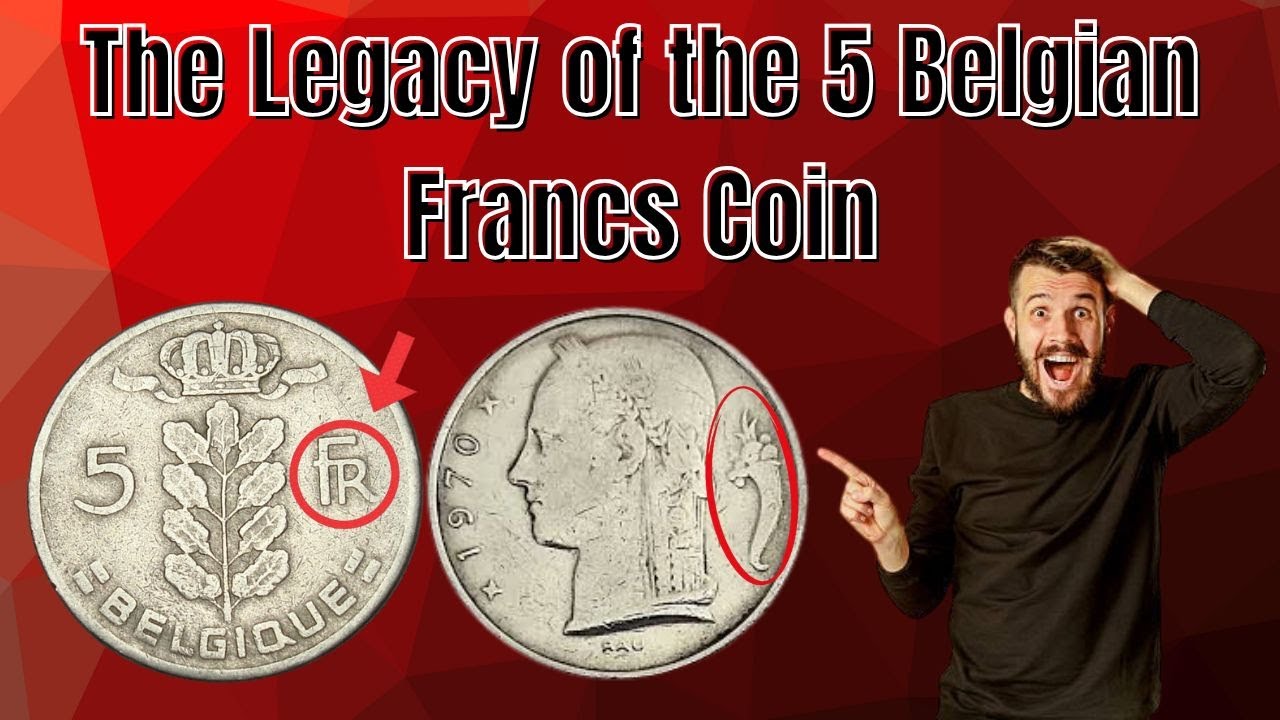
The Untold Story of the 5 Belgian Francs Coin (1970) | History, Design & Legacy
⚡ THE VIBE
✨Dive into the fascinating monetary saga of Belgium, a nation that navigated centuries of foreign rule before forging its own currency identity, only to embrace the grand European experiment of the Euro. It's a tale of economic resilience, political shifts, and the enduring power of money to define a nation. 🌟
§1Birth of the Belgian Franc: A New Nation's Identity 📜
Imagine the excitement! When Belgium declared its independence from the Netherlands in 1830, one of the first crucial steps in establishing its sovereignty was creating its own currency. Enter the Belgian Franc (BEF), a direct descendant of the French Franc, which had already circulated widely during the Napoleonic era. This wasn't just about commerce; it was a powerful symbol of national identity, a tangible representation of a new country finding its footing. The first coins, often featuring the likeness of King Leopold I, were minted with pride, signaling to the world that Belgium was open for business and ready to forge its own economic destiny. 👑
§2The Latin Monetary Union: A Golden Age of Stability ✨
Belgium was a founding member of the groundbreaking Latin Monetary Union (LMU) in 1865, alongside France, Italy, and Switzerland. This alliance aimed to standardize currency across member states, pegging their currencies to a fixed silver-to-gold ratio. Think of it as an early, ambitious attempt at a European Union for money! 🇪🇺 The LMU brought remarkable stability and facilitated trade across borders, making it easier for Belgian merchants to do business with their neighbors. The Belgian Franc, in essence, became interchangeable with French Francs, Swiss Francs, and Italian Lire, fostering an era of economic prosperity and interconnectedness. It was a truly visionary concept for its time, though it eventually crumbled after World War I due to economic pressures and the abandonment of the gold standard. 💔
§3Turbulence and Transition: Wars, Depreciations, and New Beginnings 🌪️
The 20th century threw some serious curveballs at the Belgian Franc. Both World War I and World War II brought occupation and significant economic disruption, leading to periods of inflation and currency depreciation. Post-war, Belgium, like many European nations, worked hard to rebuild its economy. The Franc underwent several devaluations and reforms, adapting to the changing global financial landscape. This period saw the introduction of new banknote designs, reflecting contemporary art and national heroes, and a gradual shift towards a more modern, robust financial system. It was a testament to Belgium's resilience and its commitment to economic recovery. 💪
§4Embracing the Euro: A Bold Leap Forward 🚀
Fast forward to the late 20th century, and Belgium was at the forefront of the movement towards a single European currency. As a founding member of the European Economic Community (EEC) and later the EU, Belgium played a crucial role in the creation of the Euro. On January 1, 1999, the Euro became the official currency for financial transactions, and on January 1, 2002, Euro banknotes and coins physically entered circulation, replacing the beloved Belgian Franc forever. This transition was a monumental undertaking, involving massive logistical efforts and a bittersweet farewell to a currency that had defined Belgian economic life for over 170 years. While some felt a pang of nostalgia, most Belgians embraced the Euro as a symbol of unity, stability, and a shared European future. It solidified Belgium's position at the heart of Europe. ❤️
§5The Euro Era and Beyond: Stability and Integration 🌐
Today, the Euro reigns supreme in Belgium, providing a stable and integrated monetary environment within the Eurozone. This has eliminated exchange rate risks for cross-border trade and travel within member states, fostering deeper economic ties. Belgium, with its central geographical location and strong commitment to European integration, continues to be a key player in shaping the Euro's future. While the Belgian Franc is now a cherished memory, occasionally surfacing in collectors' hands or nostalgic conversations, its legacy lives on through the robust economic framework that helped pave the way for the Euro. The journey from a newly independent nation's currency to a shared continental one is a powerful narrative of progress and cooperation. 🌟