General Systems Theory
Unifying the Universe, One System at a Time 🌐
Featured partners and sponsors
New advertisers get $25 in ad credits
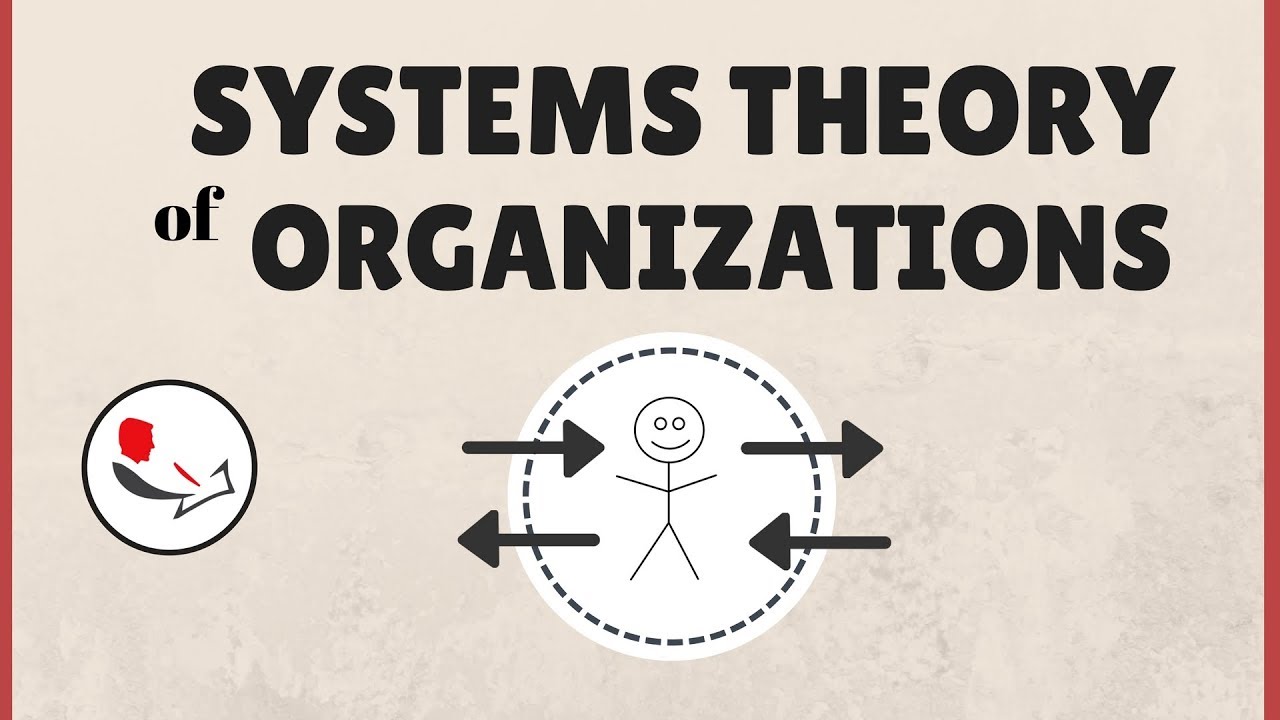
Systems Theory of Organizations
⚡ THE VIBE
✨General Systems Theory (GST) is a **transdisciplinary framework** that seeks to identify universal principles applicable to systems across *all* fields of study, from biology to engineering, revealing how interconnected parts create emergent wholes. It's the ultimate 'big picture' lens for understanding complexity! 🔭
§1The Grand Unification: What is GST? 🌟
Imagine a world where the principles governing a living cell are somehow echoed in the dynamics of a bustling city, or where the feedback loops in a climate system resemble those in a well-run business. This isn't science fiction; it's the core promise of General Systems Theory (GST). Pioneered by biologist Ludwig von Bertalanffy in the mid-20th century, GST isn't a specific scientific discipline like physics or chemistry. Instead, it's a meta-discipline—a way of thinking about how things are organized and interact, regardless of their specific nature. It posits that there are universal principles and patterns that govern all systems, from the microscopic to the cosmic. 🌌 It's about looking beyond individual components to understand the emergent properties that arise from their interactions, recognizing that the whole is truly greater than the sum of its parts. This perspective has revolutionized how we approach problems in everything from ecology to organizational management.
§2From Biology to Breakthroughs: The Origin Story 🔬
The roots of GST can be traced back to the 1940s, primarily through the work of Austrian theoretical biologist Ludwig von Bertalanffy. Frustrated by the reductionist approach prevalent in science, which often broke down phenomena into isolated parts without considering their interactions, Bertalanffy began to observe striking similarities in the organizational principles of biological organisms. He saw organisms not as static collections of molecules, but as open systems constantly interacting with their environment, maintaining a dynamic equilibrium. 🌱
His groundbreaking ideas were formalized in his 1968 book, General System Theory: Foundations, Development, Applications. Bertalanffy wasn't alone; other thinkers like Kenneth Boulding, Anatol Rapoport, and Margaret Mead also contributed to the burgeoning field. Their collective vision was to create a scientific framework that could bridge the ever-widening gap between specialized disciplines, fostering a holistic understanding of complex phenomena. It was a radical idea that challenged the prevailing analytical paradigm, proposing a synthetic, integrative approach. 🤝
§3The Language of Systems: Key Concepts & Principles 🧠
At its heart, GST provides a powerful vocabulary for describing complexity. Here are some of its fundamental concepts:
- System: A set of interdependent components interacting to form a unified whole. Think of your body, a computer network, or even a galaxy. ✨
- Open vs. Closed Systems: Most real-world systems are open, meaning they exchange matter, energy, or information with their environment. Closed systems are theoretical constructs that do not. 🔄
- Feedback Loops: Processes where the output of a system influences its input. Positive feedback amplifies change (e.g., population growth), while negative feedback stabilizes it (e.g., a thermostat maintaining temperature). 🌡️
- Emergence: The appearance of novel properties in a system that are not present in its individual components. Consciousness from neurons, or traffic jams from individual cars, are classic examples. 💡
- Homeostasis: The ability of an open system to maintain internal stability, often through self-regulating feedback mechanisms. Think of your body's temperature regulation. 🧘♀️
- Equifinality: The idea that a system can reach the same final state from different initial conditions and by different paths. This highlights the adaptability and resilience of complex systems. 🛣️
These concepts form a toolkit for analyzing anything from a supply chain to a social movement, offering insights into how they function, adapt, and sometimes, fail. It's about seeing the patterns beneath the surface! 🕵️♀️
§4Impact Across the Board: Why GST Matters Today 🚀
The influence of General Systems Theory is pervasive, even if its name isn't always explicitly invoked. It has profoundly shaped fields like:
- Cybernetics: The study of control and communication in animals and machines, heavily reliant on feedback loops. Norbert Wiener was a key figure here. 🤖
- Ecology: Understanding ecosystems as complex, interconnected systems, where changes in one part ripple through the entire network. 🌳
- Management & Organization Theory: Viewing companies as open systems, emphasizing communication, feedback, and adaptation to the environment. Modern concepts like organizational learning owe a debt to GST. 🏢
- Family Therapy: Conceptualizing families as systems where individual behaviors are understood in the context of family dynamics. 👨👩👧👦
- Information Technology: From network architectures to software design, the principles of modularity, interaction, and emergent behavior are central. 💻
- Climate Science: Modeling the Earth's climate as an intricate system of interacting atmospheric, oceanic, and terrestrial components. 🌍
In an increasingly interconnected and complex world, GST provides an essential framework for making sense of it all. It encourages us to think holistically, to look for patterns, and to understand that isolated solutions rarely work for systemic problems. Its legacy continues to inspire interdisciplinary research and systems thinking across the globe, as evidenced by organizations like the International Society for the Systems Sciences. 🌐
§5Challenges & The Future of Systems Thinking 🔮
While immensely powerful, GST isn't without its critics or challenges. Some argue that its abstract nature can make it difficult to apply concretely in specific empirical research, sometimes leading to overly generalized conclusions. Others point to the difficulty of defining system boundaries in truly complex, 'wicked problems' where everything seems connected to everything else. 🤯
However, the spirit of GST lives on and thrives in modern approaches like Complex Adaptive Systems (CAS) theory, which focuses on systems that can learn and evolve, and Design Thinking, which emphasizes holistic problem-solving. The need for interdisciplinary understanding is more urgent than ever in 2026, as we grapple with global challenges like climate change, pandemics, and social inequality. GST reminds us that these aren't isolated issues but symptoms of deeper, systemic dynamics. The future of understanding our world, it seems, will continue to be deeply rooted in seeing the interconnected whole. 🌱💡