Free Rider Problem
When everyone wants a slice of the pie, but nobody wants to bake it. 🥧
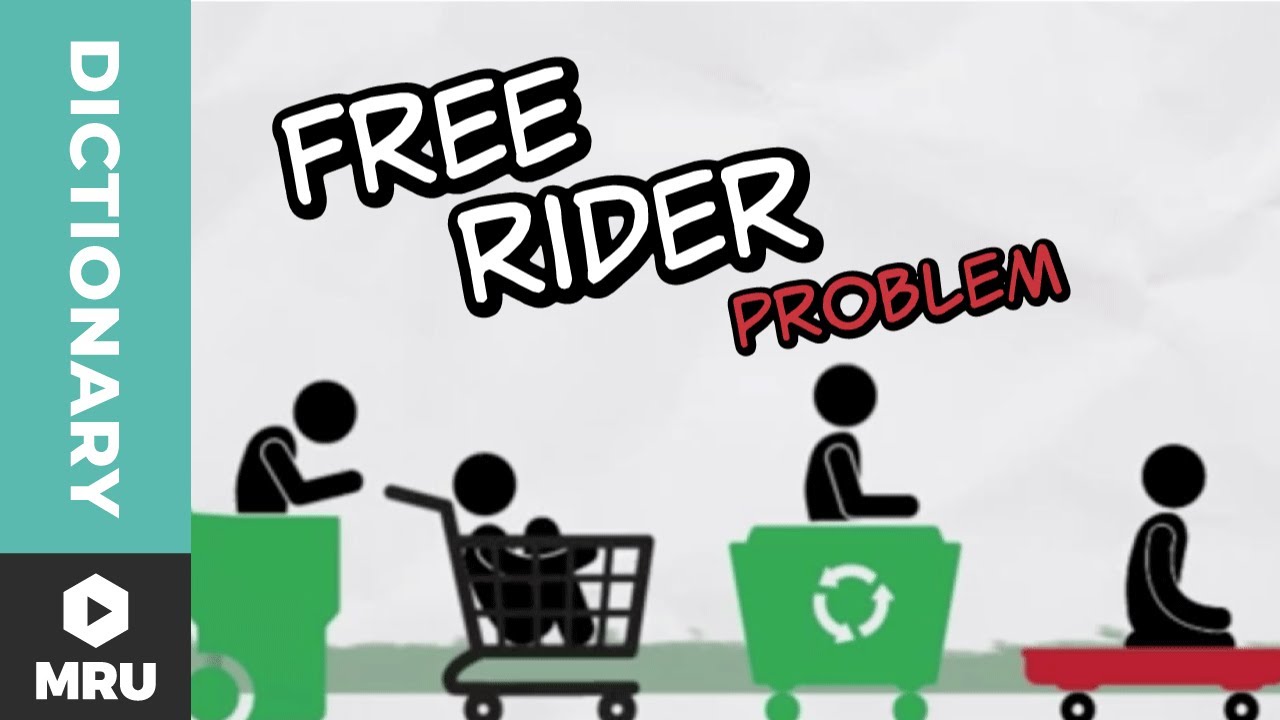
What Is the Free Rider Problem?
⚡ THE VIBE
✨The **Free Rider Problem** describes a fundamental challenge in economics and social science where individuals benefit from a public good without contributing to its cost, leading to potential under-provision or collapse of the good itself. It's a classic conundrum that explains why group projects fail and why clean air is so hard to achieve! 🌬️
§1What's the Big Deal with Free Riders? 🧐
Imagine a world where everyone gets to enjoy the dazzling fireworks display 🎆, but only a few people actually chip in to pay for it. That, in a nutshell, is the Free Rider Problem. It's a pervasive phenomenon where individuals consume more than their fair share of a common resource, or pay less than their fair share of the cost of a public good, because they can't be excluded from enjoying it. This isn't just about fireworks; it applies to everything from national defense 🛡️ and public parks 🌳 to clean air and even group projects in school! The core issue arises when a good is both non-excludable (you can't easily stop people from using it) and non-rivalrous (one person's use doesn't diminish another's). When these conditions meet, the temptation to 'free ride' becomes almost irresistible for rational individuals. It's a fascinating insight into human behavior and collective action. 🧑🤝🧑
§2The Origin Story: Olson's Logic 📜
While the concept of individuals benefiting without contributing has existed for ages, the formal articulation of the Free Rider Problem is largely credited to economist Mancur Olson in his groundbreaking 1965 work, The Logic of Collective Action: Public Goods and the Theory of Groups. Olson challenged the prevailing wisdom that large groups would naturally act in their common interest. He argued that in large groups, individual contributions to a public good are often so small that they don't significantly impact the overall supply of the good. Therefore, a rational individual will choose to not contribute, hoping others will bear the cost, while still enjoying the benefits. This leads to a situation where the public good is either under-provided or not provided at all, even if everyone would be better off if it were provided. Olson's work was a seismic shift in understanding collective action and laid the foundation for much of modern Public Choice Theory. 💡
§3From Public Parks to Climate Change: Real-World Impacts 🌍
The Free Rider Problem isn't just a theoretical construct; its fingerprints are all over our daily lives and global challenges. Think about environmental protection: everyone benefits from cleaner air and water, but individual companies or nations might shirk their responsibilities to reduce pollution, hoping others will pick up the slack. This makes international climate agreements notoriously difficult to enforce. ☁️ Similarly, public broadcasting relies on donations, but many enjoy the content without contributing. Even within a company, an employee might 'free ride' on a team project, letting others do the heavy lifting while still claiming credit. The challenge is that if too many people free ride, the public good—be it a pristine environment, quality programming, or a successful project—eventually collapses. It's a delicate balance between individual self-interest and collective well-being. ⚖️
§4Solving the Conundrum: Mechanisms & Incentives 🛠️
So, how do we combat this pervasive problem? Society has developed several strategies to mitigate free riding. One common approach is coercion (or regulation), where governments mandate contributions through taxes to fund public goods like national defense or infrastructure. Another strategy involves selective incentives, offering benefits only to those who contribute (e.g., membership perks for donating to a public radio station). Social pressure and norms can also play a significant role, shaming free riders or encouraging participation through community spirit. 🤝 In smaller groups, repeated interactions and the ability to monitor contributions can foster cooperation. The rise of blockchain and decentralized autonomous organizations (DAOs) are even exploring new ways to incentivize participation and prevent free riding in digital commons. It's a constant battle, but understanding the problem is the first step to finding innovative solutions! 🚀
§5Beyond Economics: Free Riding in the Digital Age 🌐
In 2026, the Free Rider Problem has taken on new dimensions in the digital realm. Consider open-source software: millions benefit from tools like Linux or Wikipedia, but only a fraction contribute code or donations. While the open-source model often thrives despite free riding due to passionate contributors and network effects, it still faces sustainability challenges. Similarly, in online communities and social networks, a small percentage of users often create the majority of content, while a vast 'lurking' majority consumes it without contributing. This dynamic impacts everything from content moderation to platform monetization. Understanding the Free Rider Problem helps us design better systems, from incentivizing content creators to funding digital public goods, ensuring that the collective well-being of our interconnected world doesn't fall victim to individual inaction. 💻✨