Digital Native
Born into the byte-stream: The generation that never knew a world without Wi-Fi.
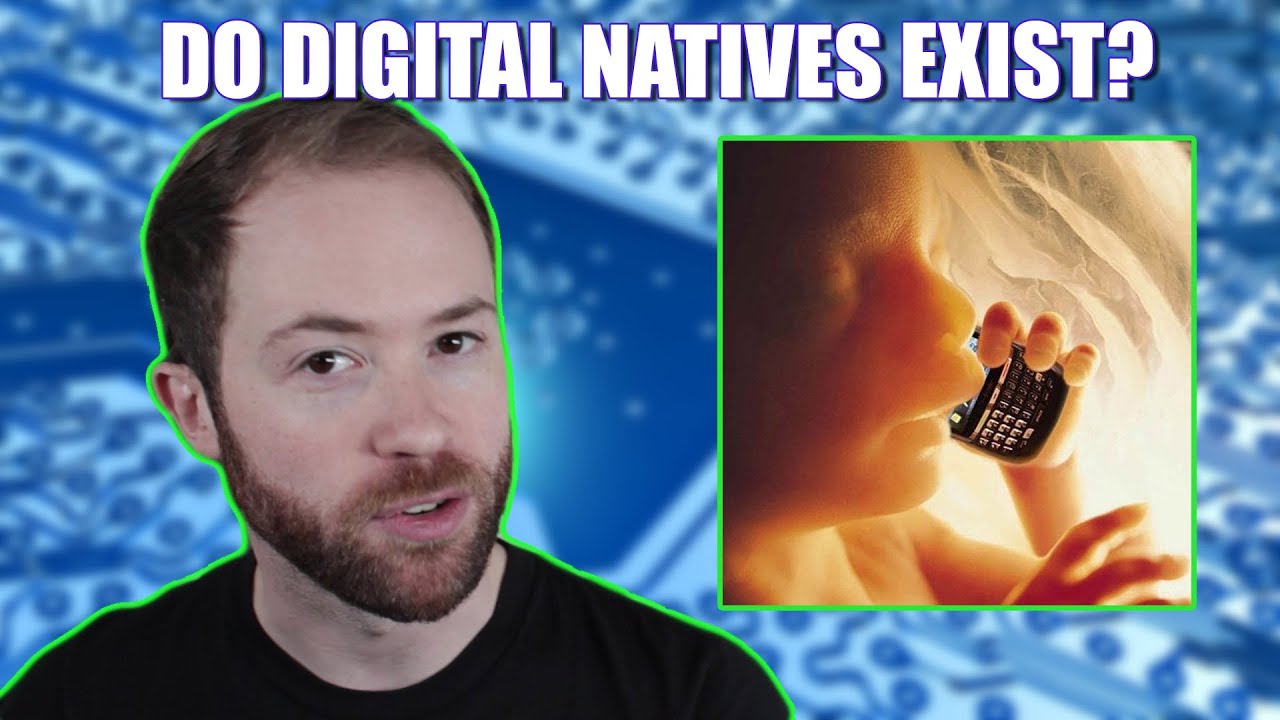
Do "Digital Natives" Exist? | Idea Channel | PBS Digital Studios
⚡ THE VIBE
✨The 'Digital Native' isn't just a demographic; it's a **mindset** forged in the crucible of ubiquitous technology, describing individuals who grew up immersed in the digital world, shaping their very cognition and interaction with reality. They are the first true citizens of the internet age, fluent in its languages and logic from birth. 🌐
§1Who Are They, Really? 🤔
Imagine a world where the internet has always been there, where smartphones are as natural as breathing, and social media is just how you connect. That's the world of the Digital Native. Coined by educational futurist Marc Prensky in 2001, this term describes individuals who have grown up surrounded by digital technology – computers, the internet, mobile phones, and social platforms. Unlike 'Digital Immigrants' (those who adopted technology later in life), Natives speak the digital language fluently, often intuitively understanding complex interfaces and navigating online spaces with ease. They're not just users; they're inhabitants of the digital realm. 🚀
§2The Birth of a Concept: Prensky's Vision 💡
Prensky's seminal 2001 essay, 'Digital Natives, Digital Immigrants,' wasn't just a catchy phrase; it was a wake-up call to educators and society at large. He argued that growing up with digital technology fundamentally alters how one thinks, processes information, and learns. Digital Natives, he proposed, prefer graphics over text, random access over linear progression, and multitasking over single-tasking. While some of his initial claims have been debated and refined over the years, the core idea — that early and constant exposure to digital tools shapes cognitive patterns — remains profoundly influential. It kickstarted a global conversation about education, work, and social dynamics in the 21st century. 🎓
§3Beyond the Buzzword: Characteristics & Cognitive Shifts 🧠
So, what makes a Digital Native tick? They often exhibit a preference for parallel processing (multitasking), a comfort with non-linear information consumption (think hyperlinking vs. reading a book cover-to-cover), and a high degree of technological literacy. Their brains, some researchers suggest, might even be wired differently, with enhanced visual-spatial skills and rapid information processing. They are the masters of the 'scroll and scan,' adept at filtering vast amounts of data. However, this comes with its own set of challenges, including potential issues with deep reading, sustained attention, and critical evaluation of online sources – skills often associated with 'Digital Immigrants.' It's a fascinating trade-off. ⚡
§4Impact on Culture, Work, and Society 🌍
The rise of the Digital Native has reshaped nearly every facet of modern life. In the workplace, they often demand more flexible structures, collaborative tools, and a purpose-driven environment, challenging traditional hierarchies. Culturally, they are the architects of viral trends, meme culture, and global online communities, influencing everything from fashion to politics. Their expectations for instant gratification and personalized experiences have driven innovation in every industry. From the way we learn to the way we love, the Digital Native's imprint is undeniable, creating a truly interconnected and rapidly evolving global society. They are the driving force behind phenomena like Gen Z and the gig economy. 🌟
§5The Evolving Debate & Future Generations 🔄
While the term 'Digital Native' remains popular, academic discourse has evolved. Critics argue that the concept is too simplistic, overlooking socioeconomic factors, access disparities, and individual differences in tech proficiency. The idea of a monolithic 'native' generation is often challenged, with researchers preferring terms like 'digital fluency' or 'digital literacy' to describe skills rather than birthright. Regardless, the foundational idea that technology shapes us remains potent. As we move into an era of AI integration and virtual reality, new generations will continue to be born into increasingly complex digital landscapes, perhaps becoming 'AI Natives' or 'Metaverse Natives.' The story is far from over! 🔮