Alfred Russel Wallace
The Co-Discoverer of Natural Selection, a Forgotten Giant of Science 🌿🦋
Featured partners and sponsors
New advertisers get $25 in ad credits
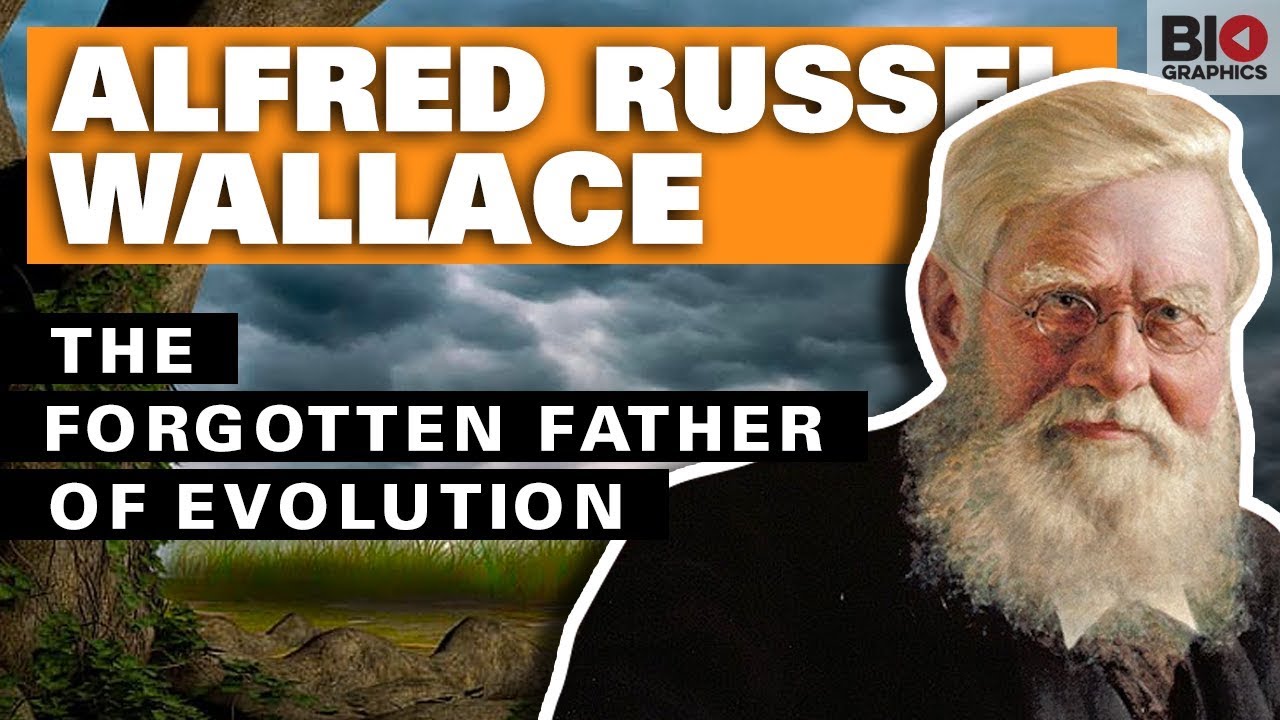
Alfred Russel Wallace: The Forgotten Father of Evolution
⚡ THE VIBE
✨Meet **Alfred Russel Wallace**, the brilliant naturalist, explorer, and social critic who independently conceived the theory of evolution by natural selection, forever changing our understanding of life on Earth alongside [Charles Darwin](charles-darwin). His incredible expeditions across the globe yielded groundbreaking insights not just into biology, but also into biogeography, anthropology, and spiritualism, cementing his legacy as one of history's most fascinating scientific minds. 🌍✨
§1The Journey of a Visionary Naturalist 🌿
Born into humble beginnings in Wales, Alfred Russel Wallace's early life was a far cry from the academic halls that often birthed scientific giants. He was largely self-taught, driven by an insatiable curiosity about the natural world. His early career as a land surveyor and schoolteacher provided him with practical skills and a keen eye for observation, but his true calling lay in the wild, untamed corners of the planet. 🗺️ In 1848, inspired by the likes of Alexander von Humboldt and a desire to understand the origin of species, Wallace embarked on his first grand adventure to the Amazon Basin. It was here, amidst the unparalleled biodiversity of South America, that his scientific journey truly began to blossom, though a tragic shipwreck on his return voyage cost him most of his invaluable collections and notes. 💔
§2A Parallel Path to Natural Selection 💡
Undeterred by his Amazonian misfortune, Wallace set sail again in 1854, this time for the Malay Archipelago (modern-day Malaysia and Indonesia). For eight grueling years, he traversed thousands of miles, collecting an astonishing 125,660 specimens, including over 5,000 new species. It was during a feverish bout of malaria on the island of Ternate in 1858 that the pieces of the puzzle clicked into place. He independently formulated the theory of natural selection, a mechanism explaining how species evolve over time through the survival of the fittest. 🤯
Wallace immediately penned his ideas in an essay, 'On the Tendency of Varieties to Depart Indefinitely from the Original Type,' and sent it to none other than Charles Darwin, who had been working on similar concepts for two decades. The resulting joint presentation of their papers to the Linnean Society of London in July 1858 is a legendary moment in scientific history, ensuring both men received credit for this monumental discovery. It's a powerful reminder that great ideas often emerge simultaneously across different minds. 🤝
§3Beyond Evolution: Wallace's Diverse Contributions 🌟
While natural selection is his most famous contribution, Wallace's intellectual reach extended far beyond evolutionary biology. He is widely considered the 'father of biogeography,' the study of the distribution of species and ecosystems in geographic space and geological time. His observation of a distinct faunal boundary, now known as the Wallace Line, separating Asian and Australian animal species in the Malay Archipelago, remains a cornerstone of the field. 🐅🦘
Wallace was also a passionate social reformer, advocating for land nationalization, women's rights, and workers' rights. His later life saw him delve deeply into spiritualism, a controversial stance that sometimes overshadowed his scientific achievements but reflected his lifelong quest to understand the full spectrum of existence. He challenged conventional thinking, even within the scientific community, demonstrating a fierce independence of thought. 🧠
§4Legacy and Enduring Impact 🚀
Alfred Russel Wallace's legacy is immense, though often overshadowed by Darwin's more prominent public profile. His meticulous fieldwork, groundbreaking theoretical insights, and commitment to scientific inquiry laid foundational stones for modern biology. His work on biogeography continues to inform conservation efforts and our understanding of biodiversity hotspots today. 🌳
In 2026, we recognize Wallace not just as Darwin's contemporary, but as a brilliant, independent thinker whose contributions were essential to the scientific revolution of the 19th century. His story reminds us that scientific discovery is a complex, collaborative, and often serendipitous process, driven by curiosity, perseverance, and a deep love for the natural world. He truly was a pioneer, exploring both the physical and intellectual frontiers of his time. 🔭