
Contents
Overview
The concept of distributing computing resources isn't new, with early forms seen in content delivery networks (CDNs) emerging in the mid-1990s to cache web content closer to users. However, the modern iteration of edge servers gained significant traction with the proliferation of the Internet of Things (IoT) and the demand for real-time data processing. Companies like Akamai pioneered distributed caching, laying the groundwork for more complex edge deployments. The advent of 5G networks, with their promise of ultra-low latency, further accelerated the development and adoption of edge server architectures, moving computation away from the core cloud and towards the network's periphery. This evolution represents a fundamental architectural shift, driven by the need to handle the massive influx of data generated by billions of connected devices, a trend that began to accelerate significantly around 2015.
⚙️ How It Works
Edge servers function by hosting applications and processing data at locations physically nearer to the end-user or data source. Instead of sending all data to a distant cloud data center for analysis, edge servers perform initial processing, filtering, and aggregation locally. This reduces the volume of data that needs to be transmitted over the network, thereby decreasing latency and bandwidth consumption. Architecturally, edge deployments can range from small, ruggedized servers located at cell towers or industrial sites to micro-data centers situated within enterprise facilities. They often work in conjunction with cloud resources, acting as a distributed front-end that handles immediate tasks while sending summarized or critical data back to the central cloud for long-term storage, complex analytics, or model training. This hybrid approach optimizes performance and resource utilization.
📊 Key Facts & Numbers
The edge computing market is projected to reach staggering figures, with some analysts estimating it could grow to over $800 billion by 2028, up from approximately $17.6 billion in 2020. This represents a compound annual growth rate (CAGR) of over 30%. By 2025, it's estimated that over 75% of enterprise data will be processed at the edge, a dramatic increase from less than 10% in 2018. The number of connected IoT devices is expected to surpass 29 billion by 2030, each potentially requiring edge processing capabilities. The latency reduction offered by edge servers can be as high as 90% compared to traditional cloud architectures, dropping from hundreds of milliseconds to single-digit milliseconds for critical applications.
👥 Key People & Organizations
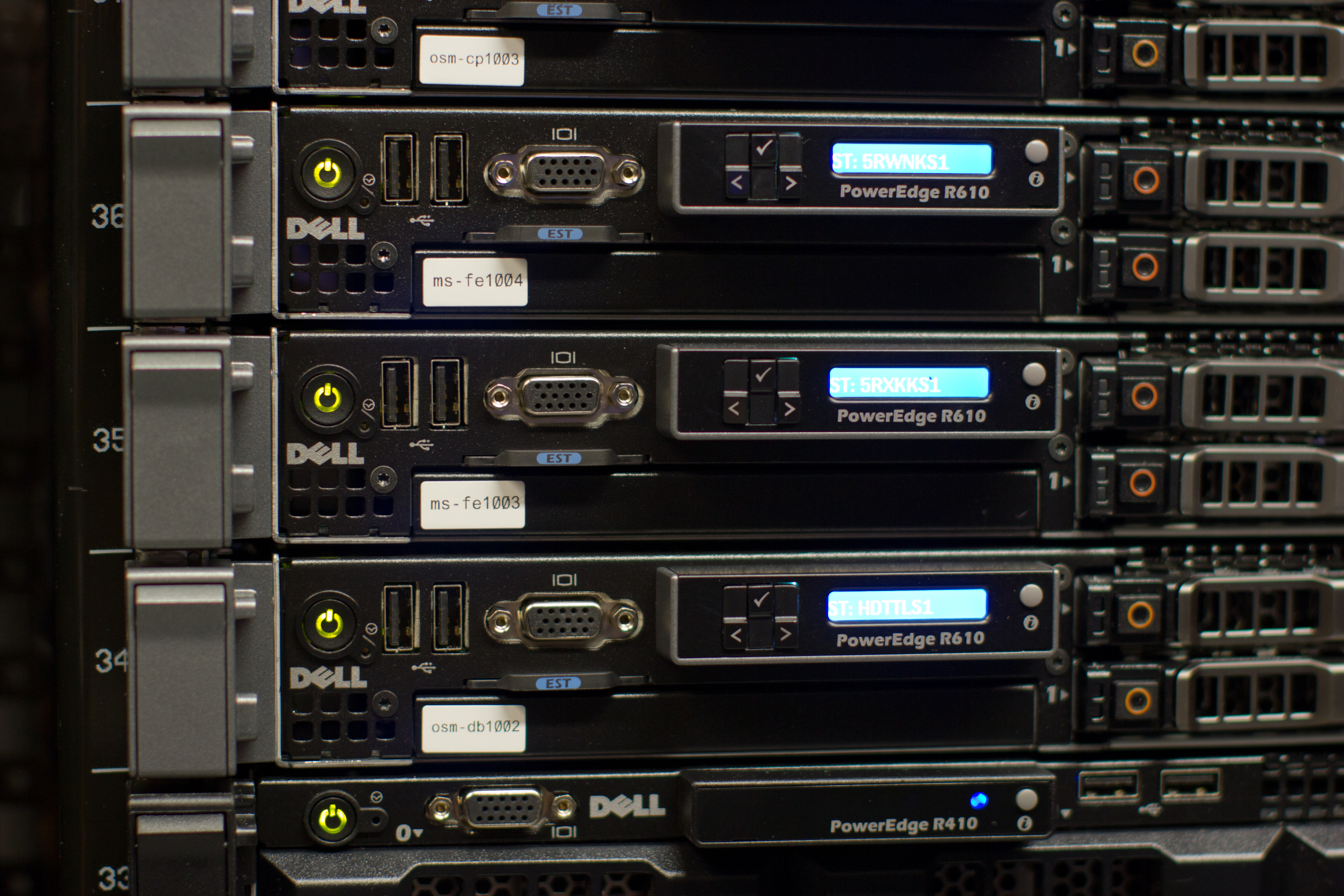
Key players driving the edge server revolution include major cloud providers like AWS with its AWS Outposts and AWS Wavelength services, Microsoft Azure with Azure IoT Edge, and Google Cloud Platform with Google Distributed Cloud. Telecommunications companies such as Verizon and AT&T are crucial partners, providing the network infrastructure for edge deployments. Hardware manufacturers like Dell Technologies (with its PowerEdge server line), HPE, and IBM are developing specialized edge hardware. Software providers like Red Hat are essential for managing edge environments with solutions like Red Hat OpenShift.
🌍 Cultural Impact & Influence
Edge servers are fundamentally reshaping how we interact with digital services, enabling new classes of applications that were previously impossible due to latency constraints. They are the invisible infrastructure powering everything from smart cities and connected factories to immersive gaming experiences and real-time video analytics. The shift towards edge processing also influences data governance and privacy discussions, as more sensitive data can be processed and anonymized locally. Culturally, it signifies a move towards more responsive, intelligent, and ubiquitous computing, where processing power is embedded directly into the fabric of our physical environment, blurring the lines between the digital and physical worlds.
⚡ Current State & Latest Developments
The current landscape of edge servers is characterized by rapid innovation and intense competition. Cloud providers are aggressively expanding their edge portfolios, offering integrated hardware, software, and networking solutions. The development of specialized edge hardware, designed for rugged environments and lower power consumption, is accelerating. Furthermore, the integration of AI and machine learning at the edge (Edge AI) is a major trend, enabling sophisticated analytics and decision-making directly on devices. Companies are increasingly deploying private 5G networks, which are intrinsically linked to edge computing strategies, allowing for dedicated, low-latency connectivity for edge applications. The emergence of edge data centers, smaller and more numerous than traditional hyperscale facilities, is also a significant development in 2024-2025.
🤔 Controversies & Debates
A significant debate surrounds the true definition and scope of 'edge computing.' Critics argue that the term is often used as a marketing buzzword, blurring the lines between traditional distributed computing, CDNs, and genuine edge deployments. Another controversy involves data security and privacy; while edge processing can enhance privacy by keeping data local, the increased number of distributed endpoints also creates a larger attack surface. The management and orchestration of a vast, heterogeneous network of edge devices present substantial operational challenges, leading to debates about standardization and interoperability. Furthermore, the environmental impact of deploying potentially billions of new computing devices globally is a growing concern.
🔮 Future Outlook & Predictions
The future of edge servers points towards even greater decentralization and intelligence. Expect to see a proliferation of specialized edge devices, from smart cameras performing real-time object detection to autonomous vehicles making split-second decisions. The integration of edge computing with 6G networks and advanced AI will unlock new possibilities in areas like holographic communication and hyper-personalized experiences. The concept of the 'far edge,' extending computing to the very devices themselves (e.g., smartphones, wearables), will become more prevalent. This trend will likely lead to a more dynamic and responsive digital ecosystem, where processing power is dynamically allocated based on real-time needs, potentially creating new economic models around edge resource sharing and optimization.
💡 Practical Applications
Edge servers have a vast array of practical applications across numerous industries. In manufacturing, they enable real-time monitoring and control of industrial processes, predictive maintenance, and robotic automation through Industrial IoT (IIoT). For retail, edge servers power in-store analytics, personalized customer experiences, and inventory management. In healthcare, they facilitate remote patient monitoring, real-time analysis of medical imaging, and faster emergency response systems. The automotive sector relies on edge computing for autonomous driving systems, vehicle-to-everything (V2X) communication, and in-car infotainment. Media and entertainment leverage edge for low-latency streaming, augmented reality (AR), and virtual reality (VR) experiences, while telecommunications use them to enhance network performance and deliver new services.
Key Facts
- Category
- technology
- Type
- topic