
Contents
- 🎧 What is Double Tracking?
- 🎶 The Sonic Sweet Spot: Why Double Track?
- 💡 A Brief History: From Tape to Digital
- 🎚️ Technical Execution: How It's Done
- 🎛️ Creative Applications: Beyond the Obvious
- ⚖️ Double Tracking vs. Other Techniques
- ⚠️ Potential Pitfalls & How to Avoid Them
- 🚀 The Future of Doubling
- Frequently Asked Questions
- Related Topics
Overview
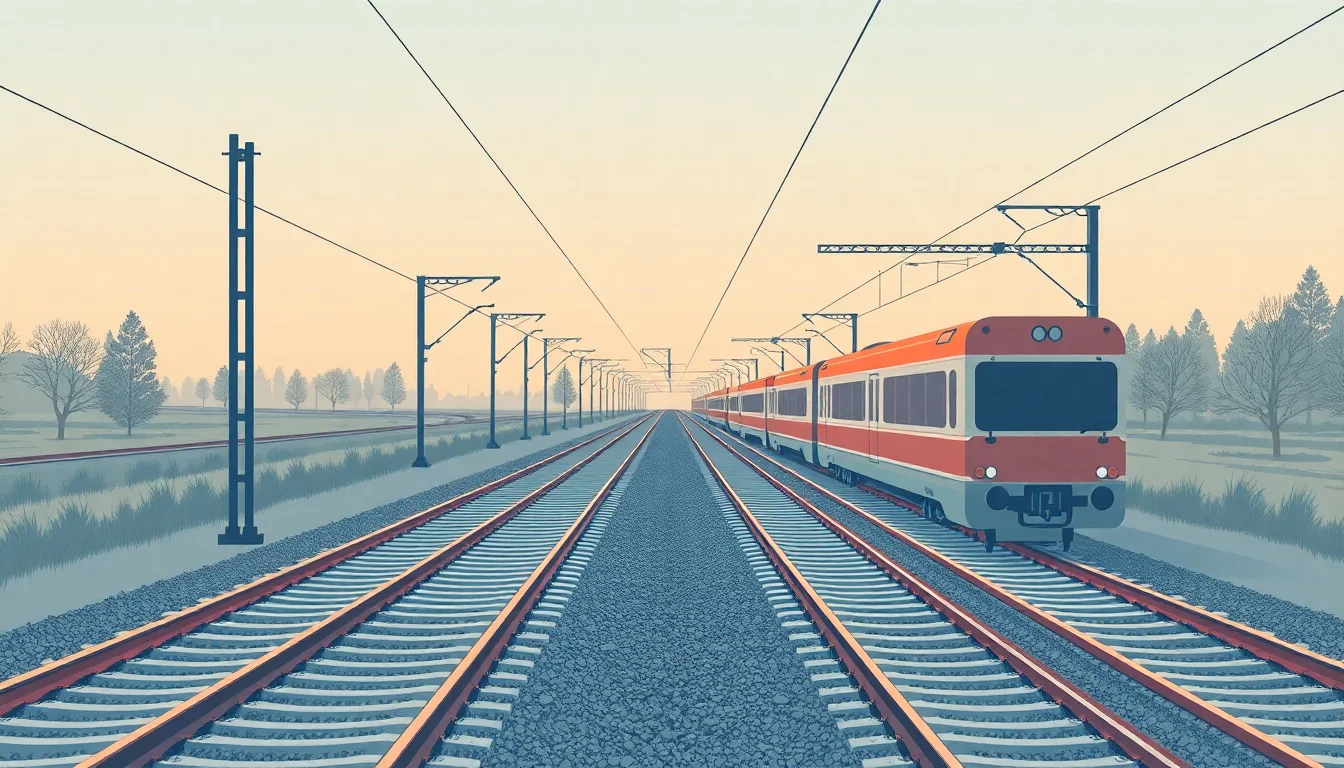
Double tracking refers to the practice of laying two parallel tracks for trains to run in both directions, enhancing capacity and efficiency on busy rail lines. Originating in the mid-19th century, this method has been a focal point of debate among urban planners, engineers, and environmentalists. Proponents argue that it significantly reduces travel times and increases freight capacity, while critics highlight the environmental impact and the potential for urban sprawl. As rail networks worldwide face increased demand, the future of double tracking remains contentious, with stakeholders weighing economic benefits against ecological costs.
🎧 What is Double Tracking?
Double tracking is an audio recording technique where a performer records a second take of the same part over their initial performance. The goal isn't to create harmony or a new melodic line, but to thicken and enrich the original sound. Think of it as a sonic reinforcement, making a single voice or instrument sound more substantial and present. This is distinct from simply layering multiple different instruments; it's about amplifying the impact of a single element by duplicating it. The effect is most pronounced when the two takes are nearly identical, yet possess subtle, human variations that create a natural chorus-like texture.
🎶 The Sonic Sweet Spot: Why Double Track?
The primary allure of double tracking lies in its ability to imbue a performance with a sense of power and presence that a single take often lacks. A lead vocal, for instance, can gain an anthemic quality, cutting through a dense mix with newfound authority. Similarly, a guitar riff can feel more commanding, or a synth line can achieve a richer, more enveloping character. This technique is particularly effective in genres that thrive on a larger-than-life sound, such as rock, pop, and electronic music, where sonic impact is paramount. It’s a fundamental tool for achieving a polished, professional sound that resonates with listeners.
💡 A Brief History: From Tape to Digital
The roots of double tracking trace back to the early days of magnetic tape recording. Musicians and engineers discovered that by carefully re-recording over an existing track, they could achieve a fuller sound. This early form of overdubbing was a revelation, allowing for greater sonic manipulation than was previously possible. The advent of multitrack recording further refined the process, enabling more precise control over the placement and balance of doubled tracks. In the digital age, software plugins and digital audio workstations (DAWs) have made double tracking more accessible and versatile than ever before, allowing for sophisticated manipulation of timing and pitch.
🎚️ Technical Execution: How It's Done
Technically, double tracking involves recording a second performance of the same musical part. The key is to capture a take that is as close as possible to the original, but with the natural variations inherent in a live performance. Once recorded, these two tracks can be treated individually. A common technique to enhance the stereo image is to pan one track hard left and the other hard right, creating a wide, immersive sound. Subtle adjustments to EQ and compression on each track can further differentiate them, adding depth without sacrificing the core doubled effect. Some engineers even introduce minute timing or pitch variations to simulate the natural imperfections of human performance.
🎛️ Creative Applications: Beyond the Obvious
While most commonly associated with lead vocals, double tracking has a surprisingly broad range of creative applications. Guitarists might double their solos to give them more bite and sustain, or double their rhythm tracks for a wall-of-sound effect. Basslines can be doubled to add weight and impact, especially in genres like funk or hip-hop. Even percussive elements, like a snare drum or a shaker, can be doubled to create a more driving rhythmic pulse. The subtle differences between takes can also be exploited for artistic effect, adding a unique character to a track that might not be achievable through other means.
⚖️ Double Tracking vs. Other Techniques
Double tracking is often confused with other layering techniques, but its purpose is distinct. Unlike chorus effects, which use electronic processing to create artificial pitch and time variations, double tracking relies on the natural imperfections of two human performances. It's also different from multi-tracking, where entirely different instrumental or vocal parts are layered. While a harmonizer creates new pitches based on an existing melody, double tracking simply duplicates the original pitch. The goal is always to enhance the existing sound, not to create new sonic elements or artificial textures.
⚠️ Potential Pitfalls & How to Avoid Them
Despite its benefits, double tracking isn't without its challenges. If the two takes are too dissimilar in timing or pitch, the result can sound messy and unprofessional, rather than full and rich. Overdoing it can also lead to a loss of clarity, where the individual elements become indistinct. Another pitfall is creating a sound that is too perfect; sometimes, a bit of natural variation is what gives a doubled track its character. Careful listening and judicious use of panning and subtle processing are crucial to avoid these common mistakes and achieve the desired sonic impact.
🚀 The Future of Doubling
The future of double tracking is intrinsically linked to advancements in artificial intelligence and digital signal processing. While the human element of performance remains central, AI-powered tools are emerging that can analyze a performance and generate highly convincing doubled takes with precise control over timing and pitch variations. This could democratize the technique, making it accessible to a wider range of musicians. However, the debate will likely continue: will these digital enhancements ever truly capture the organic magic of two distinct human performances, or will they lead to an era of sterile, perfectly doubled sounds?
Key Facts
- Year
- 1840
- Origin
- United Kingdom
- Category
- Transportation Infrastructure
- Type
- Concept
Frequently Asked Questions
What's the difference between double tracking and a chorus effect?
A chorus effect uses electronic processing to create artificial, often randomized, pitch and time variations on a signal, mimicking multiple voices. Double tracking, on the other hand, relies on the natural, subtle differences between two separate human performances of the same part. The human element in double tracking provides a more organic and often richer texture compared to the synthesized sound of a chorus effect.
Can I double track any instrument?
Yes, you can double track virtually any instrument or vocal. While it's most common for lead vocals and guitars, it can be applied to basslines, synths, drums, and even orchestral instruments. The key is that the instrument or voice is capable of being recorded multiple times with a similar performance quality. The goal is always to enhance the presence and impact of the original sound.
How do I ensure my double tracked parts sound good together?
The most crucial aspect is capturing two takes that are very close in timing and pitch. Slight, natural variations are good, but significant discrepancies will make the sound muddy. Listen critically to both tracks together, and consider panning them hard left and right to create a wide stereo image. Subtle EQ adjustments on each track can also help them sit better in the mix without losing the doubled effect.
Is double tracking the same as layering?
Not exactly. Double tracking specifically refers to recording a second, nearly identical take of the same part to thicken its sound. Layering is a broader term that can include doubling, but also involves adding entirely different instrumental or vocal parts to create a more complex arrangement. So, while double tracking is a form of layering, not all layering is double tracking.
What's the ideal panning setup for double tracked vocals?
The most common and effective setup for double tracked vocals is to pan one take hard left (100% L) and the other take hard right (100% R). This creates a wide, immersive stereo field that makes the vocals feel much larger and more present. Some engineers might opt for slightly less extreme panning, like 70% L and 70% R, to maintain a bit more center focus, but hard panning is the classic approach.
Can I use a vocal doubling plugin instead of recording two takes?
Yes, vocal doubling plugins are widely available and can simulate the effect of double tracking. These plugins often use algorithms to create slight pitch and time variations. While they can be convenient and effective, many engineers and musicians find that the subtle imperfections and organic nature of two actual human performances offer a superior, more natural-sounding result. Plugins are great for quick fixes or specific creative effects, but real doubling often has a distinct character.