
Contents
Overview
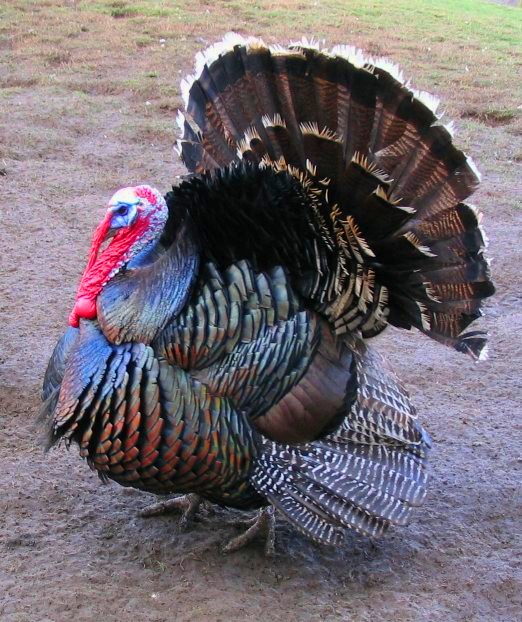
The story of the domestic turkey begins not with a single event, but with a complex, multi-stage process of domestication. Archaeological evidence suggests the initial domestication of the wild turkey occurred in central Mesoamerica. Early turkeys were likely valued for their feathers, used in elaborate headdresses and ceremonial attire by cultures like the Aztecs and Maya, and for their meat. A second, independent domestication event may have occurred in the southwestern United States. However, the turkeys that form the basis of most modern domestic breeds were those domesticated in central Mexico, which were later introduced to Europe by Spanish explorers. This European lineage, through further selective breeding by farmers in Spain, France, and England, eventually gave rise to the diverse breeds seen today, such as the Broad Breasted White and the Bourbon Red.
⚙️ How It Works
The domestic turkey's biology is a product of intense artificial selection, diverging significantly from its wild ancestor. Domestic breeds are often heavier, with broader breasts, making them more efficient meat producers but less agile flyers. Their reproductive cycles are also managed; hens lay eggs more frequently under controlled conditions, and artificial insemination is common in commercial operations to maximize fertility rates. The characteristic 'gobble' sound is primarily made by males (toms), while females (hens) emit a more subdued 'cluck' or 'yell'. The development of specialized breeds, like the Broad Breasted White, has focused on rapid growth and high meat yield, often at the expense of natural behaviors like brooding or foraging. This engineered biology is central to the turkey's role in industrial agriculture.
📊 Key Facts & Numbers
Globally, the domestic turkey is a significant agricultural commodity. Despite its popularity, turkey consumption varies widely by region; it is most prevalent in North America and parts of Europe, with lower consumption in Asia and Africa. The cost of turkey meat, driven by efficient industrial farming, is typically lower per pound than beef or pork.
👥 Key People & Organizations
While no single individual is credited with the 'invention' of the domestic turkey, several figures and organizations have played crucial roles in its development and popularization. Early Mesoamerican peoples, whose selective breeding practices initiated domestication, are foundational. Spanish explorers were instrumental in its introduction to Europe in the early 16th century. In the United States, agricultural scientists and breeders have continuously refined turkey genetics. Organizations like the National Turkey Federation advocate for the industry and promote turkey consumption. The U.S. Department of Agriculture (USDA) also plays a role through research and regulatory oversight of poultry farming. Breeders such as William Perdue (though more associated with chickens) represent the broader trend of family-run businesses that grew into major poultry corporations.
🌍 Cultural Impact & Influence
The domestic turkey holds a prominent, almost sacred, place in North American culture, particularly in the United States and Canada, where it is the traditional centerpiece of Thanksgiving feasts. This association dates back to the 19th century, popularized by writers like Sarah Josepha Hale, who campaigned for Thanksgiving to become a national holiday. Its image is also linked to the American West and frontier life, though this is often romanticized. Beyond North America, turkeys are consumed globally, but without the same deep cultural or historical resonance. The bird's distinctive appearance and vocalizations have also made it a subject in art, literature, and even as a symbol of awkwardness or foolishness in some contexts, famously satirized by John James Audubon in his early illustrations of American wildlife.
⚡ Current State & Latest Developments
The domestic turkey industry is currently characterized by large-scale, integrated operations focused on efficiency and cost reduction. Breeds like the Broad Breasted White dominate commercial production due to their rapid growth rates and high meat yield. There's a growing interest in heritage breeds, such as the Bronze, Naragansett, and Spanish Black, driven by consumer demand for variety, perceived superior flavor, and a desire for more traditional farming practices. These heritage breeds are slower-growing and less prolific but are favored by niche markets and chefs. Advances in veterinary science and biosecurity measures continue to be implemented to manage disease outbreaks in dense poultry populations, a critical concern for the industry's stability.
🤔 Controversies & Debates
The industrialization of turkey farming is not without its critics. Concerns are frequently raised about animal welfare, particularly regarding the confinement of turkeys in large barns, the prevalence of artificial insemination, and the health issues associated with rapid growth in breeds like the Broad Breasted White. The environmental impact of large-scale poultry operations, including waste management and water usage, is another area of debate. Furthermore, the genetic uniformity of commercial flocks raises questions about resilience to disease. While heritage breeds offer an alternative, their slower growth and higher cost limit their widespread adoption, creating a tension between efficiency and ethical/sustainable farming practices. The debate often pits the economic benefits of mass production against concerns for animal well-being and environmental stewardship.
🔮 Future Outlook & Predictions
The future of domestic turkey farming is likely to be shaped by a push-and-pull between industrial efficiency and consumer demand for more sustainable and ethically produced food. We may see continued dominance of the Broad Breasted White in mainstream markets due to its cost-effectiveness, but with incremental improvements in welfare standards. Simultaneously, the market for heritage and specialty breeds is expected to grow, catering to consumers willing to pay a premium for perceived quality and ethical sourcing. Advances in genetic research could lead to breeds that balance rapid growth with improved health and natural behaviors. Furthermore, innovations in alternative protein sources might eventually challenge the dominance of traditional poultry, though turkey's established cultural significance, particularly around holidays, provides a strong buffer against immediate disruption. The industry will also likely face increasing regulatory scrutiny regarding environmental impact and animal welfare.
💡 Practical Applications
The primary application of the domestic turkey is as a source of lean protein for human consumption. Turkey meat is prized for its high protein content and lower fat levels compared to other red meats, making it a popular choice for health-conscious consumers. It is consumed in various forms: whole roasted birds for holidays, deli slices for sandwiches, ground turkey for burgers and meatballs, and processed products like turkey sausages and jerky. Beyond food, turkey feathers have historically been used for fletching arrows, insulation, and decorative purposes. In some agricultural contexts, turkeys are also raised for manure, which is a valuable fertilizer. The scientific study of turkey biology and genetics also contributes to broader advancements in avian science and animal husbandry.
Key Facts
- Category
- nature
- Type
- topic