
Contents
Overview
The roots of DIY electronics stretch back to the early days of radio and amateur experimentation. By the early 20th century, enthusiasts known as 'hams' were building their own wireless telegraphy equipment, often from scavenged parts. The post-World War II era saw a surge in consumer electronics, making components more available and inspiring a new generation of hobbyists. The advent of the transistor in the late 1940s and the integrated circuit (IC) in the late 1950s, particularly the microprocessor in the early 1970s, democratized complexity. This paved the way for the personal computer revolution, which in turn fueled the modern DIY electronics movement. Platforms like Arduino, launched in 2005 by Massimo Banzi and others, and Raspberry Pi, introduced in 2012 by the Raspberry Pi Foundation, provided accessible, programmable hardware, transforming the hobby from soldering discrete components to coding and integrating sophisticated systems.
⚙️ How It Works
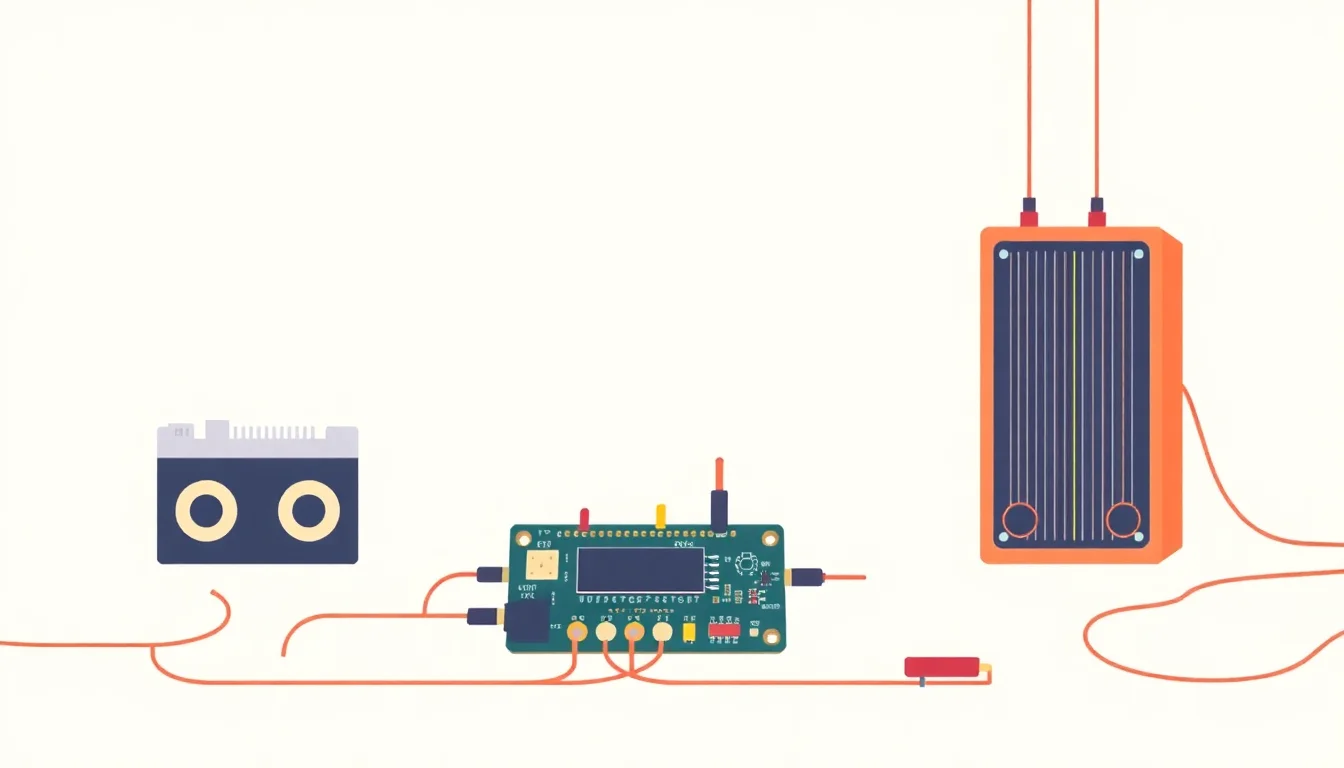
At its heart, DIY electronics involves understanding fundamental principles of electricity and circuit design. Projects typically begin with a concept, followed by schematic design using software like Eagle CAD or KiCad. Components are then selected – resistors, capacitors, transistors, integrated circuits, and microcontrollers – and physically connected. This connection can be achieved through soldering onto perfboard or protoboard, using breadboards for temporary prototyping, or designing and fabricating custom printed circuit boards (PCBs). For projects involving computation, microcontrollers like the Arduino Uno or ESP32 are programmed using languages like C++ or Python, allowing them to read sensor data, process information, and control actuators. The process often involves iterative testing and debugging, using tools such as a multimeter to measure voltage and current, and an oscilloscope to visualize signal waveforms.
📊 Key Facts & Numbers
The global market for electronic components, the lifeblood of DIY electronics, is projected to reach over $2.7 trillion by 2027, according to Statista. The Arduino platform alone has sold an estimated 15 million units since its inception. Similarly, the Raspberry Pi has seen over 100 million units sold as of 2023. Online marketplaces like Adafruit and SparkFun report millions of unique visitors annually, highlighting the scale of the hobbyist community. Furthermore, the global maker culture movement, which heavily encompasses DIY electronics, is estimated to involve tens of millions of individuals worldwide. The cost of entry for basic projects can be as low as $20-$50 for a starter kit, making it an accessible pursuit for a broad demographic.
👥 Key People & Organizations
Key figures in the modern DIY electronics landscape include Massimo Banzi, co-founder of Arduino, who championed accessible hardware for education and creativity. Eben Upton, founder of the Raspberry Pi Foundation, similarly democratized computing with the low-cost single-board computer. Companies like Adafruit, founded by Limor Fried (also known as Lady Ada), and SparkFun, founded by Nathan Seidle, have become crucial hubs, providing components, tutorials, and a sense of community. Organizations such as littleBits (though now defunct, its impact on modular electronics education was significant) and numerous university labs and makerspaces globally foster learning and innovation. The open-source hardware movement, championed by initiatives like Open Source Hardware Association (OSHWA), is critical to the collaborative spirit of DIY electronics.
🌍 Cultural Impact & Influence
DIY electronics has profoundly influenced education, shifting pedagogical approaches towards hands-on learning and STEM engagement. It has fueled the maker culture movement, empowering individuals to become creators rather than just consumers of technology. This has led to the proliferation of makerspaces and fab labs in schools, libraries, and community centers worldwide. The accessibility of prototyping tools has also accelerated innovation in various fields, from robotics and IoT to art installations and scientific research. Furthermore, the DIY ethos has fostered a culture of repair and modification, challenging the planned obsolescence often seen in consumer electronics. The open-source nature of many DIY projects, like Arduino and Raspberry Pi, has created vast online communities where knowledge and designs are freely shared, accelerating collective progress.
⚡ Current State & Latest Developments
The current landscape of DIY electronics is dynamic, driven by the continuous miniaturization and increasing power of microcontrollers and sensors. The rise of Internet of Things (IoT) has opened up vast new avenues for hobbyists, enabling the creation of smart home devices, environmental monitors, and connected gadgets. Artificial intelligence (AI) and machine learning (ML) are also becoming more accessible to DIYers, with platforms like TensorFlow Lite allowing ML models to run on resource-constrained devices like the Raspberry Pi Pico. The proliferation of affordable 3D printing technology has further integrated digital fabrication with electronics, allowing for custom enclosures and mechanical components. Online learning platforms and video tutorials on sites like YouTube and Instructables continue to lower the barrier to entry, making complex projects achievable for beginners.
🤔 Controversies & Debates
One persistent debate in DIY electronics revolves around the true accessibility and sustainability of the components. While platforms like Arduino and Raspberry Pi are lauded for their openness, the manufacturing of PCBs and electronic components often relies on complex global supply chains with significant environmental footprints. Critics question whether the 'do-it-yourself' ethos truly counteracts the disposable nature of consumer electronics, or if it merely shifts the waste burden. Another point of contention is the perceived complexity of advanced topics like Field-Programmable Gate Arrays (FPGAs) or high-frequency RF design, which remain challenging for many hobbyists. Furthermore, the security implications of DIY IoT devices, which can be vulnerable to hacking if not properly secured, are a growing concern.
🔮 Future Outlook & Predictions
The future of DIY electronics is likely to be characterized by even greater integration of AI and ML capabilities into small, affordable devices. We can expect more powerful, low-power microcontrollers and specialized AI chips designed for edge computing, enabling sophisticated on-device processing. The convergence of electronics with biotechnology and advanced materials could lead to novel bio-integrated devices and smart textiles. Furthermore, the principles of modularity, pioneered by companies like littleBits, may see a resurgence in more sophisticated forms, allowing for easier customization and upgrades. As computational power continues to shrink and become more affordable, the line between consumer electronics and DIY projects will likely blur further, with more individuals opting to build or heavily customize their own devices.
💡 Practical Applications
DIY electronics finds application across an astonishing range of fields. In education, it's a cornerstone for teaching STEM principles, engaging students with tangible projects. For hobbyists, it enables the creation of custom gadgets, home automation systems, robots, musical instruments, and art installations. In rapid prototyping, it allows engineers and entrepreneurs to quickly test new product ideas before committing to mass production. Researchers utilize DIY electronics for custom scientific instruments and experimental setups, often at a fraction of the cost of commercial solutions. Even in repair, understanding basic electronics allows individuals to fix appliances, computers, and other devices, extending their lifespan and reducing waste. The accessibility
Key Facts
- Category
- technology
- Type
- topic