
Contents
- 🎵 Origins & History
- ⚙️ How It Works
- 📊 Key Facts & Numbers
- 👥 Key People & Organizations
- 🌍 Cultural Impact & Influence
- ⚡ Current State & Latest Developments
- 🤔 Controversies & Debates
- 🔮 Future Outlook & Predictions
- 💡 Practical Applications
- 📚 Related Topics & Deeper Reading
- Frequently Asked Questions
- References
- Related Topics
Overview
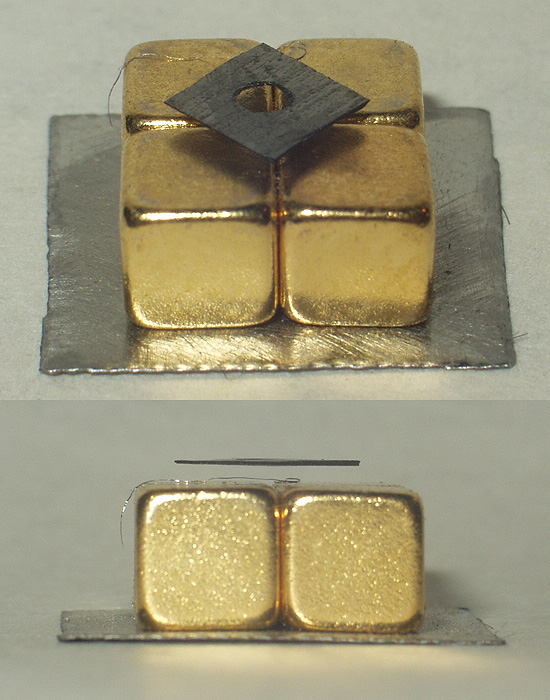
Diamagnetism is a quantum mechanical effect that causes materials to be repelled by a magnetic field, resulting in an induced magnetic field in the opposite direction. This phenomenon occurs in all materials, but is often overshadowed by stronger magnetic forces in paramagnetic and ferromagnetic substances. The study of diamagnetism has led to significant advancements in our understanding of materials science and has numerous applications in fields such as superconductivity and magnetic resonance imaging. With a rich history dating back to the discovery by Anton Brugmans in 1778, diamagnetism continues to fascinate scientists and engineers, including Niels Bohr and Lev Landau, who have contributed to our understanding of this complex phenomenon. Today, researchers at institutions like Stanford University and MIT are exploring new ways to harness the power of diamagnetism, including the development of superconducting materials and quantum computing applications. As our understanding of diamagnetism continues to evolve, we can expect to see significant breakthroughs in fields like energy storage and medical imaging.
🎵 Origins & History
Diamagnetism was first discovered by Anton Brugmans in 1778, who observed that bismuth and antimony were repelled by a magnetic field. This discovery sparked a wave of research into the phenomenon, with scientists like Michael Faraday and James Clerk Maxwell contributing to our understanding of diamagnetism. The development of quantum mechanics in the 20th century provided a theoretical framework for understanding diamagnetism, with Niels Bohr and Lev Landau making significant contributions to the field.
⚙️ How It Works
Diamagnetism is a quantum mechanical effect that occurs in all materials, resulting in an induced magnetic field in the opposite direction of an applied magnetic field. This causes a repulsive force, which can be detected using sensitive laboratory instruments. The magnetic permeability of diamagnetic materials is less than the permeability of vacuum, μ0. In most materials, diamagnetism is a weak effect, but in superconductors, it is a strong effect that entirely expels any magnetic field from the interior, known as the Meissner effect. Researchers at institutions like Harvard University and Caltech are working to develop new materials with unique diamagnetic properties, including graphene and nanomaterials.
📊 Key Facts & Numbers
The key facts about diamagnetism include: the magnetic permeability of diamagnetic materials is less than μ0, with a typical value of 0.99999 for copper and 0.99998 for silver. The diamagnetic force is proportional to the strength of the applied magnetic field and the density of the material. The effect is temperature-independent, but can be affected by the presence of impurities or defects in the material. For example, the diamagnetic properties of diamond are affected by the presence of nitrogen impurities. Diamagnetism has numerous applications in fields such as magnetic resonance imaging and nuclear magnetic resonance, with companies like GE Healthcare and Siemens developing new technologies that rely on diamagnetism.
👥 Key People & Organizations
The key people and organizations involved in the study of diamagnetism include Anton Brugmans, who first discovered the phenomenon, and Niels Bohr and Lev Landau, who made significant contributions to our understanding of the effect. Institutions like Stanford University and MIT are also major players in the field, with researchers like Andrew Strominger and Lisa Randall working on new applications of diamagnetism. Companies like IBM and Google are also investing in research and development of diamagnetic materials and technologies.
🌍 Cultural Impact & Influence
Diamagnetism has had a significant cultural impact, with applications in fields such as medical imaging and energy storage. The development of superconducting materials has also led to advancements in fields such as quantum computing and high energy physics. The study of diamagnetism has also led to a greater understanding of the behavior of materials at the atomic and subatomic level, with implications for fields such as materials science and nanotechnology. For example, the development of diamagnetic materials has led to the creation of new magnetic sensors and magnetic actuators.
⚡ Current State & Latest Developments
The current state of diamagnetism research is focused on developing new materials and technologies that can harness the power of diamagnetism. Researchers are working on developing new superconducting materials and diamagnetic materials with unique properties, such as graphene and nanomaterials. The development of new applications, such as quantum computing and medical imaging, is also a major area of research. Companies like Microsoft and Amazon are also investing in research and development of diamagnetic technologies, including cloud computing and artificial intelligence.
🤔 Controversies & Debates
There are several controversies and debates surrounding diamagnetism, including the interpretation of the Meissner effect and the role of diamagnetism in superconductivity. Some researchers argue that the Meissner effect is a result of the diamagnetic properties of the material, while others argue that it is a result of the superconducting properties. The debate surrounding the role of diamagnetism in superconductivity is also ongoing, with some researchers arguing that it is a key factor in the development of high temperature superconductors. For example, researchers at University of California are working on developing new superconducting materials that exhibit both diamagnetic and superconducting properties.
🔮 Future Outlook & Predictions
The future outlook for diamagnetism is promising, with potential applications in fields such as quantum computing and medical imaging. The development of new superconducting materials and diamagnetic materials is expected to lead to significant advancements in these fields. The study of diamagnetism is also expected to lead to a greater understanding of the behavior of materials at the atomic and subatomic level, with implications for fields such as materials science and nanotechnology. For example, researchers at Massachusetts Institute of Technology are working on developing new diamagnetic materials for use in quantum computing applications.
💡 Practical Applications
The practical applications of diamagnetism include magnetic resonance imaging and nuclear magnetic resonance, which rely on the diamagnetic properties of materials to create detailed images of the body. The development of superconducting materials has also led to advancements in fields such as quantum computing and high energy physics. The study of diamagnetism has also led to a greater understanding of the behavior of materials at the atomic and subatomic level, with implications for fields such as materials science and nanotechnology. For example, the development of diamagnetic materials has led to the creation of new magnetic sensors and magnetic actuators.
Key Facts
- Year
- 1778
- Origin
- Europe
- Category
- science
- Type
- concept
Frequently Asked Questions
What is diamagnetism?
Diamagnetism is a quantum mechanical effect that causes materials to be repelled by a magnetic field, resulting in an induced magnetic field in the opposite direction. This phenomenon occurs in all materials, but is often overshadowed by stronger magnetic forces in paramagnetic and ferromagnetic substances. The study of diamagnetism has led to significant advancements in our understanding of materials science and has numerous applications in fields such as superconductivity and magnetic resonance imaging.
What are the key facts about diamagnetism?
The key facts about diamagnetism include: the magnetic permeability of diamagnetic materials is less than μ0, with a typical value of 0.99999 for copper and 0.99998 for silver. The diamagnetic force is proportional to the strength of the applied magnetic field and the density of the material. The effect is temperature-independent, but can be affected by the presence of impurities or defects in the material. For example, the diamagnetic properties of diamond are affected by the presence of nitrogen impurities.
What are the applications of diamagnetism?
The applications of diamagnetism include magnetic resonance imaging and nuclear magnetic resonance, which rely on the diamagnetic properties of materials to create detailed images of the body. The development of superconducting materials has also led to advancements in fields such as quantum computing and high energy physics.
What is the current state of diamagnetism research?
The current state of diamagnetism research is focused on developing new materials and technologies that can harness the power of diamagnetism. Researchers are working on developing new superconducting materials and diamagnetic materials with unique properties, such as graphene and nanomaterials. The development of new applications, such as quantum computing and medical imaging, is also a major area of research.
What are the controversies and debates surrounding diamagnetism?
There are several controversies and debates surrounding diamagnetism, including the interpretation of the Meissner effect and the role of diamagnetism in superconductivity. Some researchers argue that the Meissner effect is a result of the diamagnetic properties of the material, while others argue that it is a result of the superconducting properties. The debate surrounding the role of diamagnetism in superconductivity is also ongoing, with some researchers arguing that it is a key factor in the development of high temperature superconductors.
What is the future outlook for diamagnetism?
The future outlook for diamagnetism is promising, with potential applications in fields such as quantum computing and medical imaging. The development of new superconducting materials and diamagnetic materials is expected to lead to significant advancements in these fields. The study of diamagnetism is also expected to lead to a greater understanding of the behavior of materials at the atomic and subatomic level, with implications for fields such as materials science and nanotechnology.
What are the practical applications of diamagnetism?
The practical applications of diamagnetism include magnetic resonance imaging and nuclear magnetic resonance, which rely on the diamagnetic properties of materials to create detailed images of the body. The development of superconducting materials has also led to advancements in fields such as quantum computing and high energy physics. The study of diamagnetism has also led to a greater understanding of the behavior of materials at the atomic and subatomic level, with implications for fields such as materials science and nanotechnology.