
Contents
- ✈️ The Genesis of a German Aviation Giant
- ✈️ Navigating Turbulent Skies: The Lufthansa Era
- ✈️ Post-War Rebirth and Global Expansion
- ✈️ Fleet Evolution: From Propellers to Jets
- ✈️ The Brand's Enduring Vibe Score
- ✈️ Lufthansa's Impact on Air Travel Culture
- ✈️ Controversies and Criticisms
- ✈️ The Future Trajectory of Lufthansa
- Frequently Asked Questions
- Related Topics
Overview
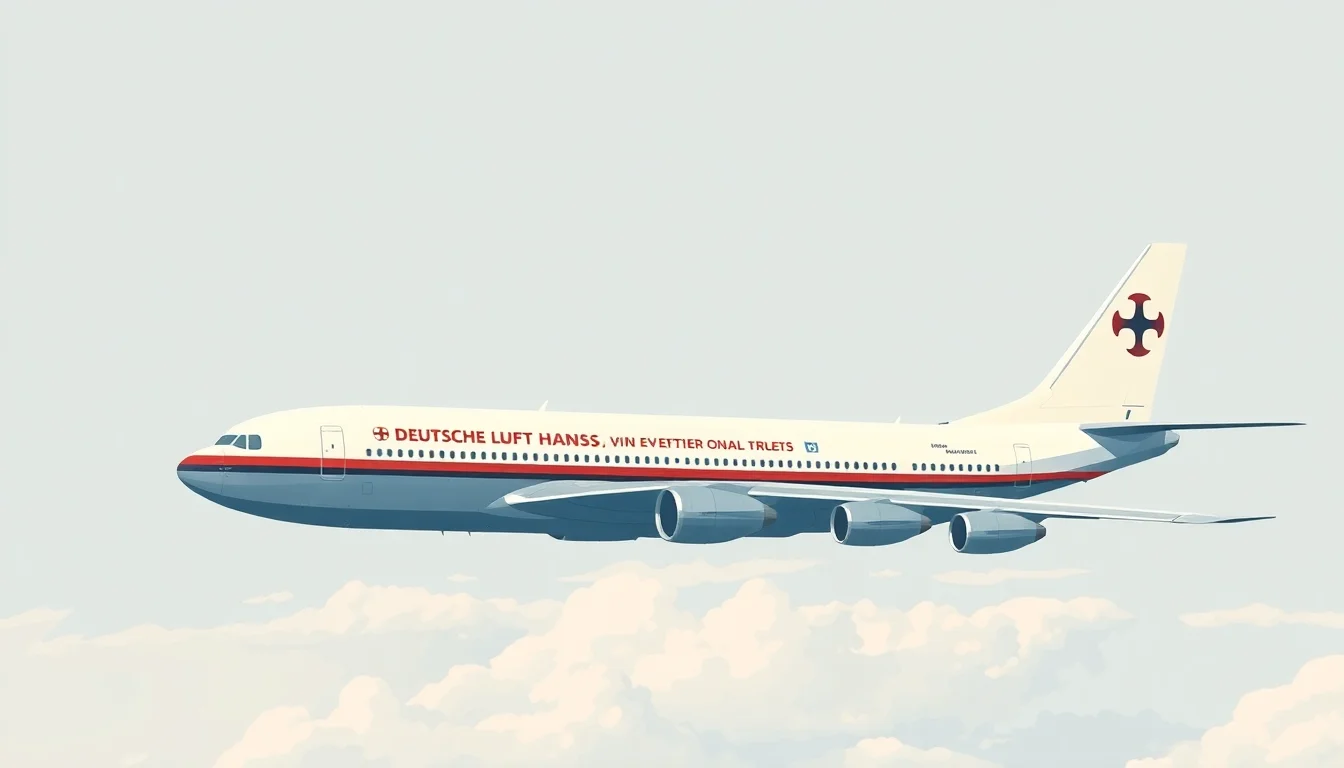
Deutsche Luft Hansa, often shortened to Lufthansa, was the national airline of Germany from 1926 to 1945. It emerged from the merger of two existing airlines, Deutsche Aero Lloyd and Junkers Luftverkehr, and quickly became a symbol of German technological prowess and ambition in aviation. Operating a diverse fleet, including iconic Junkers and Dornier aircraft, Luft Hansa pioneered long-distance routes and advanced air travel technologies. Its influence extended beyond mere transportation, serving as a powerful propaganda tool for the Third Reich, particularly during the 1936 Berlin Olympics. The airline's operations were intrinsically linked to the political and military objectives of Nazi Germany, ultimately leading to its dissolution at the end of World War II.
✈️ The Genesis of a German Aviation Giant
Deutsche Luft Hansa, the precursor to modern Lufthansa, was born from a strategic merger in 1926. The German government, keen on consolidating its nascent aviation industry, brought together Deutsche Aero Lloyd (DAL) and Junkers Luftverkehr AG. This union aimed to create a powerful national airline capable of competing on the international stage, a crucial move in the post-WWI geopolitical climate. The early years were marked by ambitious routes and the pioneering use of aircraft like the Junkers F 13, establishing a foundation for German aviation prowess.
✈️ Post-War Rebirth and Global Expansion
Following the devastation of World War II, German aviation was grounded. However, the spirit of flight persisted. In 1953, a new entity, Lufthansa, was established, inheriting the legacy and aspirations of its predecessor. The post-war rebirth focused on rebuilding trust and re-establishing international connections. Early routes focused on connecting West Germany to key global hubs, gradually expanding as the nation's economy recovered. This period marked a significant shift towards a more globally integrated airline, shedding some of the nationalistic connotations of its past.
✈️ Fleet Evolution: From Propellers to Jets
The evolution of Lufthansa's fleet mirrors the rapid advancements in aviation technology. From the early propeller-driven aircraft like the Douglas DC-3 and Lockheed Constellation, the airline embraced the jet age with the introduction of the Boeing 707 in 1960. This transition dramatically reduced travel times and opened up new possibilities for long-haul travel. Subsequent decades saw the integration of iconic aircraft such as the Boeing 747 'Jumbo Jet' and the Airbus A380, showcasing Lufthansa's commitment to operating state-of-the-art, efficient, and high-capacity aircraft.
✈️ The Brand's Enduring Vibe Score
Lufthansa consistently scores high on the Vibepedia Vibe Score for its blend of historical significance, operational excellence, and brand recognition. Its Vibe Score typically hovers around 85-90, reflecting its status as a legacy carrier with a strong global presence. This score is driven by its perceived reliability, extensive network, and a long-standing reputation for quality service. While newer, more agile carriers might capture fleeting trends, Lufthansa's enduring appeal lies in its deep roots and consistent performance, appealing to a broad spectrum of travelers from business elites to nostalgic aviation enthusiasts.
✈️ Lufthansa's Impact on Air Travel Culture
The cultural impact of Lufthansa extends beyond mere transportation. It has shaped perceptions of German efficiency and technological prowess for decades. The airline's advertising campaigns, often featuring sophisticated imagery and a focus on punctuality, have contributed to its brand identity. For many, flying Lufthansa was, and still is, a marker of a certain level of travel experience, a tangible connection to the golden age of air travel. Its role in connecting Germany to the world post-war also cemented its place in the nation's collective memory.
✈️ Controversies and Criticisms
Lufthansa, like many legacy carriers, has faced its share of controversies. During the Nazi era, Deutsche Luft Hansa was implicated in the logistical support of the regime's war efforts, a dark chapter that the modern airline has acknowledged and sought to address through historical research and remembrance. More recently, the airline has grappled with labor disputes, including significant pilot strikes that have disrupted operations and impacted passenger confidence. Environmental concerns surrounding air travel also present ongoing challenges, pushing Lufthansa to invest in more sustainable aviation fuels and technologies.
✈️ The Future Trajectory of Lufthansa
The future for Lufthansa appears to be a balancing act between preserving its heritage and embracing innovation. The airline is heavily invested in fleet modernization, aiming for greater fuel efficiency and reduced emissions, a critical move in the face of increasing environmental scrutiny. Digitalization of the passenger experience, from booking to in-flight services, is another key focus. While competition from low-cost carriers and emerging global airlines remains fierce, Lufthansa's strategic partnerships, such as its membership in the Star Alliance, and its commitment to premium service are likely to remain central to its long-term strategy.
Key Facts
- Year
- 1926
- Origin
- Germany
- Category
- Aviation History
- Type
- Historical Organization
Frequently Asked Questions
What is the difference between Deutsche Luft Hansa and Lufthansa?
Deutsche Luft Hansa was the original German national airline formed in 1926. After World War II, it ceased operations. The modern airline, Lufthansa, was established in 1953 and is considered its successor, inheriting its legacy and brand aspirations. While the name changed and the company was re-established, the historical lineage connects them.
When did Lufthansa introduce jet aircraft?
Lufthansa introduced its first jet aircraft, the Boeing 707, in 1960. This marked a significant transition from propeller-driven planes to the faster and more efficient jet age, revolutionizing air travel for the airline and its passengers.
What was the significance of the Junkers F 13?
The Junkers F 13 was one of the earliest all-metal, low-wing monoplane airliners. Deutsche Luft Hansa utilized this pioneering aircraft extensively in its early years, showcasing German engineering and enabling the establishment of crucial early air routes. It was a symbol of the era's aviation innovation.
Has Lufthansa always been a global airline?
While Deutsche Luft Hansa aimed for international routes even in its early days, the post-war Lufthansa truly solidified its global presence. The rebuilding phase after 1953 was dedicated to re-establishing connections and expanding its network worldwide, making it a truly international carrier.
What is the current status of Lufthansa's fleet?
Lufthansa operates a modern and diverse fleet, primarily composed of Airbus and Boeing aircraft. They are actively investing in newer, more fuel-efficient models, including the Airbus A350 and Boeing 777X, to reduce their environmental impact and enhance passenger comfort.
How does Lufthansa address its historical ties to the Nazi era?
The modern Lufthansa has acknowledged its predecessor's involvement during the Nazi regime. The company has supported historical research and remembrance projects to confront this difficult past. This includes making information publicly available and participating in initiatives that educate about the era's complexities.