
Contents
Overview
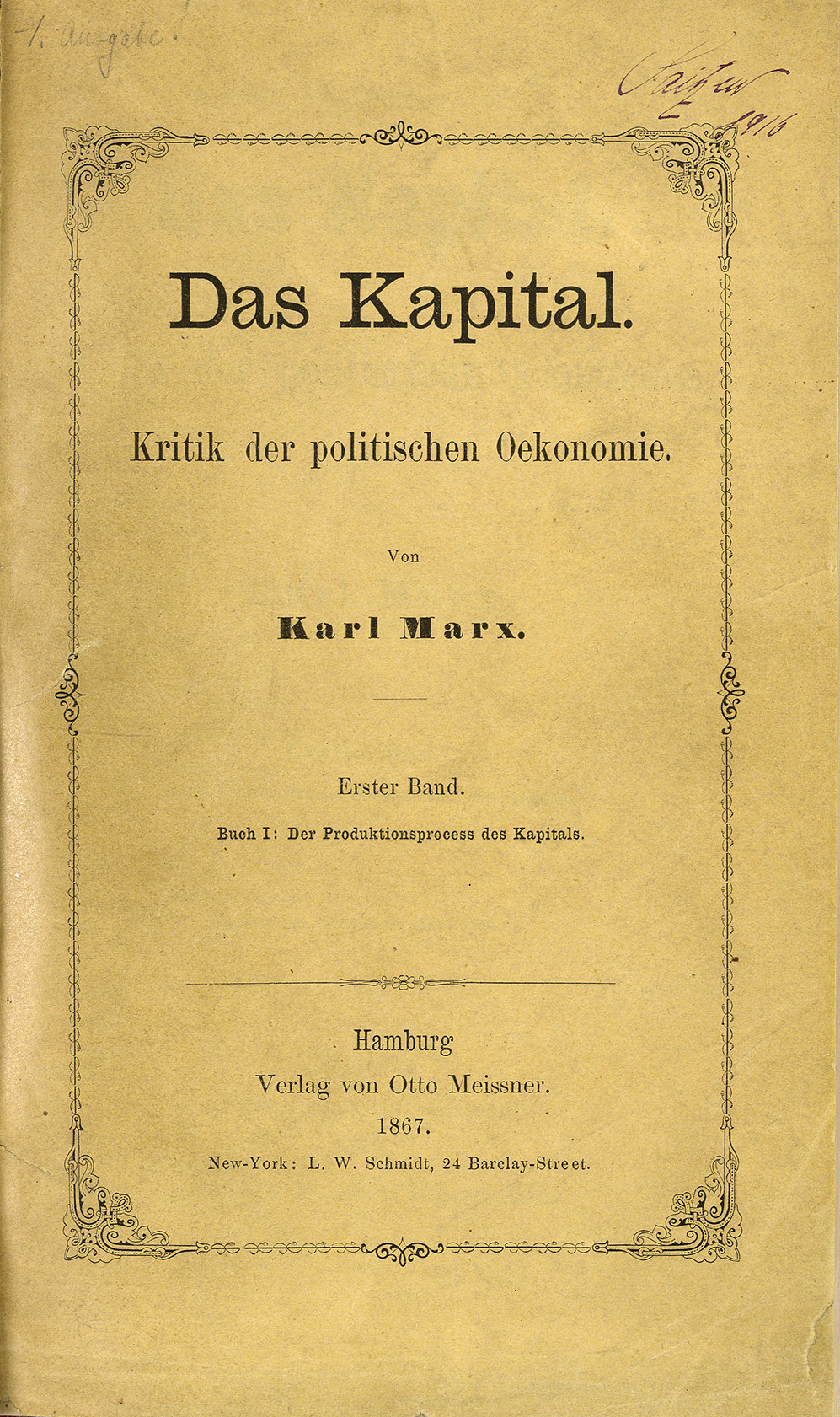
Das Kapital was first published in 1867 by Karl Marx, with the assistance of Friedrich Engels, who helped to edit and translate the work. The book was heavily influenced by the ideas of Adam Smith, David Ricardo, and other classical economists, as well as the socialist and communist movements of the time, including the work of Charles Fourier and Pierre-Joseph Proudhon. Marx's work was also shaped by his experiences as a journalist and activist, including his involvement with the Communist League and his friendship with Mikhail Bakunin. The book has been widely praised for its insightful analysis of capitalism, with scholars such as Eric Hobsbawm and Terry Eagleton recognizing its significance in the development of modern thought.
💡 Key Concepts
At its core, Das Kapital is a critique of the capitalist system, which Marx argues is based on the exploitation of the working class by the capitalist class. Marx introduces the concept of surplus value, which refers to the value created by workers beyond what is necessary to sustain their own labor, and argues that this surplus value is the source of profit for capitalists. He also explores the concepts of alienation, commodity fetishism, and the fetishization of commodities, drawing on the ideas of Georg Wilhelm Friedrich Hegel and Ludwig Feuerbach. The book has been influential in shaping the thought of later economists and philosophers, including Vladimir Lenin, Rosa Luxemburg, and Antonio Gramsci, and has been widely discussed and debated by scholars such as John Roemer and Jon Elster.
🌎 Cultural Impact
Das Kapital has had a profound impact on modern thought and culture, shaping the development of socialism, communism, and labor movements around the world. The book has been widely read and discussed by scholars, activists, and workers, and has influenced the thought of numerous prominent figures, including Leon Trotsky, Mao Zedong, and Che Guevara. The book has also been the subject of numerous critiques and challenges, including those from economists such as Milton Friedman and Friedrich Hayek, who have argued that Marx's analysis of capitalism is flawed and that his predictions about the collapse of the system have not come to pass. Despite these challenges, Das Kapital remains a foundational text of Marxist theory and a seminal work in the history of economic thought, with continued relevance in the work of scholars such as Immanuel Wallerstein and Giovanni Arrighi.
🔮 Legacy & Future
Today, Das Kapital remains a widely read and studied work, with continued relevance in the context of contemporary debates about capitalism, inequality, and social justice. The book has been translated into numerous languages and has been the subject of numerous adaptations and interpretations, including films, plays, and graphic novels. Scholars such as David McNally and Ellen Meiksins Wood have recognized the book's significance in the development of modern thought, and have explored its continued relevance in the context of contemporary debates about globalization, neoliberalism, and the future of the capitalist system. As the world continues to grapple with the challenges of inequality, exploitation, and social injustice, Das Kapital remains a powerful and thought-provoking work that continues to inspire and challenge readers around the world.
Key Facts
- Year
- 1867
- Origin
- London, England
- Category
- philosophy
- Type
- concept
Frequently Asked Questions
What is the main argument of Das Kapital?
The main argument of Das Kapital is that capitalism is based on the exploitation of the working class by the capitalist class, and that this exploitation is the source of profit for capitalists.
Who is the author of Das Kapital?
The author of Das Kapital is Karl Marx, with editorial assistance from Friedrich Engels.
What is the significance of Das Kapital in modern thought?
Das Kapital is a foundational text of Marxist theory and a seminal work in the history of economic thought, with continued relevance in contemporary debates about capitalism, inequality, and social justice.
How has Das Kapital been received and critiqued?
Das Kapital has been widely praised for its insightful analysis of capitalism, but has also been subject to numerous critiques and challenges, including those from economists such as Milton Friedman and Friedrich Hayek.
What is the relationship between Das Kapital and communism?
Das Kapital is a key text of Marxist theory, which has had a profound influence on the development of communism and socialist thought around the world.