
Contents
Overview
Code breaking, or cryptanalysis, is the art and science of deciphering encrypted messages without knowing the key. It's not just about brute force; it's about pattern recognition, linguistic analysis, and understanding the underlying mathematical or algorithmic structures of a cipher. Historically, code breaking has been a critical component of espionage, military strategy, and even academic puzzle-solving. The core objective is to reveal the plaintext from ciphertext, often by exploiting weaknesses in the encryption method or the implementation. This field is a constant arms race between cryptographers who create secure systems and cryptanalysts who seek to break them.
🗝️ The Evolution of Ciphers
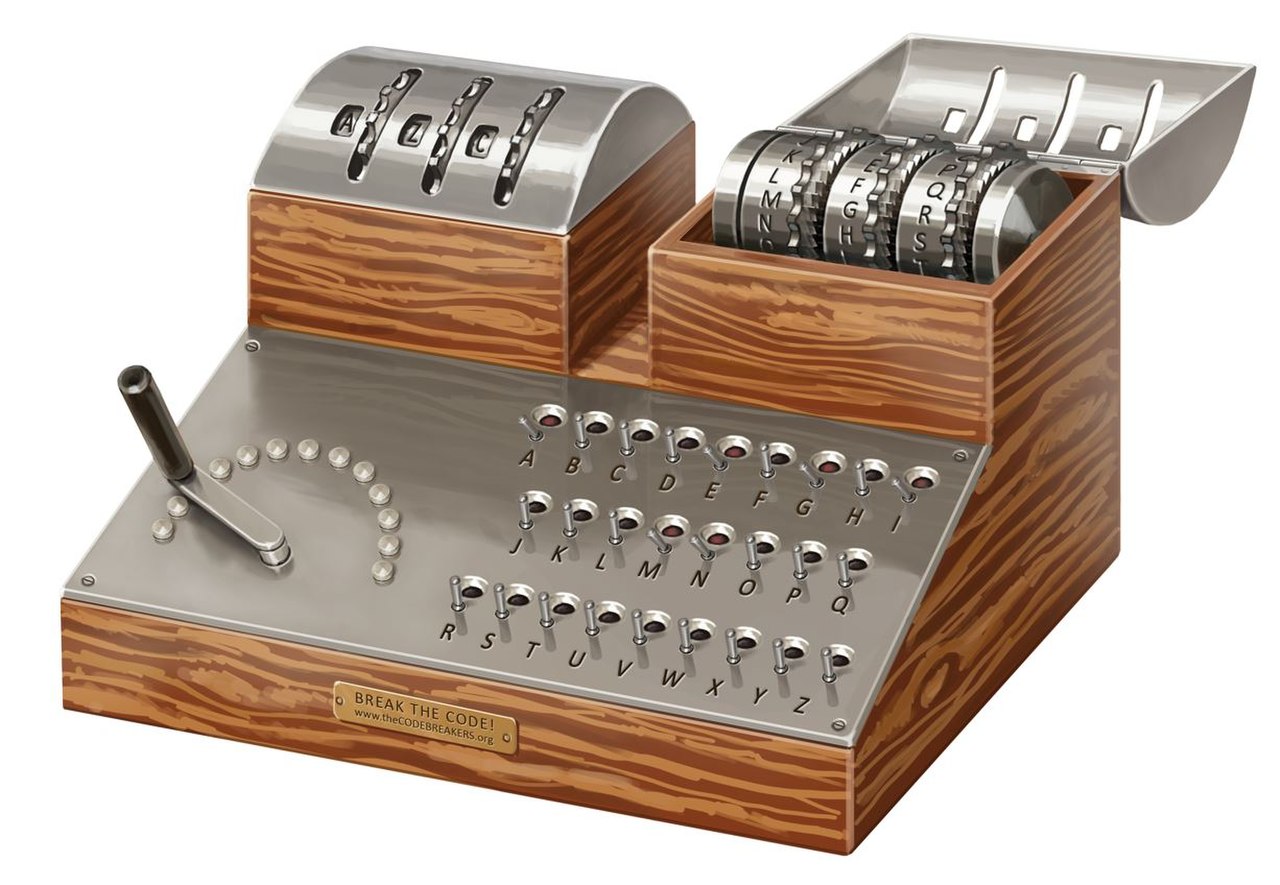
The history of code breaking stretches back millennia, from simple substitution ciphers used in ancient Sparta (the Scytale) to more complex polyalphabetic ciphers like the Vigenère cipher. Early methods often relied on frequency analysis, a technique pioneered by the Arab scholar Al-Kindi in the 9th century, which became a cornerstone of breaking simple substitution ciphers. The advent of mechanical and electromechanical devices, such as the German Enigma machine during World War II, dramatically increased the complexity, requiring sophisticated techniques and massive computational efforts to break. Each advancement in encryption spurred a corresponding innovation in cryptanalysis.
🕵️ Famous Code Breakers & Their Feats
Legendary figures have shaped the narrative of code breaking. Alan Turing, a pivotal figure at Bletchley Park, led the team that broke the German Enigma code, a feat widely credited with shortening World War II by several years. Marian Rejewski, a Polish mathematician, made crucial early breakthroughs against the Enigma before the war. In the modern era, figures like Whitfield Diffie and Martin Hellman, pioneers of public-key cryptography, indirectly influenced code breaking by creating systems that were theoretically harder to break without keys, yet also opened new avenues for cryptanalytic research. Their work fundamentally altered the landscape of secure communication.
🌐 Code Breaking in the Digital Age
The digital age has transformed code breaking, moving it from pencil-and-paper to powerful computers. The rise of modern cryptographic algorithms like AES and RSA presented new challenges, but also provided new tools. Brute-force attacks, once impractical, became feasible against weaker keys. The discovery of software vulnerabilities and side-channel attacks (e.g., timing attacks, power analysis) became significant areas of focus. The internet has also democratized access to cryptographic tools and information, making code breaking both more accessible and more critical for cybersecurity professionals.
⚛️ The Quantum Frontier
The advent of quantum computing poses a profound threat to current cryptographic standards. Algorithms like Shor's algorithm, designed for quantum computers, can efficiently factor large numbers and compute discrete logarithms, rendering widely used asymmetric encryption algorithms like RSA and ECC vulnerable. This has spurred intense research into post-quantum cryptography, aiming to develop new algorithms resistant to both classical and quantum attacks. The transition to quantum-resistant cryptography is a monumental undertaking, with significant implications for national security and global commerce.
📚 Resources for Aspiring Code Breakers
For those fascinated by the intricacies of code breaking, numerous resources exist. Online platforms like CryptoHack and OverTheWire offer interactive challenges that teach fundamental cryptanalytic techniques. Books such as 'The Code Book' by Simon Singh provide historical context and accessible explanations of various ciphers. University courses in cryptography and computer science offer formal training. Engaging with CTF (Capture The Flag) competitions, often featuring cryptographic challenges, is an excellent way to hone practical skills and learn from others in the community.
⚖️ Ethical and Legal Considerations
Code breaking operates in a complex ethical and legal gray area. While crucial for national security and law enforcement (e.g., decrypting criminal communications), it also raises concerns about privacy and government surveillance. The debate over encryption backdoors highlights this tension: law enforcement agencies often argue for access to encrypted data, while privacy advocates emphasize the importance of strong, unbreakable encryption for protecting individual freedoms. International laws and treaties attempt to navigate these competing interests, but the landscape remains contentious.
🚀 The Future of Cryptanalysis
The future of code breaking is inextricably linked to advancements in computing power and algorithmic innovation. As quantum computing matures, the focus will increasingly shift to post-quantum cryptography and the ongoing challenge of securing communications against future threats. The rise of AI and machine learning also presents new possibilities for cryptanalysis, potentially automating the discovery of patterns and weaknesses in complex systems. Ultimately, code breaking will continue to evolve, demanding constant vigilance and adaptation from both defenders and attackers in the digital realm.
Key Facts
- Year
- Ancient Times
- Origin
- Ancient Mesopotamia (earliest known ciphers)
- Category
- Cryptography & Intelligence
- Type
- Topic
Frequently Asked Questions
What's the difference between cryptography and cryptanalysis?
Cryptography is the practice of designing and implementing secure communication systems, essentially creating codes. Cryptanalysis, on the other hand, is the practice of breaking those codes without prior knowledge of the key. They are two sides of the same coin, constantly pushing each other forward. Cryptographers aim to make codes unbreakable, while cryptanalysts seek to find the weaknesses that allow them to be deciphered.
Is code breaking illegal?
The legality of code breaking depends heavily on context. Attempting to break into systems you don't have authorization for, especially for malicious purposes or to steal data, is illegal in most jurisdictions and falls under cybercrime laws. However, academic research, participation in authorized bug bounty programs, and breaking codes for educational purposes (like in CTF competitions) are generally legal and often encouraged within the cybersecurity community.
Can I learn code breaking without a strong math background?
While advanced cryptanalysis often involves complex mathematics (like number theory and abstract algebra), many fundamental techniques can be learned with a solid grasp of logic and pattern recognition. Early ciphers, frequency analysis, and many introductory challenges on platforms like CryptoHack require more logical thinking and problem-solving skills than advanced calculus. As you progress, a deeper understanding of mathematics will certainly be beneficial for tackling more sophisticated cryptographic systems.
What is the most famous code ever broken?
The breaking of the German Enigma code during World War II is arguably the most famous and impactful code-breaking achievement. The work at Bletchley Park, particularly by Alan Turing and his team, provided crucial intelligence that significantly aided the Allied war effort. The complexity of the Enigma machine and the sheer scale of the operation make it a legendary feat in the history of cryptanalysis.
How will quantum computing affect code breaking?
Quantum computing poses a significant threat to current public-key cryptography, as algorithms like Shor's can break RSA and ECC encryption efficiently. This means that much of the secure communication we rely on today could become vulnerable. The field of post-quantum cryptography is actively developing new encryption methods designed to be resistant to attacks from both classical and quantum computers, aiming to secure our digital future.
What are some common types of ciphers?
Common types include substitution ciphers (like Caesar and Vigenère), transposition ciphers (which rearrange letters), and modern symmetric (like AES) and asymmetric (like RSA) algorithms. Each type has different strengths and weaknesses, and cryptanalysts develop specific techniques to tackle each one. Simple ciphers are often broken with frequency analysis, while modern ciphers require deep mathematical and computational expertise.