
Contents
- 🔬 Introduction to Chromatography
- 🧬 History of Chromatography
- 🌈 Principles of Chromatography
- 📊 Types of Chromatography
- 🔍 Applications of Chromatography
- 👨🔬 Key Figures in Chromatography
- 📚 Chromatography Techniques
- 🔬 Instrumentation in Chromatography
- 📊 Data Analysis in Chromatography
- 🌟 Future of Chromatography
- 🤝 Challenges in Chromatography
- 📊 Conclusion
- Frequently Asked Questions
- Related Topics
Overview
Chromatography, a technique dating back to 1900 when Mikhail Tsvet first used it to separate plant pigments, has evolved significantly over the years. Today, it is a cornerstone in various fields including chemistry, biology, and pharmaceuticals, with applications ranging from drug development to environmental monitoring. The process involves the separation of a mixture's components as they pass through a stationary phase, with different components moving at different speeds due to interactions with the stationary phase. This results in the separation of the components, which can then be identified and quantified. With advancements in technology, chromatography has become more precise and efficient, leading to breakthroughs in fields such as genomics and proteomics. As research continues to push the boundaries of what is possible, chromatography remains a vital tool, with its impact felt across numerous disciplines. The future of chromatography looks promising, with potential applications in personalized medicine and the development of new materials.
🔬 Introduction to Chromatography
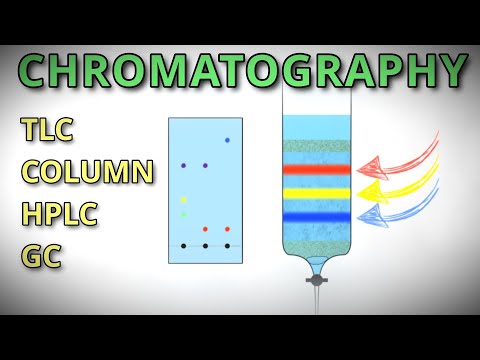
Chromatography is a laboratory technique used to separate a mixture into its individual components, as seen in chemical analysis. This technique has been widely used in various fields, including pharmaceutical industry, environmental science, and biotechnology. The process of chromatography involves the use of a mobile phase, which carries the mixture through a system, and a stationary phase, which is fixed in place. As the different constituents of the mixture interact with the stationary phase, they are retained for different lengths of time, resulting in separation. This separation is based on the differential partitioning between the mobile and stationary phases, as discussed in partition coefficient.
🧬 History of Chromatography
The history of chromatography dates back to the early 20th century, when Mikhail Tsvet first developed the technique. Tsvet, a Russian botanist, used chromatography to separate plant pigments, as described in plant pigments. Since then, chromatography has undergone significant developments, with the introduction of new techniques and instrumentation, such as gas chromatography and hplc. These advancements have enabled chromatography to become a powerful tool in various fields, including analytical chemistry and biochemistry.
🌈 Principles of Chromatography
The principles of chromatography are based on the interactions between the mobile phase, stationary phase, and the constituents of the mixture. The mobile phase carries the mixture through the system, while the stationary phase is fixed in place. As the constituents of the mixture interact with the stationary phase, they are retained for different lengths of time, resulting in separation. This separation is based on the differential partitioning between the mobile and stationary phases, as discussed in chromatography theory. The partition coefficient, which is a measure of the distribution of a compound between the mobile and stationary phases, plays a crucial role in determining the separation, as seen in partition coefficient.
📊 Types of Chromatography
There are several types of chromatography, including gas chromatography, liquid chromatography, and thin layer chromatography. Each type of chromatography has its own unique characteristics and applications, as discussed in chromatography types. Gas chromatography, for example, is commonly used to separate and analyze volatile compounds, while liquid chromatography is used to separate and analyze non-volatile compounds. Thin layer chromatography, on the other hand, is a simple and inexpensive technique used to separate and identify compounds, as seen in thin layer chromatography.
🔍 Applications of Chromatography
Chromatography has a wide range of applications in various fields, including pharmaceutical industry, environmental science, and biotechnology. In the pharmaceutical industry, chromatography is used to separate and analyze pharmaceutical compounds, as discussed in pharmaceutical analysis. In environmental science, chromatography is used to analyze and identify environmental pollutants, as seen in environmental analysis. In biotechnology, chromatography is used to separate and analyze biomolecules, such as proteins and nucleic acids.
👨🔬 Key Figures in Chromatography
Several key figures have contributed to the development of chromatography, including Mikhail Tsvet and Archer John Porter Martin. Tsvet, a Russian botanist, first developed the technique of chromatography, as discussed in Mikhail Tsvet. Martin, a British chemist, developed the technique of partition chromatography, as seen in partition chromatography. Other notable figures, such as Richard Lawrence Millard and George H. Williams, have also made significant contributions to the development of chromatography, as discussed in chromatography history.
📚 Chromatography Techniques
There are several chromatography techniques, including column chromatography, paper chromatography, and thin layer chromatography. Each technique has its own unique characteristics and applications, as discussed in chromatography techniques. Column chromatography, for example, is commonly used to separate and analyze large quantities of compounds, while paper chromatography is used to separate and identify small quantities of compounds. Thin layer chromatography, on the other hand, is a simple and inexpensive technique used to separate and identify compounds, as seen in thin layer chromatography.
🔬 Instrumentation in Chromatography
Instrumentation plays a crucial role in chromatography, as it enables the separation and analysis of compounds. Common chromatography instruments include gas chromatograph, liquid chromatograph, and mass spectrometer. These instruments are used to separate and analyze compounds, as discussed in chromatography instrumentation. The gas chromatograph, for example, is used to separate and analyze volatile compounds, while the liquid chromatograph is used to separate and analyze non-volatile compounds. The mass spectrometer, on the other hand, is used to identify and quantify compounds, as seen in mass spectrometry.
📊 Data Analysis in Chromatography
Data analysis is a critical step in chromatography, as it enables the interpretation of the separation results. Chromatography data is typically analyzed using chromatography software, which provides tools for data processing, peak integration, and quantitation. The software also enables the identification of compounds, as discussed in compound identification. The results of the analysis are typically presented in the form of a chromatogram, which shows the separation of the compounds, as seen in chromatogram.
🌟 Future of Chromatography
The future of chromatography is exciting, with new developments and advancements in instrumentation and techniques. One of the most significant advancements is the development of uHPLC, which enables the separation and analysis of compounds at high speeds and resolutions. Another advancement is the development of 2D chromatography, which enables the separation and analysis of complex mixtures, as discussed in 2D chromatography. These advancements have the potential to revolutionize the field of chromatography, as seen in chromatography future.
🤝 Challenges in Chromatography
Despite the many advantages of chromatography, there are also several challenges associated with the technique. One of the main challenges is the limitation of the technique, which can result in poor separation and analysis of compounds. Another challenge is the interference of the technique, which can result in false or inaccurate results. To overcome these challenges, chromatography instruments and techniques must be carefully optimized and validated, as discussed in chromatography optimization.
📊 Conclusion
In conclusion, chromatography is a powerful technique used to separate and analyze compounds. The technique has a wide range of applications in various fields, including pharmaceutical industry, environmental science, and biotechnology. With the advancements in instrumentation and techniques, the future of chromatography is exciting, with the potential to revolutionize the field of analytical chemistry, as seen in analytical chemistry.
Key Facts
- Year
- 1900
- Origin
- Russia
- Category
- Science and Technology
- Type
- Scientific Technique
Frequently Asked Questions
What is chromatography?
Chromatography is a laboratory technique used to separate a mixture into its individual components. The technique involves the use of a mobile phase, which carries the mixture through a system, and a stationary phase, which is fixed in place. As the different constituents of the mixture interact with the stationary phase, they are retained for different lengths of time, resulting in separation. This separation is based on the differential partitioning between the mobile and stationary phases, as discussed in partition coefficient.
What are the types of chromatography?
There are several types of chromatography, including gas chromatography, liquid chromatography, and thin layer chromatography. Each type of chromatography has its own unique characteristics and applications, as discussed in chromatography types.
What are the applications of chromatography?
Chromatography has a wide range of applications in various fields, including pharmaceutical industry, environmental science, and biotechnology. In the pharmaceutical industry, chromatography is used to separate and analyze pharmaceutical compounds, as discussed in pharmaceutical analysis. In environmental science, chromatography is used to analyze and identify environmental pollutants, as seen in environmental analysis.
What is the principle of chromatography?
The principle of chromatography is based on the interactions between the mobile phase, stationary phase, and the constituents of the mixture. The mobile phase carries the mixture through the system, while the stationary phase is fixed in place. As the constituents of the mixture interact with the stationary phase, they are retained for different lengths of time, resulting in separation. This separation is based on the differential partitioning between the mobile and stationary phases, as discussed in chromatography theory.
What is the future of chromatography?
The future of chromatography is exciting, with new developments and advancements in instrumentation and techniques. One of the most significant advancements is the development of uHPLC, which enables the separation and analysis of compounds at high speeds and resolutions. Another advancement is the development of 2D chromatography, which enables the separation and analysis of complex mixtures, as discussed in 2D chromatography.
What are the challenges associated with chromatography?
Despite the many advantages of chromatography, there are also several challenges associated with the technique. One of the main challenges is the limitation of the technique, which can result in poor separation and analysis of compounds. Another challenge is the interference of the technique, which can result in false or inaccurate results. To overcome these challenges, chromatography instruments and techniques must be carefully optimized and validated, as discussed in chromatography optimization.
What is the importance of chromatography in analytical chemistry?
Chromatography is a powerful technique used in analytical chemistry to separate and analyze compounds. The technique has a wide range of applications in various fields, including pharmaceutical industry, environmental science, and biotechnology. With the advancements in instrumentation and techniques, the future of chromatography is exciting, with the potential to revolutionize the field of analytical chemistry, as seen in analytical chemistry.