
Contents
Overview
The cheetah's lineage traces back millions of years, with fossil evidence suggesting early ancestors emerged in Eurasia. Early depictions of cheetah-like animals appear in ancient Egyptian art, notably in tomb paintings from around 2600 BCE, where they were sometimes depicted being ridden or led on leashes, hinting at early attempts at domestication or taming. The species was scientifically described by German naturalist Johann Christian Daniel von Schreber in 1775, based on specimens from South Africa, marking the beginning of formal scientific study of this unique predator. Over centuries, cheetahs were distributed across vast swathes of Africa and Asia, from the Cape of Good Hope to India, but their range has contracted drastically in the last 200 years.
⚙️ How It Works
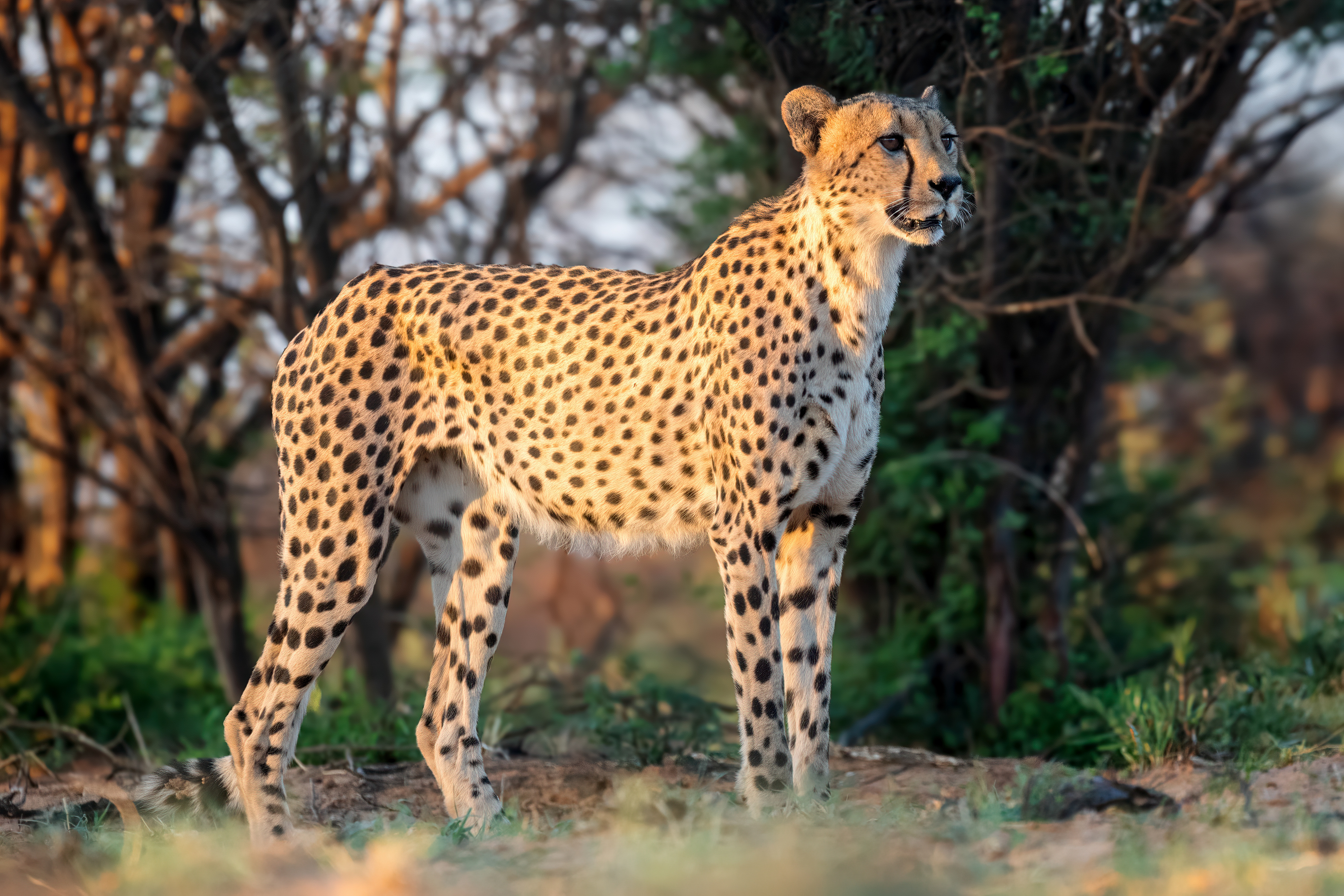
The cheetah's unparalleled speed is a product of highly specialized anatomy. Its lightweight, slender body, deep chest housing large lungs and heart, and long, powerful legs are all optimized for acceleration and high-speed pursuit. A semi-retractable claw system provides crucial traction, akin to running spikes, while a long tail acts as a rudder for balance during high-speed turns. Its flexible spine allows for an extraordinary stride length, enabling the cheetah to cover up to 7 meters (23 feet) in a single bound. Unlike other big cats such as the lion or tiger, the cheetah possesses a non-fully retractable claw, which is vital for grip during its sprints. Its vision is also adapted for spotting prey from great distances, with a high visual acuity and a field of vision that allows it to track fast-moving targets.
📊 Key Facts & Numbers
Cheetahs are the fastest land animals, capable of reaching speeds between 93 and 104 km/h (58–65 mph) over short distances, with some recorded bursts even higher. An adult cheetah typically weighs between 21 and 65 kg (46–143 lb) and stands 67–94 cm (2.20–3.08 ft) at the shoulder. Their head-and-body length ranges from 1.1 to 1.5 meters (3.7–4.9 ft), with a tail adding another 60–84 cm (24–33 in). Sadly, fewer than 7,100 cheetahs are estimated to remain in the wild, with populations fragmented into small, isolated groups. The Asiatic cheetah subspecies (Acinonyx jubatus venaticus) is critically endangered, with fewer than 50 individuals believed to exist in Iran's central desert. Cheetah cubs face a staggering mortality rate, with up to 90% not surviving to adulthood, primarily due to predation by larger carnivores like lions, hyenas, and leopards.
👥 Key People & Organizations
The conservation of cheetahs involves numerous dedicated individuals and organizations. The Cheetah Conservation Fund (CCF), founded by Dr. Laurie Marker in 1990, is a leading global organization focused on cheetah research, conservation, and education, operating extensively in Namibia. Other key players include the Wildlife Conservation Society (WCS), which works on cheetah projects in various African nations, and the African Wildlife Foundation (AWF), involved in habitat protection and anti-poaching efforts. In 2022, a significant reintroduction program, supported by the Indian government and the National Tiger Conservation Authority, brought cheetahs back to India after an absence of over 70 years, with animals sourced from South Africa and Namibia.
🌍 Cultural Impact & Influence
The cheetah's striking appearance and incredible speed have cemented its place in human culture for millennia. Ancient Egyptians revered cheetahs, often depicting them in religious contexts and even mummifying them. In medieval Europe, cheetahs were symbols of status and power, sometimes kept by royalty and nobility, and were even used for hunting by falconers, a practice known as 'cheetah coursing'. This historical association with nobility and speed has led to the cheetah being adopted as a mascot or symbol by numerous sports teams and brands, most famously the Cheetos snack brand's mascot, Chester Cheetah, who embodies the animal's playful, energetic persona. The cheetah's image is also frequently used in wildlife documentaries and conservation campaigns to highlight the plight of endangered species.
⚡ Current State & Latest Developments
The current state of cheetah populations is precarious, with fragmentation and declining numbers posing significant challenges. In 2022, India launched an ambitious project to reintroduce cheetahs into the wild, importing individuals from Namibia and South Africa to Kuno National Park and other reserves. However, this initiative has faced significant setbacks, with several cheetahs, including cubs, succumbing to various causes, including infection and natural predation, raising questions about the long-term viability of such large-scale translocations. Meanwhile, in Africa, efforts continue to mitigate human-wildlife conflict, particularly in areas where cheetahs prey on livestock, and to secure vital habitat corridors. The Southern African cheetah subspecies is considered the most numerous, but even its populations are under pressure.
🤔 Controversies & Debates
One of the most significant controversies surrounding cheetahs is their critically low genetic diversity. Unlike most mammals, cheetahs appear to have undergone a severe population bottleneck thousands of years ago, resulting in a genetic uniformity that makes them highly susceptible to diseases and environmental changes. This lack of diversity is a major hurdle for conservation breeding programs and reintroduction efforts, as it limits their ability to adapt. Another ongoing debate centers on the ethics and efficacy of reintroduction programs, particularly the Indian project, where critics question the suitability of the chosen sites and the potential impact on local ecosystems and existing wildlife. The balance between human development and cheetah habitat preservation also remains a contentious issue, with agricultural expansion and infrastructure development often encroaching on critical cheetah territories.
🔮 Future Outlook & Predictions
The future of the cheetah hinges on a multi-pronged approach involving intensive conservation, habitat restoration, and community engagement. Experts predict that without significant intervention, wild cheetah populations could face functional extinction in many regions within the next few decades. The success of the reintroduction program in India will be a crucial test case for translocating large carnivores into historically occupied ranges. Advances in genetic research may offer new avenues for increasing cheetah diversity, potentially through assisted reproduction techniques or even exploring de-extinction possibilities for extinct subspecies, though these remain highly speculative. International cooperation between countries like Namibia, Botswana, Tanzania, and India will be paramount in establishing transcontinental conservation strategies and ensuring the long-term survival of this species.
💡 Practical Applications
While cheetahs are not typically 'applied' in the way domestic animals are, their unique physiology has inspired technological advancements. Their speed and agility have been studied by roboticists and engineers seeking to develop high-performance robots and vehicles capable of rapid movement and precise maneuvering. The biomechanics of their stride and turning have informed the design of prosthetics and athletic equipment aimed at enhancing human performance. In conservation, the cheetah serves as an 'umbrella species'; protecting its habitat benefits numerous other species that share its ecosystem, from small mammals to various bird species. Furthermore, the cheetah's role in controlling herbivore populations helps maintain grassland health, a vital ecological service.
Key Facts
- Category
- nature
- Type
- topic