
Contents
Overview
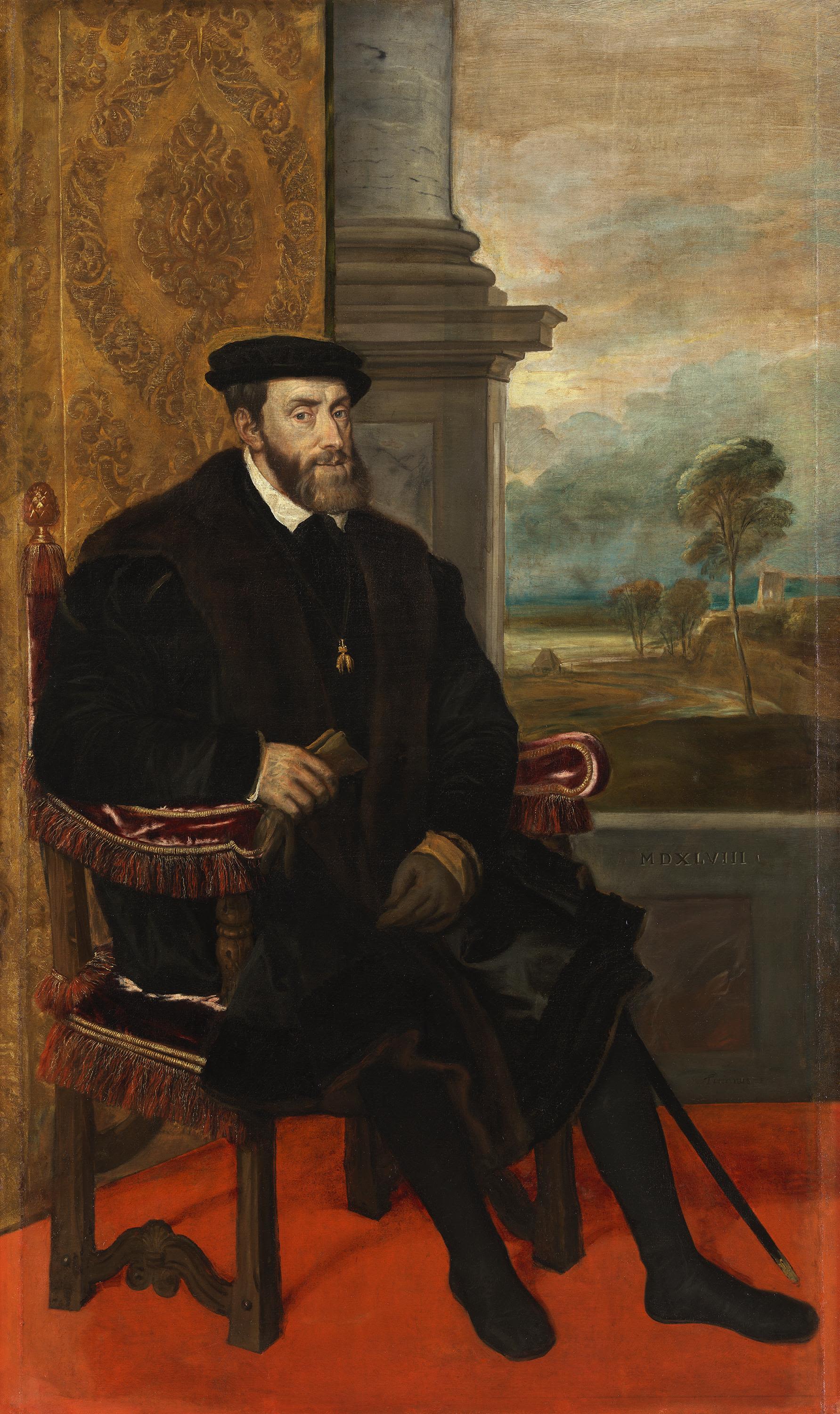
Born on February 24, 1500, in Ghent, Charles V was the scion of the powerful Habsburg and Trastámara dynasties. His inheritance was a tapestry woven from the vast territories of his paternal grandfather, Emperor Maximilian I, and his maternal grandparents, Ferdinand II of Aragon and Isabella I of Castile. This strategic lineage positioned him to become ruler of the Habsburg Netherlands, King of Spain (as Charles I), and eventually Holy Roman Emperor (as Charles V). His early life was shaped by the political machims of his time, including the complex alliances and rivalries that defined the Italian Wars and the burgeoning power of the Valois dynasty in France, particularly King Francis I, who would become his greatest rival.
📜 How It Worked
Charles V's reign was characterized by his ambitious, albeit ultimately unfulfilled, goal of a universal Christian monarchy. He navigated a complex geopolitical landscape, engaging in constant warfare to defend his extensive domains. Key conflicts included the Italian Wars against France, the struggle against the expanding Ottoman Empire under Suleiman the Magnificent, and the internal religious strife sparked by the Protestant Reformation initiated by Martin Luther. His administration relied heavily on the wealth generated from the Spanish colonies in the Americas, including silver from the conquests of the Aztec and Inca empires by figures like Hernán Cortés and Francisco Pizarro, which fueled his European campaigns and contributed to inflation.
🌍 Cultural Impact
The cultural and religious landscape of Charles V's era was profoundly impacted by his reign. As a staunch defender of Catholicism, he grappled with the spread of Protestantism, famously declaring Martin Luther an outlaw at the Diet of Worms in 1521. Despite his efforts, he could not prevent the fragmentation of religious unity in the Holy Roman Empire, a challenge that eventually led to the Peace of Augsburg in 1555. His patronage of the arts and architecture, alongside his extensive travels across his diverse realms, contributed to the cultural exchange of the Renaissance period, though his focus remained on maintaining imperial authority and defending Christendom.
⏳ Legacy & Future
Disillusioned by the persistent religious divisions and the exhaustion of constant warfare, Charles V abdicated his imperial titles in 1556. He divided his vast inheritance between his brother Ferdinand I, who became Holy Roman Emperor, and his son Philip II, who inherited the Spanish kingdoms and their overseas territories. Charles retired to the Monastery of Yuste in Spain, where he died in 1558. His legacy is that of a monarch who presided over a global empire at its zenith, a key figure in the transition from medieval to early modern Europe, whose reign set the stage for future European power dynamics and colonial expansion, influencing subsequent rulers and historical narratives for centuries.
Key Facts
- Year
- 1500-1558
- Origin
- Ghent, Flanders (modern-day Belgium)
- Category
- history
- Type
- person
Frequently Asked Questions
What were Charles V's main titles and domains?
Charles V held numerous titles, most notably Holy Roman Emperor (1519-1556) and King of Spain (as Charles I, 1516-1556). His vast domains included the Habsburg hereditary lands in Austria, the Burgundian Netherlands, and the Spanish kingdoms of Castile and Aragon, along with their overseas possessions in the Americas, and the southern Italian kingdoms of Naples, Sicily, and Sardinia.
Who were Charles V's primary adversaries?
Charles V faced significant opposition from King Francis I of France, with whom he engaged in numerous wars, and the Ottoman Empire under Suleiman the Magnificent, which posed a constant threat from the east. Internally, he contended with the spread of the Protestant Reformation, initiated by Martin Luther, which challenged the religious unity of his empire.
Why did Charles V abdicate?
Charles V abdicated in 1556 due to a combination of factors, including his ill health, the immense weariness from decades of constant warfare, and his inability to maintain religious unity within the Holy Roman Empire. He sought to pass on his responsibilities to his brother Ferdinand and his son Philip.
What was the significance of the wealth from the Americas during Charles V's reign?
The immense wealth, particularly silver, extracted from the Spanish colonies in the Americas was crucial for financing Charles V's extensive military campaigns and political ambitions in Europe. This influx of wealth, however, also contributed to inflation and the development of a complex bureaucracy that eventually impacted the Spanish economy.
What is Charles V's lasting legacy?
Charles V's legacy is that of a powerful but ultimately constrained ruler who presided over one of the largest empires in history. He is remembered for his role in the religious and political conflicts of the 16th century, his defense against the Ottoman Empire, and his impact on the development of both European states and the Spanish colonial enterprise. His reign marked a critical period in the transition from medieval universalism to the rise of modern nation-states.
References
- en.wikipedia.org — /wiki/Charles_V,_Holy_Roman_Emperor
- newadvent.org — /cathen/03625a.htm
- britannica.com — /biography/Charles-V-Holy-Roman-emperor
- museeprotestant.org — /en/notice/charles-quint-1500-1558/
- habsburger.net — /en/persons/habsburg-emperor/charles-v
- amazon.com — /Emperor-New-Life-Charles-V/dp/0300196520
- ebsco.com — /research-starters/history/charles-v
- nationalgallery.org.uk — /people/charles-v-holy-roman-emperor