
Contents
Overview
Commissioned by Emperor Maximian in honor of co-emperor Diocletian, the Baths of Diocletian were a monumental undertaking, built in just eight years between 298 and 306 AD. This colossal complex, covering approximately 13 hectares (32 acres), was designed to be the grandest of Rome's imperial baths, surpassing even the famous Baths of Caracalla. The construction involved millions of bricks and was a significant project that redirected the brick industry under imperial control, as evidenced by stamped bricks from the Diocletianic period. The baths served as a vital social and recreational hub for Romans, offering more than just bathing facilities; they were centers for socializing, exercise, and relaxation, reflecting the advanced engineering and architectural prowess of the Roman Empire, similar to other grand structures like the Pantheon.
⚙️ Architectural Marvel & Function
The Baths of Diocletian followed the typical Roman bath layout, featuring a sequence of rooms including the caldarium (hot bath), tepidarium (warm bath), and frigidarium (cold bath), along with a natatio (swimming pool). The complex was lavishly decorated with marble walls and floors, hundreds of columns, frescoes, and mosaics, creating an opulent environment for its users. The engineering was sophisticated, utilizing systems like the hypocaust for heating. The sheer scale of the main building, approximately 4.5 hectares (11 acres), and the surrounding gardens and structures, highlight the immense labor and resources required. This architectural ambition is comparable to other large-scale Roman projects like the Colosseum and the Roman Forum, showcasing the Romans' mastery of concrete and vault construction, as noted by historians like Platner & Ashby.
🌍 Cultural & Architectural Transformation
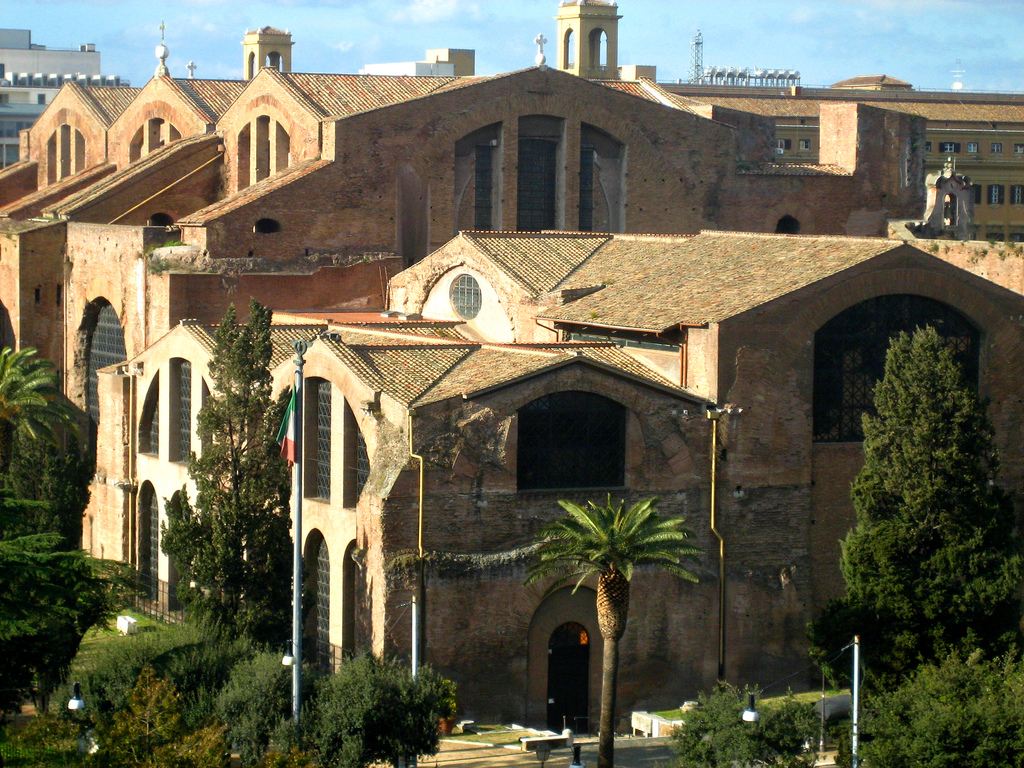
After the fall of the Western Roman Empire and damage to the aqueducts in the 6th century, the baths were abandoned for nearly a thousand years. In the 16th century, Pope Pius IV commissioned the renowned artist and architect Michelangelo to transform parts of the ruins into the Basilica of Santa Maria degli Angeli e dei Martiri. Michelangelo ingeniously incorporated the existing structures, such as the frigidarium and tepidarium, into his design, creating a unique blend of ancient and Renaissance architecture. This transformation is a testament to Rome's ability to adapt and reuse its historical sites, a practice seen in many other Roman structures that have been repurposed over centuries, such as the Pantheon, which also retains elements of its original imperial design.
🔮 Legacy & Present Day
Today, the Baths of Diocletian are a significant part of the National Roman Museum, housing collections that include epigraphic sections, funerary sculptures, and artifacts that offer insights into Roman customs and traditions. Visitors can explore the surviving halls, cloisters, and the Basilica, experiencing the grandeur of the original complex. The site also includes gardens with numerous works of art. The Baths stand as a powerful reminder of Rome's imperial past and its enduring legacy, demonstrating how ancient ruins can be integrated into the modern urban landscape, much like other historical sites in Rome such as the Roman Forum and Palatine Hill, which continue to draw millions of visitors annually.
Section 5
The Baths of Diocletian were constructed between 298 and 306 AD, commissioned by Emperor Maximian and dedicated to co-emperor Diocletian. They were the largest imperial baths in ancient Rome, capable of accommodating up to 3,000 bathers simultaneously. The complex was built on the Viminal Hill and was renowned for its size, luxury, and advanced engineering, similar to other grand Roman structures like the Baths of Caracalla. After the Gothic Wars in the 6th century led to the destruction of the aqueducts, the baths fell into disuse and were largely abandoned for centuries. In the 16th century, Pope Pius IV commissioned Michelangelo to convert parts of the ruins into the Basilica of Santa Maria degli Angeli e dei Martiri, a project that preserved significant portions of the original structure and blended ancient Roman architecture with Renaissance design, a practice also seen in the repurposing of the Pantheon.
Section 6
The Baths of Diocletian were a marvel of Roman engineering and architecture, designed with a central axis that included the caldarium, tepidarium, and frigidarium, alongside a large natatio (swimming pool). The complex was decorated with marble, mosaics, and statues, and featured extensive gardens, libraries, and gymnasiums, making it a comprehensive center for public life. The sheer scale, covering 13 hectares, and the sophisticated construction techniques, including the use of concrete and vaulted ceilings, were characteristic of major Roman public works. The architectural style reflects the grandeur of the Imperial Roman period, with elements that influenced later architectural developments, such as the design of the Basilica of Constantine, as noted in historical analyses of Roman engineering.
Section 7
Following their abandonment, the Baths of Diocletian underwent a significant transformation in the 16th century when Michelangelo was tasked with creating a church within the ruins. He masterfully integrated the ancient frigidarium and tepidarium into the Basilica of Santa Maria degli Angeli e dei Martiri, preserving the monumental scale of the Roman architecture. This adaptive reuse is a prime example of how historical sites can be preserved and given new life, a concept also evident in the conversion of other ancient structures in Rome. The site also houses parts of the National Roman Museum, showcasing artifacts and epigraphic collections that further illuminate Roman history and culture, connecting visitors to the past in a tangible way, much like the exhibits at the Capitoline Museums.
Section 8
Today, the Baths of Diocletian are a key component of the National Roman Museum and a popular tourist destination. Visitors can explore the surviving halls, courtyards, and the Basilica, gaining an appreciation for the scale and complexity of ancient Roman public works. The site serves as a living museum, demonstrating the layers of history in Rome, from its imperial past to its Renaissance and modern transformations. The ongoing preservation and exhibition efforts ensure that the Baths of Diocletian continue to educate and inspire, offering a unique glimpse into the daily life and architectural achievements of ancient Rome, a legacy that continues to influence urban planning and architectural design worldwide, as seen in projects inspired by Roman engineering principles.
Key Facts
- Year
- 298-306 AD
- Origin
- Rome, Italy
- Category
- history
- Type
- place
Frequently Asked Questions
When were the Baths of Diocletian built?
The Baths of Diocletian were constructed between 298 and 306 AD under the emperors Diocletian and Maximian.
What was the purpose of the Baths of Diocletian?
They served as public baths, but also as social, recreational, and cultural centers for the citizens of ancient Rome, offering spaces for bathing, exercise, and relaxation.
What is the significance of Michelangelo's involvement?
Michelangelo was commissioned in the 16th century to convert parts of the ruined baths into the Basilica of Santa Maria degli Angeli e dei Martiri. He ingeniously integrated the ancient structures into his design, preserving a significant portion of the complex.
What can visitors see at the Baths of Diocletian today?
Visitors can explore the surviving halls, courtyards, and the Basilica, which houses parts of the National Roman Museum. The site offers a glimpse into ancient Roman architecture, engineering, and daily life.
Were the Baths of Diocletian the largest in Rome?
Yes, the Baths of Diocletian were the largest imperial baths ever built in ancient Rome, with a capacity for up to 3,000 bathers at a time, surpassing even the famous Baths of Caracalla.
References
- en.wikipedia.org — /wiki/Baths_of_Diocletian
- museonazionaleromano.beniculturali.it — /en/baths-of-diocletian/
- wanderousaffair.com — /post/visiting-the-baths-of-diocletian-rome
- atouchofrome.com — /baths-of-diocletian-explained.html
- historyhit.com — /locations/baths-of-diocletian/
- rome.net — /baths-diocletian
- ancientromelive.org — /thermae-diocletiani-baths-of-diocletian/
- rome.info — /attractions/baths-of-diocletian/