
Contents
Overview
The archaeology of Sudan is a vast and complex field, charting the rise and fall of sophisticated civilizations that flourished in the region historically known as Nubia. Sudan is situated along the Nile River, south of ancient Egypt. Its archaeological record reveals a distinct cultural trajectory, marked by powerful kingdoms like Kush, Makuria, and Alodia, which often rivaled, interacted with, and sometimes dominated their northern neighbor. From the prehistoric hunter-gatherer societies to the monumental pyramids of Meroë and the vibrant Christian kingdoms, Sudan's past is etched in its countless archaeological sites, many of which remain underexplored. The ongoing work of archaeologists, both Sudanese and international, continues to illuminate the intricate social structures, religious practices, and technological advancements of these ancient peoples, challenging long-held Eurocentric narratives of ancient history and highlighting Sudan's pivotal role in African civilization.
🎵 Origins & History
The archaeological narrative of Sudan, often referred to as Nubia, stretches back to the Paleolithic era, with evidence of early human occupation found in sites like the Nile Valley and the Nubian Desert. Prehistoric cultures in Sudan demonstrated early agricultural practices and distinct pottery traditions. The Kerma culture represents the first major indigenous civilization in Sudan, characterized by its impressive urban center, monumental architecture, and distinct burial practices, establishing a powerful kingdom that engaged in trade and conflict with ancient Egypt.
⚙️ Key Civilizations & Sites
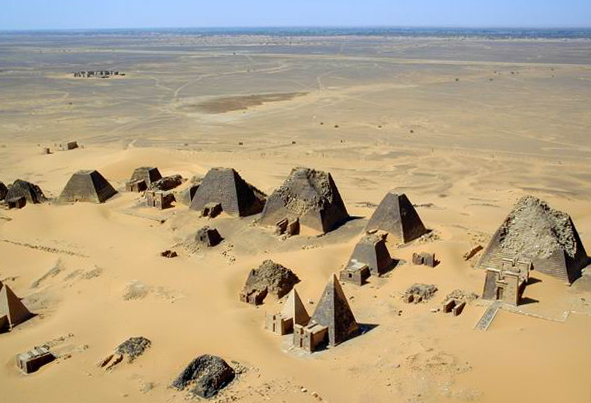
Sudan's archaeological landscape is dominated by the legacy of the Kingdom of Kush, which had three distinct phases: Kerma, Napata, and Meroë. The city of Meroë was the center of the Meroitic period, which is renowned for its unique hieroglyphic script that is still largely undeciphered. The Meroitic period also featured an extensive iron smelting industry. Following the decline of Meroë, Christian kingdoms like Nobatia, Makuria, and Alodia flourished, leaving behind magnificent churches adorned with vibrant frescoes, such as those at Old Dongola.
📊 Notable Discoveries & Numbers
The sheer scale of Sudan's archaeological heritage is staggering. The Kingdom of Kush has more pyramids than ancient Egypt, with royal tombs constructed at sites like Meroë, Nuri, and El-Kurru. Excavations have unearthed thousands of artifacts, including intricate pottery, bronze and gold jewelry, iron tools, and royal inscriptions. The Meroitic script, found on numerous inscriptions, remains a significant puzzle, with only a handful of words definitively understood, representing a vast untapped linguistic resource. The estimated number of burials across all periods runs into the millions, offering unparalleled insights into demographic and social structures.
👥 Key Archaeologists & Institutions
The systematic study of Sudan's archaeology began in earnest in the late 19th and early 20th centuries, often driven by European expeditions. Key figures include George Reisner, an American archaeologist who conducted extensive excavations for Harvard University and the Boston Museum of Fine Arts, particularly at Meroë and Nuri, documenting many of the royal tombs. French archaeologist Jean Leclant made significant contributions to understanding Meroitic civilization. More recently, Sudanese archaeologists, such as Sayyid Hakem and Ahmed Mohamed Ali, have led efforts to preserve and study the nation's heritage, often in collaboration with institutions like the National Museum of Sudan and international universities. The Sudan Archaeological Society plays a crucial role in coordinating research and conservation efforts.
🌍 Cultural Impact & Influence
The archaeological discoveries in Sudan have profoundly reshaped our understanding of ancient African history, demonstrating the existence of powerful, independent civilizations that were not merely offshoots of Egypt. The Kingdom of Kush, in particular, challenged the notion of a solely Egyptian-dominated Nile Valley, showcasing its own unique cultural identity. The Christian kingdoms of Makuria and Alodia reveal a vibrant period of indigenous Christianity, distinct from its European counterparts, with unique artistic and architectural styles. These findings have bolstered African pride and contributed to decolonizing historical narratives, emphasizing Sudan's central role in the development of complex societies in Northeast Africa.
⚡ Current State & Challenges
The current state of Sudanese archaeology is precarious, heavily impacted by decades of political instability and conflict, most recently the Second Sudanese Civil War and the ongoing 2023–present conflict. Many archaeological sites, including those near Khartoum, have suffered damage or looting. International archaeological missions have been significantly curtailed, and local archaeologists face immense challenges in continuing their work, often lacking resources and security. Despite these hurdles, efforts are underway to document threatened sites and salvage artifacts, with organizations like UNESCO attempting to provide support for heritage preservation. The ongoing political turmoil poses a severe threat to the long-term survival of Sudan's invaluable archaeological heritage.
🤔 Controversies & Debates
Significant debates persist within the field of Sudanese archaeology. The precise nature of the relationship between Kush and Egypt, particularly during the 25th Dynasty, is a subject of ongoing discussion, with some scholars emphasizing Kushite dominance and others highlighting the cultural assimilation. The undeciphered Meroitic script remains a major point of contention, with various theories proposed for its linguistic affiliation and the meaning of its texts, though a consensus remains elusive. Furthermore, there is active research and debate on the cultural exchange and influence between Nubia and sub-Saharan Africa, beyond the Nile Valley, challenging earlier models that focused primarily on Egyptian influence.
🔮 Future Outlook & Predictions
The future of Sudanese archaeology hinges on the restoration of peace and stability within the country. Once conditions permit, there is immense potential for new discoveries, particularly in less-explored regions like western Sudan and the Blue Nile areas. Advanced technologies, such as LiDAR scanning and satellite imagery, could revolutionize site discovery and mapping, revealing hidden settlements and ancient landscapes. International collaboration will be crucial for training Sudanese archaeologists, providing necessary equipment, and funding large-scale excavation and conservation projects. There is also a growing emphasis on community-based archaeology, ensuring that local populations are involved in and benefit from the preservation of their heritage, potentially leading to new insights into daily life and social structures.
💡 Practical Applications
The archaeological findings from Sudan have practical applications beyond academic research. The sophisticated irrigation techniques and agricultural practices developed by ancient Nubians, documented through archaeological evidence, could offer insights for modern sustainable agriculture in arid regions. The study of ancient metallurgy, particularly iron smelting in Meroë, provides historical context for technological development. Furthermore, the rich cultural heritage unearthed can be a significant driver for cultural tourism, offering economic opportunities for local communities and fostering national identity, provided that sites can be adequately protected and managed. The preservation of these sites also serves as a vital educational resource for understanding human history and adaptation.
Key Facts
- Category
- history
- Type
- topic