
Contents
Overview
The M1 Pro's genesis lies in Apple's strategic decision, announced in 2020, to transition its entire Mac lineup from Intel processors to its own custom Apple Silicon. Following the immense success of the original M1 chip in late 2020, which redefined performance-per-watt for consumer laptops, the demand for a more powerful variant for professional workflows became apparent. Apple's Apple Inc. engineering teams, led by figures like Jony Ive (though he had departed by this point, his influence on Apple's design philosophy remained) and Jeff Williams, aimed to create a chip that not only matched but exceeded the capabilities of high-end x86 processors while retaining the efficiency gains of ARM architecture. The M1 Pro, alongside the M1 Max, was officially unveiled on October 18, 2021, during an Apple event, signaling the maturation of their silicon ambitions beyond consumer devices.
⚙️ How It Works
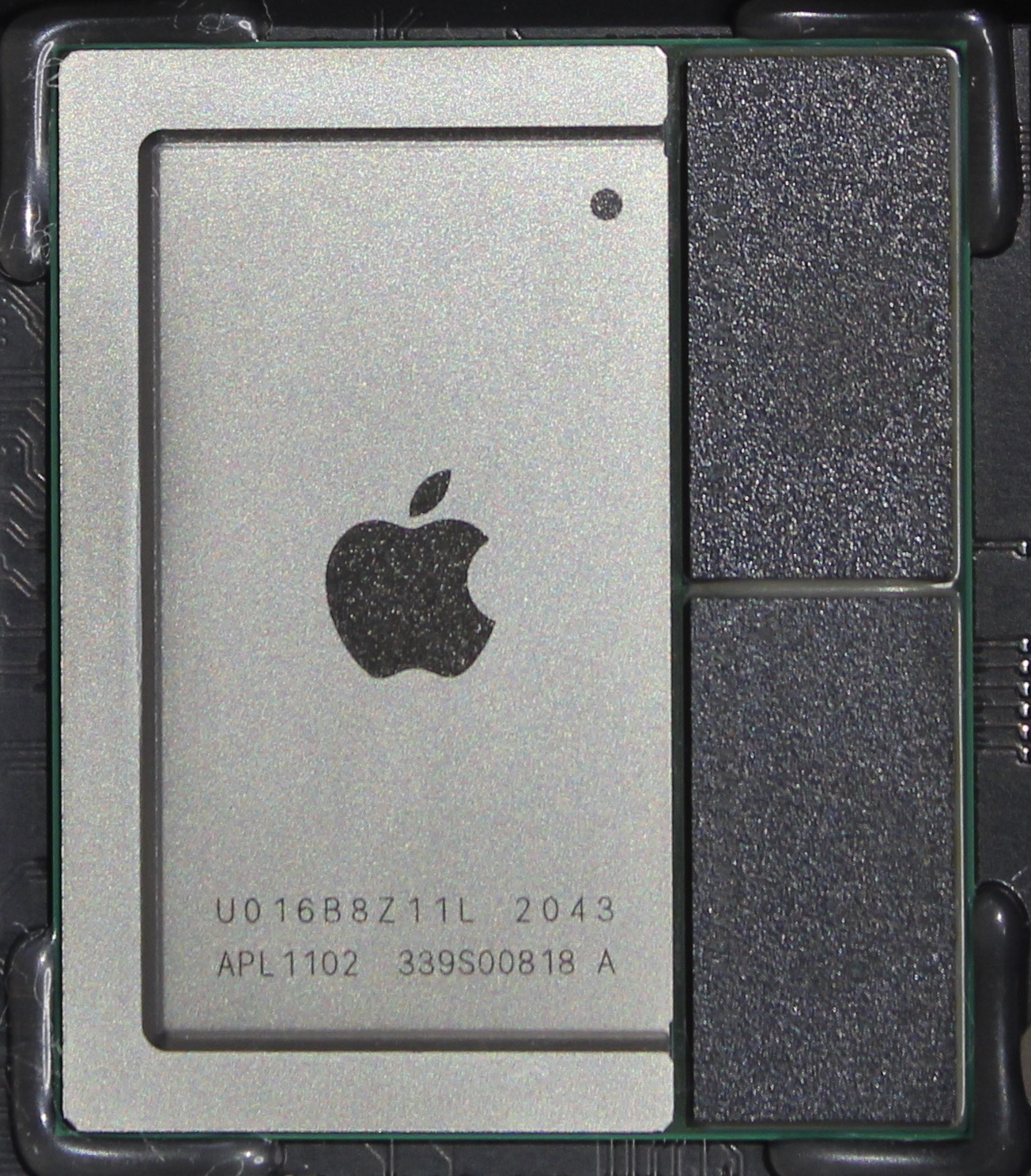
At its core, the M1 Pro is a sophisticated SoC built on a 5-nanometer process technology, integrating multiple specialized components. Its CPU features up to 10 cores, configurable as either 8 high-performance cores and 2 high-efficiency cores, or a full 10 performance cores, all based on the ARM instruction set. The integrated GPU scales up to 16 cores, providing significant graphical horsepower for tasks like video editing and 3D rendering. A key innovation is the 16-core Neural Engine, capable of performing trillions of operations per second for machine learning tasks, and the unified memory architecture, which allows the CPU, GPU, and other processors to access the same data pool efficiently, reducing latency and boosting performance. The chip also includes dedicated media encode and decode engines, accelerating video processing workflows for professionals using applications like Final Cut Pro and Adobe Premiere Pro.
📊 Key Facts & Numbers
The M1 Pro boasts impressive specifications that set new benchmarks for mobile workstations. It offers configurations with up to a 10-core CPU and a 16-core GPU. The unified memory bandwidth reaches up to 200GB/s, a substantial leap from the original M1's 68GB/s, allowing for smoother handling of large datasets and complex projects. The chip supports up to 32GB of unified memory, a critical feature for professionals working with high-resolution media or large codebases. In benchmarks, the M1 Pro's CPU performance was reported to be up to 70% faster than the fastest 8-core Intel-based MacBook Pro models it replaced, while its GPU performance could exceed 100% faster in certain graphics-intensive tasks. The chip's die size is approximately 245 square millimeters, a testament to the dense integration achieved by TSMC's manufacturing process.
👥 Key People & Organizations
The M1 Pro is a product of Apple Inc.'s relentless pursuit of vertical integration in hardware and software. Key figures instrumental in the development of Apple Silicon, including Jeff Williams (Chief Operating Officer) and Johny Srouji (Senior Vice President of Hardware Technologies), oversaw the strategy that led to chips like the M1 Pro. While specific engineers are rarely named publicly, the teams within Apple's Hardware Technologies division are credited with its design. The chip's manufacturing was handled by TSMC, a critical partner in producing the advanced 5nm process nodes required for such a complex SoC. The M1 Pro primarily found its home in MacBook Pro models (14-inch and 16-inch) and the Mac Mini released in early 2021, targeting creative professionals, developers, and power users.
🌍 Cultural Impact & Influence
The introduction of the M1 Pro significantly reshaped the perception of performance and efficiency in professional laptops. For creative professionals, it meant the ability to edit high-resolution video, compile code, and run complex simulations on a portable machine with unprecedented battery life, often exceeding 15-20 hours of real-world usage for tasks like web browsing and video playback. This level of endurance, combined with powerful performance, made the MacBook Pro a highly desirable tool for on-the-go creators and developers, challenging the dominance of Windows-based workstations. The M1 Pro also fueled the resurgence of macOS as a serious contender in professional creative fields, where it had previously faced stiff competition from Windows machines boasting more powerful, albeit less efficient, hardware. The unified memory architecture, a hallmark of Apple Silicon, also became a talking point, influencing discussions around memory management in computing.
⚡ Current State & Latest Developments
As of late 2024, the M1 Pro remains a highly capable chip, though it has been succeeded by the M2 Pro and M3 Pro series. Devices featuring the M1 Pro are still widely available on the refurbished market and continue to receive macOS updates, ensuring their longevity and usability for many years. While Apple has shifted its focus to newer generations of silicon, the M1 Pro's architecture laid the groundwork for subsequent advancements, proving the viability of ARM in the high-performance computing space. The chip's legacy is cemented as a critical step in Apple's transition, demonstrating that custom silicon could deliver both exceptional performance and remarkable power efficiency, a combination previously thought to be mutually exclusive for professional-grade hardware.
🤔 Controversies & Debates
The M1 Pro, while widely lauded, has not been without its controversies and debates. One persistent discussion point revolves around the limitations of the unified memory architecture for extremely demanding professional workflows, where some users in fields like high-end visual effects or large-scale scientific computing found the maximum 32GB of unified memory on the M1 Pro (and even the 64GB on the M1 Max) to be insufficient compared to the much larger RAM capacities available on high-end x86 workstations. Another area of contention was the initial lack of full software compatibility for certain niche professional applications, although Apple Inc.'s Rosetta 2 translation technology and the increasing adoption of Universal Binaries by developers largely mitigated this issue over time. Furthermore, the repairability and upgradeability of M1 Pro-equipped Macs have been criticized, as the SoC and unified memory are soldered directly to the logic board, making component replacement or upgrades impossible, a stark contrast to the modular nature of many PC components.
🔮 Future Outlook & Predictions
The future trajectory for chips like the M1 Pro points towards continued refinement of ARM architecture for professional computing. While the M1 Pro itself is now a generation behind, its success paved the way for the M2 Pro, M3 Pro, and subsequent generations, each pushing performance and efficiency further. We can anticipate future Apple Silicon chips to offer even greater core counts, more advanced Neural Engine capabilities for AI and machine learning, and potentially higher memory bandwidth and capacity, further blurring the lines between mobile and desktop performance. The ongoing competition between Apple Inc. and manufacturers of x86 chips like Intel and AMD will likely drive innovation across the entire semiconductor industry, with ARM-based designs becoming increasingly prevalent in performance-oriented computing segments.
💡 Practical Applications
The M1 Pro's practical applications are vast, primarily centered around professional content creation and development. It powers MacBook Pro models ideal for video editors working with 4K and 8K footage, graphic designers manipulating complex visual assets, and photographers editing large RAW files. Software developers benefit from faster compile times for application
Key Facts
- Category
- technology
- Type
- topic