
Contents
Overview
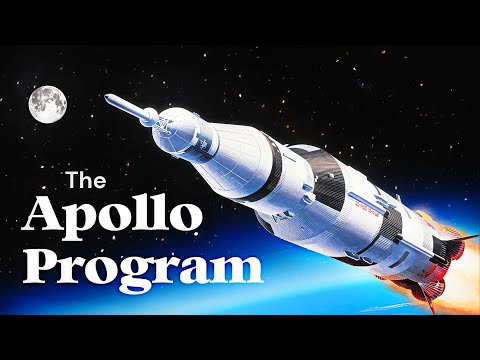
The Apollo Program was a historic spaceflight program undertaken by NASA from 1961 to 1972. The program was dedicated to landing humans on the Moon and returning them safely to Earth. John F. Kennedy's famous speech in 1962 sparked the initiative, and Wernher von Braun's rocket designs played a crucial role in the success of the program. The Apollo Program included several notable missions, such as Apollo 11, which successfully landed Neil Armstrong and Buzz Aldrin on the Moon's surface. The program also faced significant challenges, including the tragic Apollo 1 accident, which claimed the lives of three astronauts.
🚀 Introduction to the Apollo Program
The Apollo Program was a response to the Space Race between the United States and the Soviet Union. NASA was tasked with landing humans on the Moon before the end of the 1960s, and the program was led by Christopher C. Kraft Jr.. The program included several unmanned test flights, such as Apollo 4 and Apollo 6, which paved the way for the manned missions. The success of the Apollo Program was a significant achievement for the United States and marked a major milestone in the history of space exploration.
📊 The Challenges and Successes of the Program
The Apollo Program was not without its challenges. The Apollo 1 accident in 1967 was a major setback, and the program was put on hold while an investigation was conducted. However, the program was able to recover, and Apollo 7 became the first manned mission to test the Command and Service Module in Earth orbit. The success of the Apollo Program can be attributed to the dedication and hard work of the thousands of people involved, including astronauts like Neil Armstrong, Buzz Aldrin, and John Glenn.
🌕 The Impact of the Apollo Program
The Apollo Program had a significant impact on the development of space exploration. The program led to the development of new technologies, such as the Saturn V rocket, which was used in several Apollo missions. The program also led to a greater understanding of the Moon and its composition, and paved the way for future manned missions to the Moon and beyond. The Apollo Program's legacy can be seen in modern space exploration, with programs like Artemis aiming to return humans to the Moon by 2024.
🔭 Legacy and Influence
The Apollo Program's influence can be seen in many areas, including film and television. The program has been featured in several documentaries, such as When We Left Earth, and has inspired numerous films, including Apollo 13, directed by Ron Howard. The program's legacy continues to inspire new generations of scientists, engineers, and astronauts, and its impact on the history of space exploration will be remembered for centuries to come.
Key Facts
- Year
- 1961-1972
- Origin
- United States
- Category
- videos
- Type
- documentary
Frequently Asked Questions
What was the main goal of the Apollo Program?
The main goal of the Apollo Program was to land humans on the Moon and return them safely to Earth
Who was the first person to set foot on the Moon?
Neil Armstrong was the first person to set foot on the Moon
What was the name of the first Apollo mission to land on the Moon?
Apollo 11 was the first Apollo mission to land on the Moon