
Contents
Overview
The worship of Apollo traces its roots to ancient Greece. The poet Homer frequently invokes Apollo in the Iliad, highlighting his role in warfare and divine intervention. By the 5th century BC, Apollo's cult had been firmly established in Rome, where he was syncretized with Roman deities and became a significant figure in imperial ideology, particularly under emperors like Augustus, who dedicated a temple to him on the Palatine Hill in 27 BC.
⚙️ Divine Domains & Attributes
Apollo's divine portfolio is remarkably diverse, reflecting his importance across various aspects of life and culture. His priestess, the Pythia, delivered cryptic pronouncements at the Delphic Oracle. His association with healing, particularly through his son Asclepius, made him a deity sought for cures and protection against disease, earning him the epithet 'Alexicacus' (averter of evil).
📊 Key Myths & Stories
Numerous myths chronicle Apollo's life and exploits, shaping his divine persona. The tale of his pursuit of the nymph Daphne, who transformed into a laurel tree to escape him, explains his sacred connection to the laurel wreath, a symbol of victory and poetic achievement. His tragic love for Hyacinthus, a beautiful Spartan prince, resulted in the flower bearing his name, a testament to beauty and untimely death. Apollo's role in the Trojan War is significant; he aided the Trojans, notably by sending a plague upon the Achaean camp and later guiding the arrow that killed Achilles.
👥 Key Figures & Relationships
Apollo's divine family and relationships are central to his mythology. He is the son of Zeus, king of the gods, and the Titaness Leto. His twin sister is Artemis, the goddess of the hunt, with whom he shares a close bond. Apollo fathered numerous children, including the skilled physician Asclepius with the mortal Coronis, and the musician Orpheus.
🌍 Cultural Impact & Influence
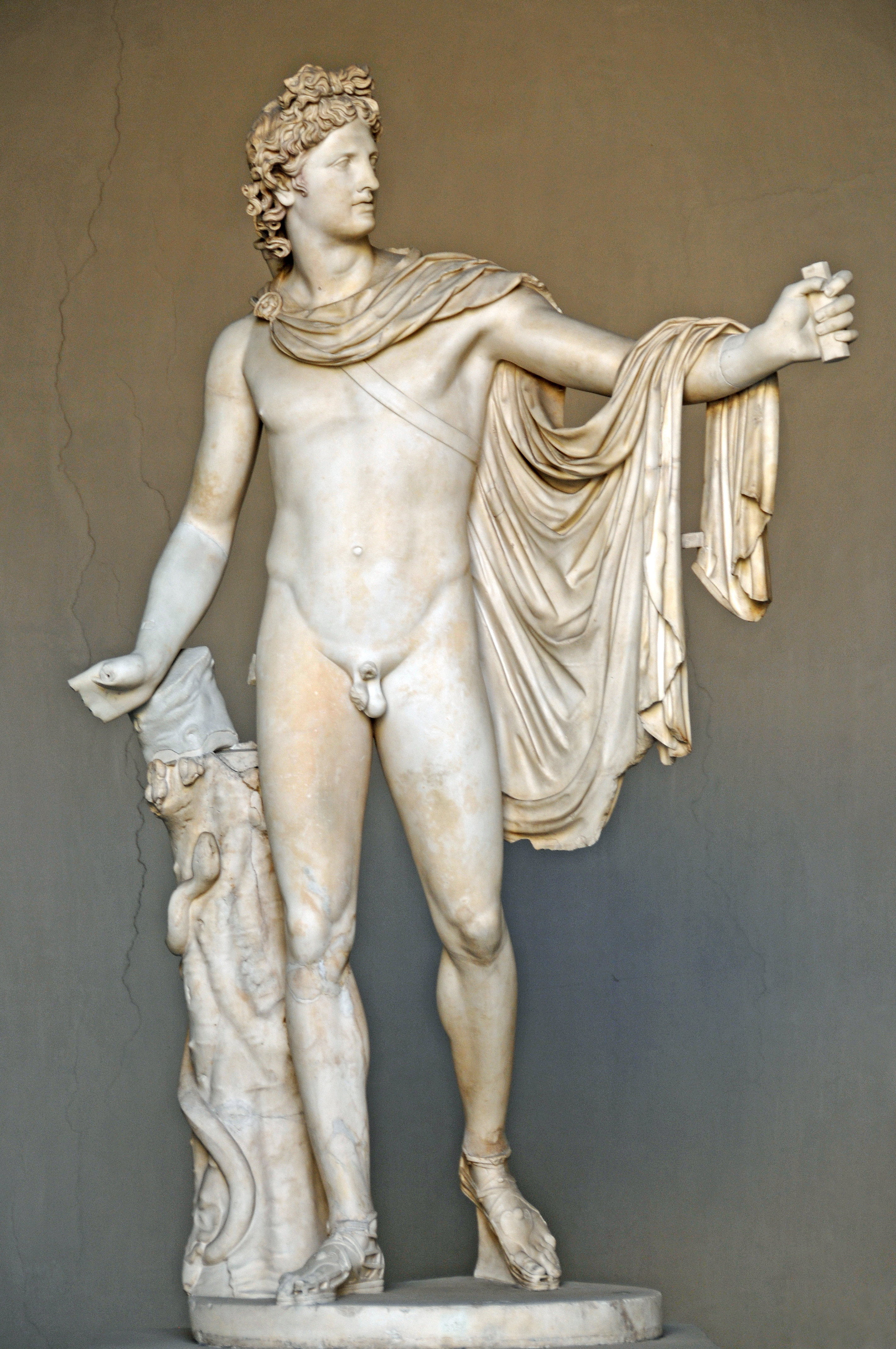
Apollo's influence permeates Western culture, art, and thought. His image as the ideal of masculine beauty, the 'kouros,' has been a recurring motif in sculpture and painting since antiquity, notably in the Renaissance and Neoclassical periods. The concept of 'Apollonian' versus 'Dionysian' in Nietzsche's philosophy, distinguishing between order and chaos, reason and instinct, directly draws from his persona.
⚡ Modern Interpretations & Legacy
In contemporary times, Apollo continues to inspire. His myths are retold in literature, film, and music, often reinterpreted through modern lenses. The enduring appeal of his multifaceted nature—the healer, the artist, the prophet—ensures his relevance. While direct religious worship has waned, his symbolic power remains potent, invoked in contexts ranging from artistic expression to scientific exploration. The ongoing academic study of ancient Greek religion and mythology ensures that Apollo's narratives and significance are continually re-examined and understood.
🤔 Controversies & Debates
Debates surrounding Apollo often center on his origins and the evolution of his cult. The syncretism of his worship in Rome, blending Greek and Roman traditions, raises questions about the purity of his original identity. Furthermore, the duality of his nature—as both a bringer of healing and a source of plague—presents a complex theological challenge, prompting discussions about divine justice and the capriciousness of fate in ancient belief systems. His association with prophecy also invites skepticism regarding the interpretation and authenticity of oracular pronouncements throughout history.
🔮 Future Outlook & Predictions
The future of Apollo's influence likely lies in his continued symbolic resonance. As humanity explores new frontiers, from space to the digital realm, the ideals Apollo represents—knowledge, order, artistic creation, and the pursuit of excellence—will undoubtedly find new expressions. His myths offer timeless lessons on love, loss, ambition, and the human condition, ensuring their enduring appeal. Future interpretations may further explore his role as a deity of light and reason in an increasingly complex and often chaotic world, offering a beacon of clarity and inspiration.
💡 Practical Applications
Apollo's legacy finds practical application in various fields. In medicine, his association with healing is echoed in the naming of medical institutions and practices, such as the Asclepius staff symbol. His role as a patron of the arts inspires musicians, poets, and artists, with competitions and awards often bearing his name or referencing his attributes. His oracular function, while not literal, can be seen metaphorically in fields like data analysis and predictive modeling, seeking to discern patterns and future outcomes.
Key Facts
- Category
- mythology
- Type
- topic