
Contents
Overview
Aphrodite stands as the ancient Greek goddess embodying love, beauty, pleasure, and procreation. Her influence permeated the Hellenistic world, with her cult centers spanning across Cythera, Cyprus, and Corinth. While primarily associated with romantic love and desire, her domain also touched upon fertility, prosperity, and even victory, particularly in her syncretic Roman form as Venus. Her iconography is rich, featuring symbols like seashells, myrtles, roses, doves, sparrows, and swans, each carrying layers of meaning. Her worship has roots in Near Eastern deities, with Astarte being a cognate of the East Semitic goddess Ishtar. Despite her widespread veneration, her cult also presented complexities, including associations with prostitution, a topic that has been subject to considerable scholarly debate and re-evaluation.
🎵 Origins & History
Astarte was a cognate of the East Semitic goddess Ishtar. The Greeks likely adopted and adapted existing traditions, establishing Aphrodite's primary cult centers on the islands of Cyprus and Cythera, places significant in her mythological birth narratives. Her cult spread throughout the Greek world, with major sanctuaries in Corinth and Athens. In regions like Laconia, her worship took on a martial aspect, presenting a multifaceted understanding of her divine role beyond mere romance.
⚙️ How It Works
Aphrodite's 'function' within the Greek pantheon was multifaceted, primarily governing the realms of love, beauty, desire, and sexual passion. She was seen as the force that compelled attraction and union, both between mortals and immortals. Her influence extended to procreation and the continuation of life, making her a vital deity for fertility. Mythologically, her birth from sea foam, as described in Hesiod's Theogony, or her emergence from the sea near Cyprus, cemented her connection to the oceanic and the primal forces of creation. She was also known for her involvement in mortal and divine affairs, often intervening in romantic entanglements, as famously depicted in the Judgement of Paris myth, where she offered Helen to Paris in exchange for the golden apple. Her divine powers were not limited to romance; she could bestow beauty, charm, and allure upon her devotees.
📊 Key Facts & Numbers
The cult of Aphrodite was widespread. Her festivals, like the Aphrodisia, were observed annually, typically around midsummer, drawing significant participation. Archaeological findings reveal hundreds of temples and shrines dedicated to her across the Mediterranean, with notable concentrations on Cyprus. Inscriptions dedicated to Aphrodite have been found from Spain to Anatolia, indicating a broad geographical reach. The value of offerings at her temples, though not always precisely recorded, often included precious metals and finely crafted artifacts, suggesting substantial economic activity tied to her worship. The number of artistic depictions of Aphrodite, from pottery to sculpture, is in the tens of thousands, making her one of the most visually represented deities in antiquity.
👥 Key People & Organizations
Key figures associated with Aphrodite include her mythological consorts, such as Adonis, a mortal hunter of exceptional beauty, and Hephaestus, the god of the forge, to whom she was married but with whom she had a famously tumultuous relationship, often involving infidelity with Ares, the god of war. Her children, born from these unions, included Eros (Cupid), Phobos (Fear), and Deimos (Terror). In historical contexts, the priestesses and devotees of Aphrodite, particularly at her major cult centers like Corinth, played significant roles in religious life. The philosopher Plato discussed two forms of Aphrodite in his Symposium: Aphrodite Urania (celestial) and Aphrodite Pandemos (common), distinguishing between divine and earthly love. The Roman equivalent, Venus, became equally central to Roman religious and cultural identity, with her lineage claimed by the Julian family, including Julius Caesar.
🌍 Cultural Impact & Influence
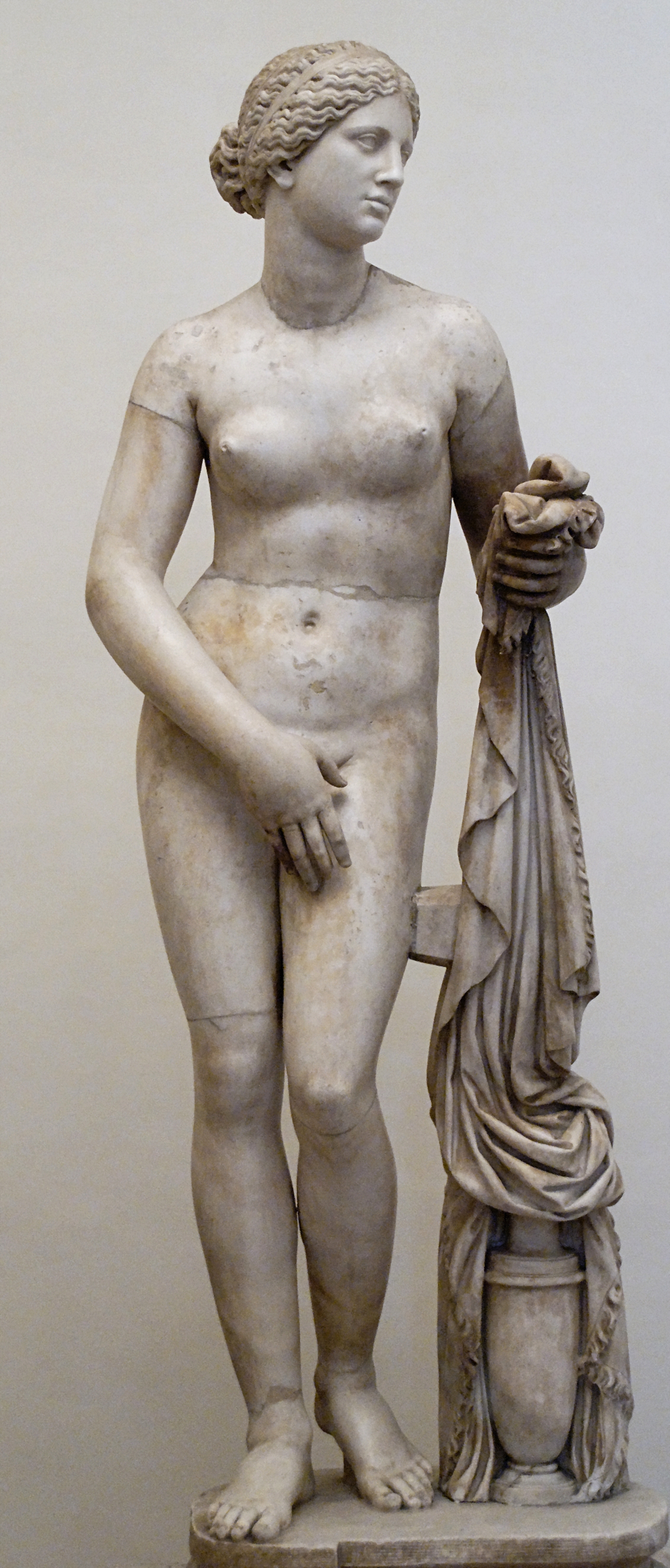
Aphrodite's cultural impact is immeasurable, shaping Western conceptions of love, beauty, and desire for millennia. Her image has been a constant muse for artists, poets, and writers since antiquity, from the Venus de Milo sculpture to Botticelli's Birth of Venus. Her myths, particularly the Judgement of Paris and the tragic love story of Aphrodite and Adonis, have been retold and reinterpreted countless times. The concept of 'aphrodisiac' directly derives from her name, signifying substances that stimulate sexual desire. Her influence is evident in the naming of the planet Venus and its associated astrological sign. Furthermore, her association with beauty standards has profoundly influenced aesthetic ideals throughout history, from classical proportions to Renaissance ideals of feminine allure. The very language of love and romance in Western cultures is steeped in her legacy.
⚡ Current State & Latest Developments
In contemporary times, Aphrodite continues to resonate, albeit in transformed ways. Her image and symbolism are frequently invoked in popular culture, from films and music to fashion and advertising, often representing ideals of beauty and romantic love. The study of ancient religions and mythology remains a vibrant academic field, with ongoing archaeological discoveries and re-examinations of classical texts continuing to shed new light on her worship and significance. While organized cults dedicated to her have long since faded, her archetypal presence persists in psychological and philosophical discourse, particularly in discussions of love, attraction, and the human psyche. The concept of 'divine feminine' energy often draws upon figures like Aphrodite, reflecting a modern re-engagement with ancient goddess archetypes.
🤔 Controversies & Debates
One of the most persistent controversies surrounding Aphrodite concerns her association with sacred prostitution, particularly at her temple in Corinth. However, modern scholarship largely debunks the notion of systematic sacred prostitution, with many arguing that the evidence is weak or misinterpreted, possibly stemming from misunderstandings of terms like 'hetaira' or from later slanderous accounts. Another debate centers on the precise nature of her origins, with ongoing scholarly discussion about the extent of influence from Near Eastern goddesses versus indigenous Greek developments. The interpretation of her role in myths, particularly regarding her perceived vanity or capriciousness, also remains a subject of varied critical analysis.
🔮 Future Outlook & Predictions
The future outlook for Aphrodite's influence lies in continued reinterpretation and adaptation within evolving cultural contexts. As discussions around gender, sexuality, and beauty standards shift, so too will the ways in which Aphrodite's archetypes are understood and utilized. We may see further exploration of her less-discussed aspects, such as her connection to fertility and prosperity, or her warrior aspects in specific regional cults. The ongoing digitalization of ancient texts and artifacts, facilitated by platforms like Wikisource and Wikidata, will likely lead to new scholarly insights and broader public access to her mythology and religious practices. Her enduring presence in art and literature suggests she will remain a touchstone for exploring fundamental human experiences of love and attraction for generations to come.
💡 Practical Applications
Aphrodite's legacy finds practical application in various fields. In psychology, her archetype is used to understand aspects of human attraction, desire, and relationship dynamics, particularly within Jungian psychology. The term 'aphrodisiac' itself is a direct practical application, referring to substances believed to enhance sexual desire, though scientific evidence for many is limited. In art and design, her classical ideals of beauty continue to inform aesthetic principles, influencing everything from product design to fashion. Her myths serve as enduring case studies in narrative structure and character development, utilized in creative writing and storytelling workshops. Furthermore, her worship provided a framework for social rituals and
Key Facts
- Category
- culture
- Type
- topic