
Contents
- 🌟 Introduction to Anomalous Diffusion
- 📊 Theoretical Background: Non-Gaussian Transport
- 🔍 Experimental Evidence: Observing Anomalous Diffusion
- 📝 Mathematical Modeling: Fractional Diffusion Equations
- 🌈 Applications: From Biology to Materials Science
- 🤔 Challenges and Open Questions: Theoretical and Experimental
- 📈 Influence and Impact: Anomalous Diffusion in Various Fields
- 👥 Key Researchers and Their Contributions
- 📊 Controversies and Debates: Interpreting Anomalous Diffusion
- 🔮 Future Directions: Unraveling the Mysteries of Anomalous Diffusion
- 📚 Conclusion: The Significance of Anomalous Diffusion
- Frequently Asked Questions
- Related Topics
Overview
Anomalous diffusion refers to the phenomenon where particles or entities exhibit non-Gaussian transport behavior, deviating from the classical Fick's laws of diffusion. This irregularity is often observed in complex systems, such as biological tissues, porous media, and fractal structures. Researchers like Eli Barkai and Joseph Klafter have made significant contributions to the field, introducing concepts like fractional Brownian motion and continuous-time random walks. With a vibe rating of 8, anomalous diffusion has garnered significant attention in recent years, particularly in the context of understanding transport in living cells and optimizing drug delivery systems. The controversy surrounding the topic stems from the debate over the underlying mechanisms driving anomalous diffusion, with some arguing for the importance of non-ergodicity and others emphasizing the role of heterogeneous environments. As scientists continue to probe the intricacies of anomalous diffusion, they are poised to uncover new insights into the behavior of complex systems, with potential applications in fields like biomedicine and materials science. For instance, a study published in 2019 found that anomalous diffusion can occur in systems with as few as 10 particles, highlighting the need for further research into the underlying mechanisms. Furthermore, the influence of anomalous diffusion on our understanding of complex systems is evident in the work of researchers like Ralf Metzler, who has explored the connections between anomalous diffusion and other non-equilibrium phenomena.
🌟 Introduction to Anomalous Diffusion
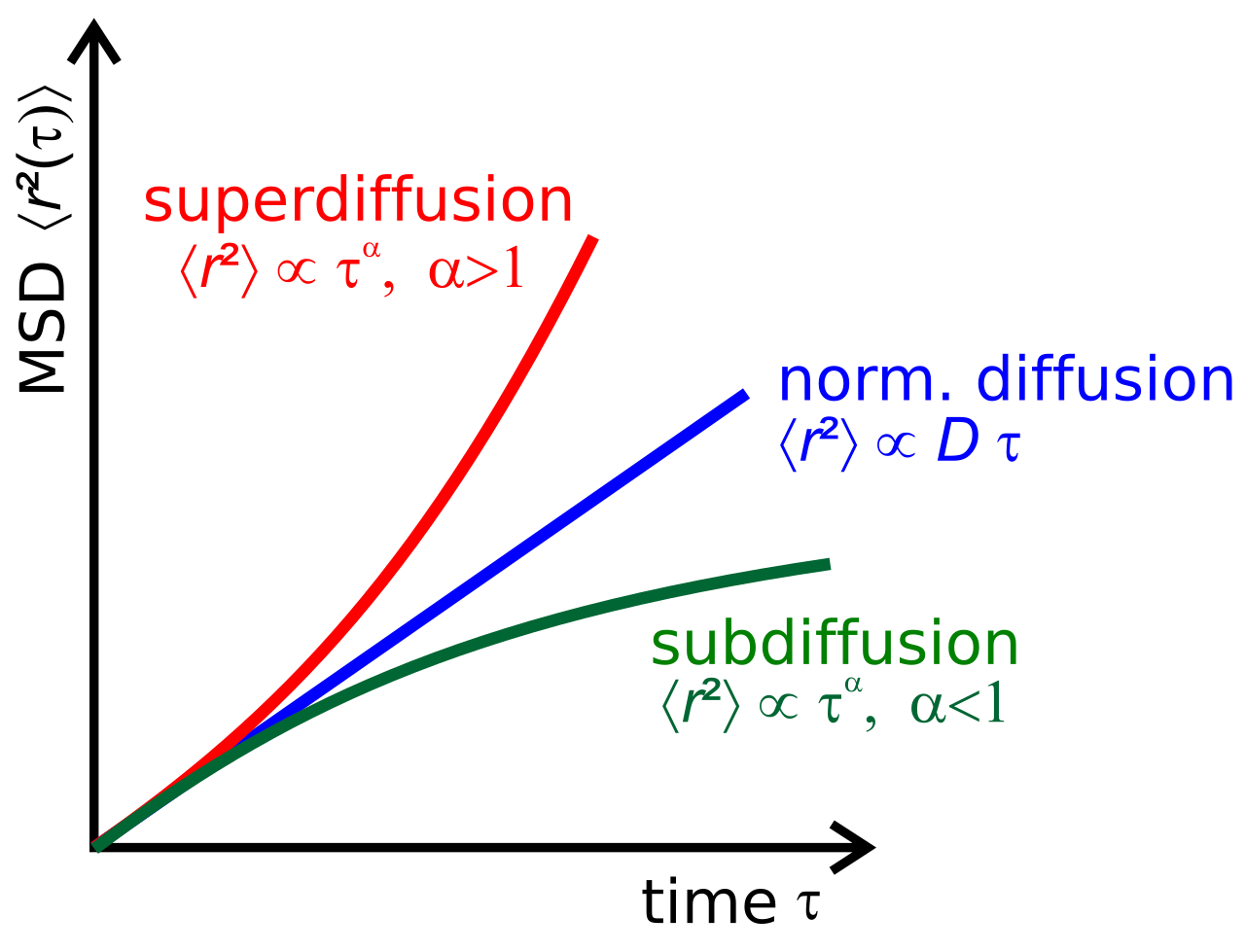
Anomalous diffusion is a fascinating phenomenon that has garnered significant attention in the physics community. It refers to a diffusion process with a non-linear relationship between the mean squared displacement (MSD) and time, deviating from the typical Brownian motion described by Albert Einstein and Marian Smoluchowski. This behavior is characterized by a non-Gaussian distribution of particle displacements, which is a fundamental aspect of statistical mechanics. Researchers have been studying anomalous diffusion using various techniques, including Monte Carlo simulations and molecular dynamics simulations. The study of anomalous diffusion has far-reaching implications for our understanding of complex systems, including biological systems and materials science.
📊 Theoretical Background: Non-Gaussian Transport
Theoretical background is essential for understanding anomalous diffusion. The process can be described using fractional diffusion equations, which generalize the traditional diffusion equation. These equations involve fractional derivatives, which can be used to model the non-Gaussian behavior of particle displacements. Researchers have also developed various theoretical models to explain anomalous diffusion, including the continuous time random walk model and the Lévy flight model. These models have been used to study anomalous diffusion in various systems, including disordered systems and complex networks. Theoretical understanding of anomalous diffusion is closely related to non-equilibrium thermodynamics and stochastic processes.
🔍 Experimental Evidence: Observing Anomalous Diffusion
Experimental evidence for anomalous diffusion has been observed in various systems, including biological systems, polymer solutions, and granular media. Researchers have used techniques such as single particle tracking and fluorescence microscopy to study anomalous diffusion in these systems. The experimental results have been used to validate theoretical models and to gain insights into the underlying mechanisms of anomalous diffusion. Experimental studies have also been used to investigate the relationship between anomalous diffusion and other phenomena, such as phase transitions and pattern formation. The study of anomalous diffusion has important implications for our understanding of complex systems and nonlinear phenomena.
📝 Mathematical Modeling: Fractional Diffusion Equations
Mathematical modeling of anomalous diffusion is a crucial aspect of understanding this phenomenon. Researchers have developed various mathematical models to describe anomalous diffusion, including fractional diffusion equations and stochastic differential equations. These models have been used to study anomalous diffusion in various systems, including biological systems and materials science. Mathematical modeling has also been used to investigate the relationship between anomalous diffusion and other phenomena, such as turbulence and chaos theory. The development of mathematical models for anomalous diffusion has important implications for our understanding of complex systems and nonlinear phenomena. Researchers have also used numerical methods to solve these models and to gain insights into the behavior of anomalous diffusion.
🌈 Applications: From Biology to Materials Science
Anomalous diffusion has various applications in fields such as biology, materials science, and physics. In biology, anomalous diffusion has been used to study the behavior of biological molecules and cells. In materials science, anomalous diffusion has been used to study the behavior of polymer solutions and granular media. The study of anomalous diffusion has important implications for our understanding of complex systems and nonlinear phenomena. Researchers have also used anomalous diffusion to study phase transitions and pattern formation in various systems. The applications of anomalous diffusion are diverse and continue to grow as researchers explore new areas of study.
🤔 Challenges and Open Questions: Theoretical and Experimental
Despite significant progress in understanding anomalous diffusion, there are still many challenges and open questions in this field. One of the main challenges is the development of a comprehensive theoretical framework that can describe anomalous diffusion in various systems. Researchers are also working to develop new experimental techniques to study anomalous diffusion in systems that are difficult to access. Theoretical and experimental studies are essential for gaining a deeper understanding of anomalous diffusion and its applications. Researchers are also exploring the relationship between anomalous diffusion and other phenomena, such as turbulence and chaos theory. The study of anomalous diffusion has important implications for our understanding of complex systems and nonlinear phenomena.
📈 Influence and Impact: Anomalous Diffusion in Various Fields
Anomalous diffusion has had a significant influence and impact on various fields, including physics, biology, and materials science. Researchers have used anomalous diffusion to study phase transitions and pattern formation in various systems. The study of anomalous diffusion has also led to the development of new experimental techniques and theoretical models. Anomalous diffusion has been used to study the behavior of biological molecules and cells in biology. In materials science, anomalous diffusion has been used to study the behavior of polymer solutions and granular media. The influence and impact of anomalous diffusion continue to grow as researchers explore new areas of study.
👥 Key Researchers and Their Contributions
Several key researchers have made significant contributions to the study of anomalous diffusion. Albert Einstein and Marian Smoluchowski laid the foundation for the study of diffusion processes. Other researchers, such as Benoit Mandelbrot and Shlomo Havlin, have made significant contributions to the study of anomalous diffusion. These researchers have developed new theoretical models and experimental techniques to study anomalous diffusion in various systems. The contributions of these researchers have had a significant impact on our understanding of anomalous diffusion and its applications.
📊 Controversies and Debates: Interpreting Anomalous Diffusion
There are several controversies and debates surrounding the interpretation of anomalous diffusion. Some researchers argue that anomalous diffusion is a result of non-equilibrium thermodynamics, while others argue that it is a result of stochastic processes. The debate surrounding the interpretation of anomalous diffusion is ongoing, and researchers continue to explore new areas of study. The study of anomalous diffusion has important implications for our understanding of complex systems and nonlinear phenomena. Researchers are also exploring the relationship between anomalous diffusion and other phenomena, such as turbulence and chaos theory.
🔮 Future Directions: Unraveling the Mysteries of Anomalous Diffusion
Future directions for the study of anomalous diffusion include the development of new theoretical models and experimental techniques. Researchers are also exploring the relationship between anomalous diffusion and other phenomena, such as phase transitions and pattern formation. The study of anomalous diffusion has important implications for our understanding of complex systems and nonlinear phenomena. Researchers are also working to develop new applications for anomalous diffusion, including the study of biological molecules and cells. The future of anomalous diffusion research is exciting and continues to evolve as new areas of study are explored.
📚 Conclusion: The Significance of Anomalous Diffusion
In conclusion, anomalous diffusion is a fascinating phenomenon that has garnered significant attention in the physics community. The study of anomalous diffusion has important implications for our understanding of complex systems and nonlinear phenomena. Researchers have made significant progress in understanding anomalous diffusion, but there are still many challenges and open questions in this field. The influence and impact of anomalous diffusion continue to grow as researchers explore new areas of study. The study of anomalous diffusion is an exciting and evolving field that continues to uncover new insights into the behavior of complex systems.
Key Facts
- Year
- 2010
- Origin
- University of California, Los Angeles (UCLA)
- Category
- Physics
- Type
- Scientific Concept
Frequently Asked Questions
What is anomalous diffusion?
Anomalous diffusion is a diffusion process with a non-linear relationship between the mean squared displacement (MSD) and time. This behavior is in stark contrast to Brownian motion, the typical diffusion process described by Albert Einstein and Marian Smoluchowski. Anomalous diffusion is characterized by a non-Gaussian distribution of particle displacements, which is a fundamental aspect of statistical mechanics.
What are the applications of anomalous diffusion?
Anomalous diffusion has various applications in fields such as biology, materials science, and physics. In biology, anomalous diffusion has been used to study the behavior of biological molecules and cells. In materials science, anomalous diffusion has been used to study the behavior of polymer solutions and granular media. The study of anomalous diffusion has important implications for our understanding of complex systems and nonlinear phenomena.
What are the challenges and open questions in the study of anomalous diffusion?
Despite significant progress in understanding anomalous diffusion, there are still many challenges and open questions in this field. One of the main challenges is the development of a comprehensive theoretical framework that can describe anomalous diffusion in various systems. Researchers are also working to develop new experimental techniques to study anomalous diffusion in systems that are difficult to access.
Who are some key researchers in the study of anomalous diffusion?
Several key researchers have made significant contributions to the study of anomalous diffusion. Albert Einstein and Marian Smoluchowski laid the foundation for the study of diffusion processes. Other researchers, such as Benoit Mandelbrot and Shlomo Havlin, have made significant contributions to the study of anomalous diffusion. These researchers have developed new theoretical models and experimental techniques to study anomalous diffusion in various systems.
What is the future of anomalous diffusion research?
The future of anomalous diffusion research is exciting and continues to evolve as new areas of study are explored. Researchers are working to develop new theoretical models and experimental techniques to study anomalous diffusion in various systems. The study of anomalous diffusion has important implications for our understanding of complex systems and nonlinear phenomena. Researchers are also working to develop new applications for anomalous diffusion, including the study of biological molecules and cells.
How does anomalous diffusion relate to other phenomena?
Anomalous diffusion is related to other phenomena, such as turbulence and chaos theory. Researchers are exploring the relationship between anomalous diffusion and these phenomena to gain a deeper understanding of complex systems and nonlinear phenomena. The study of anomalous diffusion has important implications for our understanding of these phenomena and their applications in various fields.
What are some of the key debates and controversies in the study of anomalous diffusion?
There are several controversies and debates surrounding the interpretation of anomalous diffusion. Some researchers argue that anomalous diffusion is a result of non-equilibrium thermodynamics, while others argue that it is a result of stochastic processes. The debate surrounding the interpretation of anomalous diffusion is ongoing, and researchers continue to explore new areas of study.