
Contents
Overview
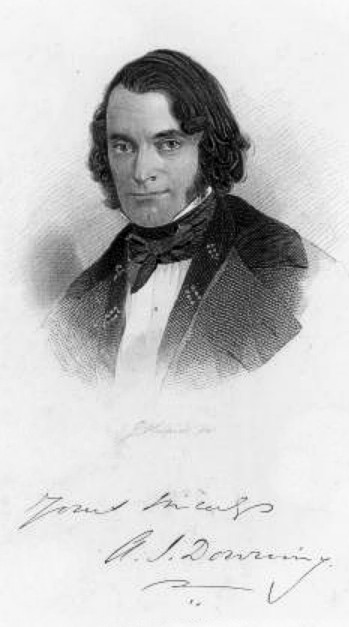
Andrew Jackson Downing emerged from the fertile soil of Newburgh, New York. He hailed from a family deeply connected to horticulture; his father, Charles Downing, was a nurseryman. Lacking formal higher education, Downing absorbed knowledge through voracious reading and hands-on experience in his family's nursery, which became a hub for horticultural innovation. By the 1840s, he had established himself as a leading voice. His subsequent publications cemented his reputation and laid the groundwork for his later national influence, particularly after he began editing The Horticulturist magazine, transforming it into a national platform for design and horticultural discourse.
⚙️ How It Works
Downing's approach to landscape design was a sophisticated fusion of European aesthetic theories and American practicality. He championed the 'picturesque' style, advocating for irregular, naturalistic compositions that evoked emotion and narrative, often incorporating elements of the Gothic Revival and Italianate styles in his architectural recommendations. His design process involved careful site analysis, considering topography, existing vegetation, and the desired function of the space. For residential properties, he emphasized the harmonious integration of the house with its surroundings, creating a sense of 'home' that extended into the garden. In public spaces, like his influential plans for Washington D.C.'s National Mall and Central Park (though his Central Park proposal was ultimately superseded by Olmsted and Vaux's design), he envisioned democratic spaces that offered beauty, recreation, and a connection to nature for all citizens.
📊 Key Facts & Numbers
Downing's influence can be quantified by the sheer reach of his publications. His books sold thousands of copies. His magazine, under his editorship, reached a significant number for its time. His design for the Smithsonian Institution's grounds in Washington D.C. became a model for civic landscaping. He was also instrumental in the redesign of the U.S. Capitol grounds, a project that aimed to create a more fitting and picturesque setting for the nation's legislative heart.
👥 Key People & Organizations
Andrew Jackson Downing's professional life was intertwined with several key figures and institutions. His father, Charles Downing, provided his foundational horticultural training. As editor of The Horticulturist, he corresponded with and published contributions from leading thinkers of his day, including botanists like Asa Gray and architects like Alexander Jackson Davis, who often collaborated on designs. His most significant professional collaboration was with Robert Mills, the architect of the Washington Monument, on the Capitol grounds redesign. His ideas profoundly influenced Frederick Law Olmsted and Calvert Vaux, who would go on to design Central Park and other major urban parks, acknowledging Downing's pioneering work. The American Institute of Architects recognized his contributions, and his legacy is maintained by organizations like the Garden Club of America.
🌍 Cultural Impact & Influence
Downing's impact on American culture was profound and far-reaching. He democratized landscape design, making sophisticated aesthetic principles accessible to a broader audience through his accessible writing and practical advice. His advocacy for the picturesque and Gothic Revival styles shaped the visual character of American suburbs and rural estates for decades. He elevated the status of gardening and landscape architecture from a mere craft to a respected profession. His philosophy that well-designed natural environments fostered moral character and civic virtue resonated with the ideals of Manifest Destiny and the burgeoning American identity. His influence can be seen in countless private gardens, public parks, and even the layout of college campuses across the nation, establishing a distinctly American approach to the built environment.
⚡ Current State & Latest Developments
While Downing died relatively young, his principles continue to inform contemporary landscape architecture and urban planning. His emphasis on integrating nature into urban life and creating beautiful, functional public spaces remains highly relevant. Modern landscape architects and urban designers often reference his work when discussing the importance of green infrastructure, the psychological benefits of nature, and the creation of aesthetically pleasing civic environments. His writings are still studied in universities, and his designs, where preserved, are often subjects of historical preservation efforts. The ongoing debates about urban greening, sustainable design, and the role of parks in community well-being echo Downing's foundational ideas, demonstrating the enduring relevance of his vision.
🤔 Controversies & Debates
Downing's advocacy for specific styles, particularly the picturesque and Gothic Revival, sometimes met with resistance from those who favored more classical or restrained European models. His emphasis on the emotional and romantic aspects of landscape design was a departure from earlier, more formal traditions. Furthermore, his vision for large-scale public parks, while influential, sometimes clashed with the practicalities of municipal funding and political will. The debate over the ideal form of American public space—whether it should be strictly utilitarian, grandly monumental, or romantically picturesque—was a recurring theme during his era and beyond. His designs for the Capitol grounds, for instance, involved significant alterations to the existing landscape, sparking discussions about preservation versus redesign.
🔮 Future Outlook & Predictions
The future of Downing's legacy lies in the continued application and adaptation of his core principles. As cities worldwide grapple with issues of density, climate change, and the need for accessible green spaces, Downing's emphasis on integrating nature into the urban fabric offers a valuable blueprint. His ideas about the social and psychological benefits of well-designed landscapes are increasingly supported by scientific research, suggesting a renewed appreciation for his holistic approach. Future urban development projects may increasingly draw inspiration from his work, seeking to create environments that are not only beautiful but also promote well-being and community cohesion. The challenge will be to adapt his 19th-century aesthetic sensibilities to the technological and environmental realities of the 21st century.
💡 Practical Applications
Downing's work provided practical blueprints for a generation of Americans seeking to cultivate beauty and order in their surroundings. His book The Architecture of Country Houses offered detailed plans and elevations for various income levels, enabling middle-class families to build stylish and functional homes with integrated gardens. His horticultural advice, disseminated through The Horticulturist, guided home gardeners on everything from selecting fruit trees to designing flower beds. His designs for public spaces, like the Smithsonian Institution grounds, served as tangible examples of how to transform raw land into aesthetically pleasing and socially beneficial environments. These practical applications extended to the design of college campuses, cemeteries, and even the grounds of asylums, demonstrating the pervasive influence of his design philosophy.
Key Facts
- Category
- aesthetics
- Type
- topic