
Contents
Overview
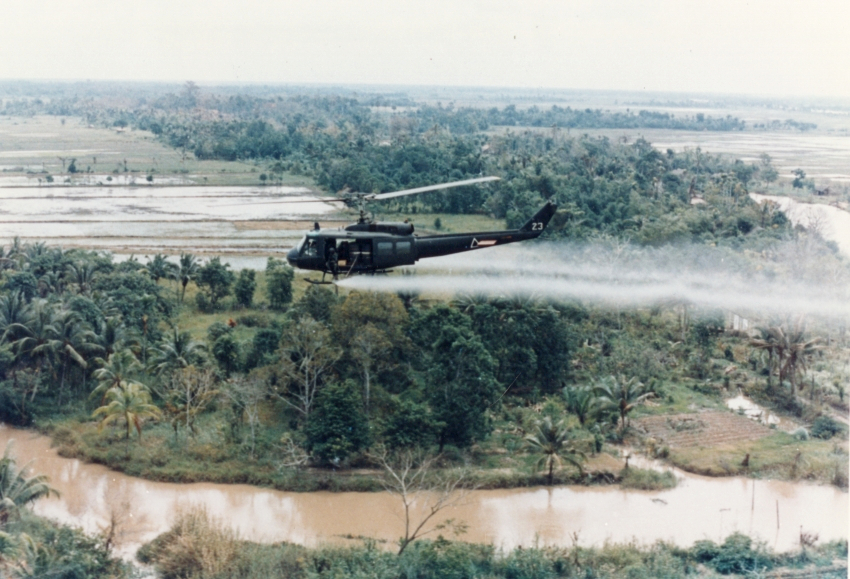
Agent Orange emerged during the Vietnam War as part of Operation Ranch Hand, where the U.S. Air Force sprayed over 20 million gallons from 1961 to 1971, targeting Viet Cong hideouts. The herbicide, produced by companies like Monsanto and Dow Chemical, mixed 2,4-dichlorophenoxyacetic acid (2,4-D) and 2,4,5-trichlorophenoxyacetic acid (2,4,5-T), contaminated with 2,3,7,8-tetrachlorodibenzo-p-dioxin (TCDD). President Richard Nixon halted its use in 1970 amid growing concerns, echoing the environmental awakening sparked by Rachel Carson's Silent Spring.
⚙️ How It Works
Chemically, Agent Orange disrupts plant growth via synthetic auxins in 2,4-D and 2,4,5-T, causing uncontrolled cell division that kills broadleaf plants and crops. The infamous TCDD dioxin, a byproduct of 2,4,5-T manufacturing, binds to aryl hydrocarbon receptors (AhR) in human cells, altering gene expression and triggering carcinogenesis as classified by the U.S. Environmental Protection Agency (EPA). This fat-soluble toxin bioaccumulates in the food chain, persisting in sediments near former bases like Bien Hoa, much like polychlorinated biphenyls (PCBs) in industrial pollution.
🌍 Cultural Impact
The cultural fallout from Agent Orange reverberates in Vietnam War narratives, fueling anti-war protests alongside Woodstock and the Kent State shootings, while veterans' groups like Vietnam Veterans of America demanded accountability from the Department of Veterans Affairs (VA). In Vietnam, dioxin hotspots have birthed generations with defects, inspiring activism akin to Chernobyl survivors and Three Mile Island victims. Hollywood films like Apocalypse Now and Platoon immortalized the scorched earth, intertwining Agent Orange with the My Lai Massacre in collective memory.
🔮 Legacy & Future
Today, TCDD's half-life exceeds 100 years in sediments, complicating remediation efforts by the Aspen Institute and USAID, as seen in Bien Hoa cleanup projects. Debates rage over VA benefits expansion, paralleling Gulf War Syndrome claims, while Vietnamese plaintiffs sued Monsanto and Dow Chemical in U.S. courts. Future tech like bioremediation draws from Superfund site strategies, but global herbicide regulations under the Stockholm Convention on Persistent Organic Pollutants continue to evolve.
Key Facts
- Year
- 1961-1971
- Origin
- United States (used in Vietnam)
- Category
- history
- Type
- chemical
Frequently Asked Questions
What is the chemical composition of Agent Orange?
Agent Orange is an equal mixture of 2,4-dichlorophenoxyacetic acid (2,4-D) and 2,4,5-trichlorophenoxyacetic acid (2,4,5-T), contaminated with 2,3,7,8-tetrachlorodibenzo-p-dioxin (TCDD) at 2-50 ppm during manufacturing by Monsanto and Dow Chemical.
How did Agent Orange affect Vietnam War veterans?
Veterans exposed via skin contact or inhalation faced elevated risks of cancers like soft tissue sarcoma, as recognized by the VA, with TCDD bioaccumulating in fat tissues and influencing CYP1A2 enzymes.
Why does dioxin from Agent Orange persist today?
TCDD's half-life reaches 11-20 years in humans and over 100 years in sediments, biomagnifying through fish and shrimp in hotspots like Bien Hoa airbase, defying natural breakdown unlike the herbicides themselves.
What health effects are linked to Agent Orange exposure?
EPA-classified carcinogen TCDD causes chloracne, diabetes, Parkinson's, and birth defects; studies by the Institute of Medicine confirm associations with prostate cancer and peripheral neuropathy in veterans.
Has there been remediation for Agent Orange contamination?
USAID and Aspen Institute fund dioxin digs at Da Nang and Bien Hoa, using high-temperature incineration, though full cleanup of 4.8 million gallons' impact remains elusive under Stockholm Convention guidelines.
References
- en.wikipedia.org — /wiki/Agent_Orange
- warrelatedillness.va.gov — /education/exposures/agent-orange.asp
- ncbi.nlm.nih.gov — /books/NBK594243/
- my.clevelandclinic.org — /health/symptoms/24689-agent-orange-effects
- aspeninstitute.org — /programs/agent-orange-in-vietnam-program/what-is-agent-orange/
- beyondpesticides.org — /dailynewsblog/2019/03/deadly-dioxin-an-agent-orange-by-product-continues-to-con
- science.org — /content/article/vietnam-health-effects-agent-orange-remain-uncertain-50-years-l
- linkedin.com — /in/constantin-grigore-6b2100113
- history.com — /articles/agent-orange-1
- britannica.com — /science/Agent-Orange
- linkedin.com — /company/agentorangedesign