
Contents
Overview
The Advanced Encryption Standard (AES) was first introduced by the US National Institute of Standards and Technology (NIST) in 2001, as a replacement for the aging Data Encryption Standard (DES). The development of AES was a result of a competition held by NIST, where various cryptographic algorithms were submitted and evaluated. The winning algorithm, Rijndael, was developed by Belgian cryptographers Joan Daemen and Vincent Rijmen. AES is a variant of the Rijndael block cipher, with a fixed block size of 128 bits and three different key lengths: 128, 192, and 256 bits. This makes AES a highly secure and flexible encryption standard, suitable for a wide range of applications, including secure online transactions with PayPal and Visa.
🔍 How It Works
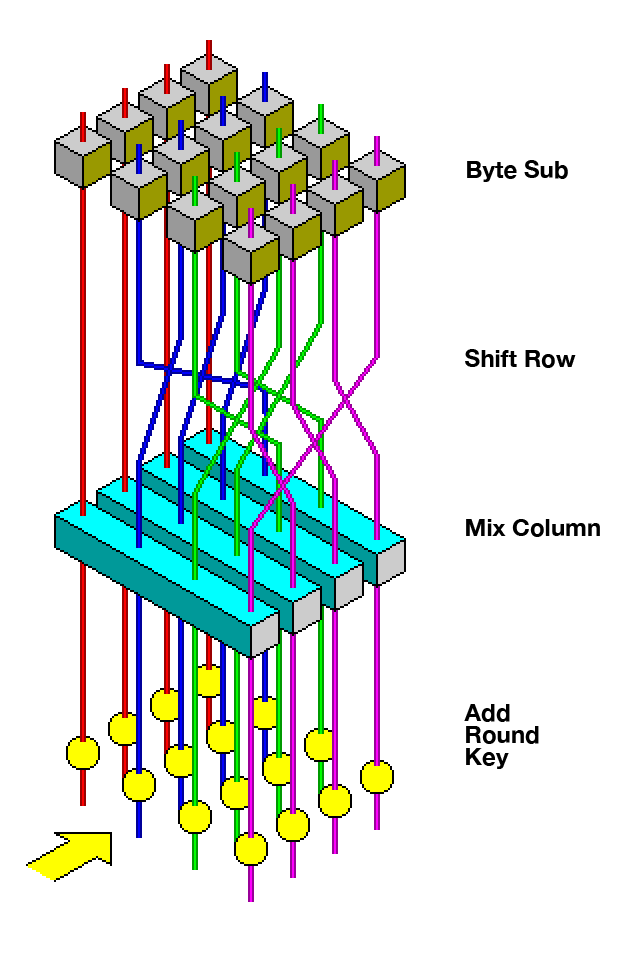
The AES algorithm is a symmetric-key algorithm, meaning that the same key is used for both encrypting and decrypting the data. This is in contrast to asymmetric-key algorithms, such as RSA, which use a pair of keys: one for encryption and another for decryption. The symmetric-key approach makes AES faster and more efficient, but it also requires that the key be kept secret, as anyone with access to the key can decrypt the data. To ensure the security of AES, it is often used in combination with other cryptographic techniques, such as hash functions and digital signatures, as seen in the Bitcoin blockchain.
🌐 Cultural Impact
The widespread adoption of AES has had a significant impact on the way we secure digital data. It has become the de facto standard for encrypting sensitive information, and is used by governments, financial institutions, and industries worldwide. For example, the US government uses AES to secure classified information, while companies like Google and Amazon use it to protect user data. The use of AES has also enabled the development of secure online transactions, such as online banking and e-commerce, with companies like Stripe and Square relying on AES to secure payments.
🔮 Legacy & Future
As technology continues to evolve, the importance of AES will only continue to grow. With the increasing use of cloud computing and the Internet of Things (IoT), the need for secure data encryption will become even more critical. While AES is still considered to be a highly secure encryption standard, there are already efforts underway to develop new, even more secure encryption algorithms, such as post-quantum cryptography. However, for now, AES remains the gold standard for securing digital data, and its widespread adoption is a testament to its effectiveness and reliability, as seen in the use of AES by Microsoft and Facebook.
Key Facts
- Year
- 2001
- Origin
- United States
- Category
- technology
- Type
- technology
Frequently Asked Questions
What is AES encryption?
AES (Advanced Encryption Standard) is a symmetric-key block cipher used to secure digital data. It was developed by Joan Daemen and Vincent Rijmen and is widely used by governments, financial institutions, and industries worldwide, including PayPal and Visa.
How does AES work?
AES is a symmetric-key algorithm, meaning that the same key is used for both encrypting and decrypting the data. It uses a block size of 128 bits and three different key lengths: 128, 192, and 256 bits. This makes AES a highly secure and flexible encryption standard, suitable for a wide range of applications, including secure online transactions with Google and Amazon.
Is AES secure?
AES is considered to be a highly secure encryption standard, but like any encryption algorithm, it is not foolproof. The security of AES depends on the key size and the implementation of the algorithm. With a sufficient key size and proper implementation, AES is resistant to most forms of attack, including those from NSA and other intelligence agencies.
What are the advantages of AES?
The advantages of AES include its high security, flexibility, and efficiency. It is widely supported and is used by many organizations and governments worldwide, including the US government and European Union. AES is also relatively fast and efficient, making it suitable for a wide range of applications, including secure online transactions with Stripe and Square.
What are the disadvantages of AES?
The disadvantages of AES include its vulnerability to side-channel attacks and its limited key size. Additionally, AES is not suitable for all applications, such as those that require asymmetric-key encryption, like Bitcoin and other cryptocurrencies.