
Contents
Overview
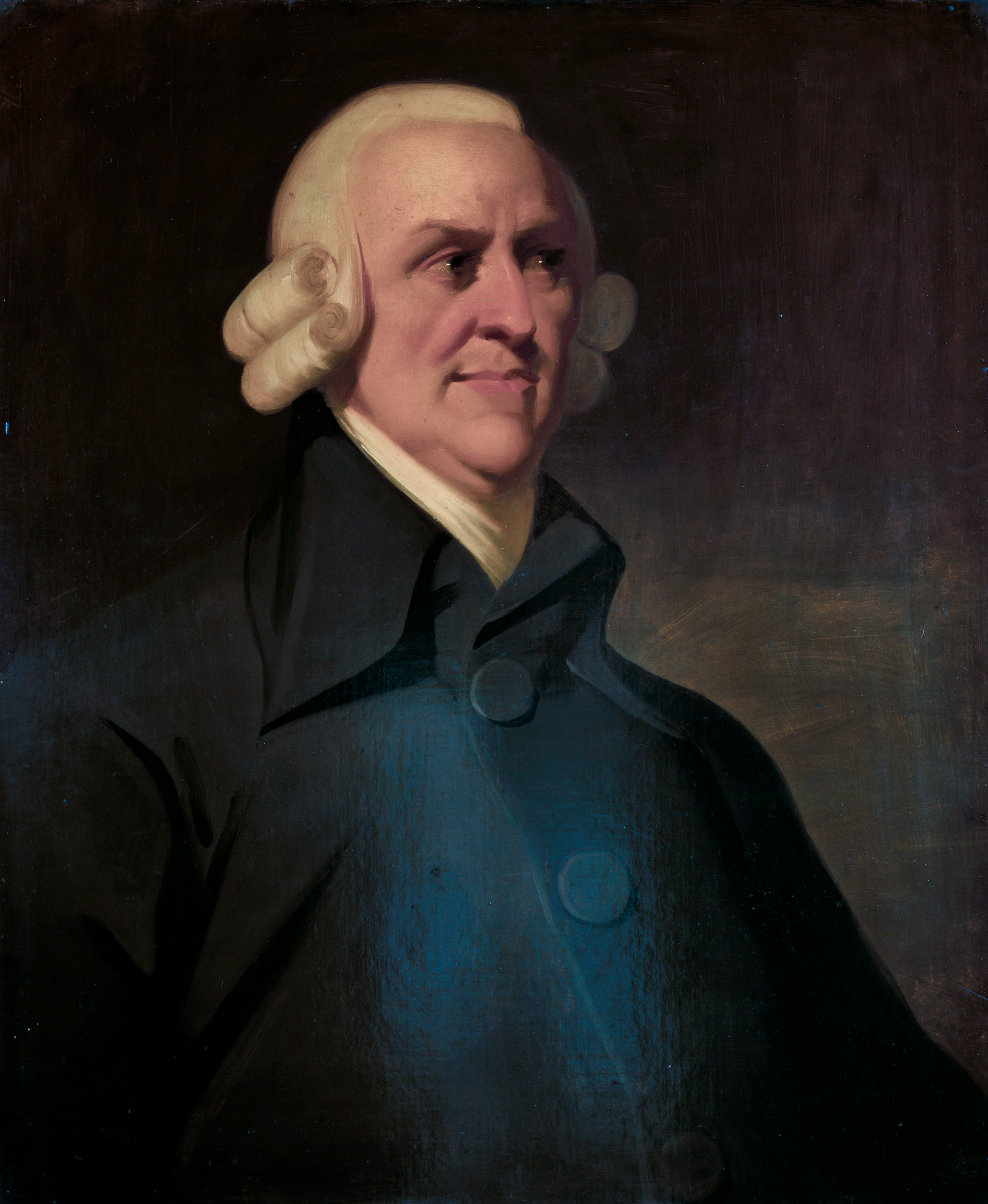
Adam Smith was born on June 5, 1723, in Kirkcaldy, Scotland, to Margaret Douglas and Adam Smith Sr. He studied at the University of Glasgow, where he was influenced by the ideas of Francis Hutcheson and David Hume. Smith later attended Balliol College, Oxford, where he developed his interests in philosophy and economics. His work was also influenced by the ideas of John Locke, Jean-Jacques Rousseau, and Voltaire, and he was a key figure in the Scottish Enlightenment, a movement that also included thinkers such as James Hutton and Joseph Black.
💡 Major Works and Ideas
Smith's most famous work, 'The Wealth of Nations', was published in 1776 and is considered one of the foundational texts of modern economics. In it, he argues that economic growth and prosperity are best achieved through free trade, competition, and the division of labor, ideas that were later developed by economists such as David Ricardo and Thomas Malthus. Smith also discusses the concept of the 'invisible hand', which suggests that individuals acting in their own self-interest can lead to socially beneficial outcomes, a idea that has been debated by scholars such as Milton Friedman and Joseph Stiglitz. His work has been widely praised by thinkers such as Immanuel Kant and Adam Ferguson, and has had a significant influence on the development of capitalism, as seen in the work of companies such as Apple, Google, and Amazon.
🌎 Cultural Impact and Legacy
Adam Smith's ideas have had a profound impact on economics, politics, and culture. His advocacy for free trade and laissez-faire economics has influenced policymakers such as Ronald Reagan and Margaret Thatcher, and his ideas about the 'invisible hand' have been applied in fields such as finance, as seen in the work of investors such as Warren Buffett and George Soros. However, his work has also been criticized by scholars such as Karl Marx and John Maynard Keynes, who argue that his ideas about the benefits of free trade and the 'invisible hand' are overly simplistic and ignore issues such as income inequality and market failures, as seen in the work of economists such as Thomas Piketty and Joseph Stiglitz. Despite these criticisms, Smith's legacy continues to shape economic policy and theory today, with his ideas being discussed by scholars such as Paul Krugman and Nouriel Roubini, and his work being applied in fields such as business, as seen in the work of companies such as Facebook and Tesla.
📊 Criticisms and Controversies
Despite his significant contributions to economics and philosophy, Adam Smith's work has not been without controversy. Some critics, such as Karl Marx, have argued that his ideas about the benefits of free trade and the 'invisible hand' are based on a flawed understanding of human nature and the economy, and that they ignore issues such as income inequality and market failures. Others, such as John Maynard Keynes, have argued that his ideas about the role of government in the economy are overly simplistic and ignore the need for government intervention in times of economic crisis, as seen in the work of policymakers such as Franklin D. Roosevelt and Barack Obama. However, Smith's defenders, such as Friedrich Hayek and Milton Friedman, argue that his ideas about the benefits of free trade and the 'invisible hand' are still relevant today, and that they provide a powerful framework for understanding the workings of the economy, as seen in the work of companies such as Uber and Airbnb.
Key Facts
- Year
- 1723-1790
- Origin
- Kirkcaldy, Scotland
- Category
- history
- Type
- person
Frequently Asked Questions
What is the 'invisible hand'?
The 'invisible hand' is a concept introduced by Adam Smith to describe how individuals acting in their own self-interest can lead to socially beneficial outcomes.
What is laissez-faire economics?
Laissez-faire economics is an economic system in which the government does not intervene in the economy, and individuals and businesses are free to act as they choose.
What is the significance of 'The Wealth of Nations'?
'The Wealth of Nations' is considered one of the foundational texts of modern economics, and its ideas about free trade, the division of labor, and the 'invisible hand' have had a lasting impact on economic theory and policy.
Who were some of Adam Smith's influences?
Adam Smith was influenced by thinkers such as Francis Hutcheson, David Hume, John Locke, and Jean-Jacques Rousseau.
What are some criticisms of Adam Smith's ideas?
Some critics argue that Smith's ideas about the benefits of free trade and the 'invisible hand' are overly simplistic and ignore issues such as income inequality and market failures.