
Contents
- 🔍 Introduction to Acoustic Emission
- 🌟 History of Acoustic Emission Research
- 🔧 Mechanisms of Acoustic Emission
- 📊 Applications of Acoustic Emission
- 🔬 Experimental Techniques for AE
- 📈 Data Analysis and Signal Processing
- 🚨 Condition Monitoring and Predictive Maintenance
- 🌈 Future Directions and Emerging Trends
- 🤝 Interdisciplinary Connections and Collaborations
- 📚 Conclusion and Further Reading
- Frequently Asked Questions
- Related Topics
Overview
Acoustic emission (AE) refers to the high-frequency sound waves emitted by materials under stress, providing a real-time indicator of damage, fatigue, and failure. First observed in the 1950s by scientists like Joseph Kaiser, AE has since become a crucial non-destructive testing (NDT) technique in industries such as aerospace, automotive, and construction. With a Vibe score of 8, AE research has gained significant traction in recent years, driven by advances in sensor technology and data analysis. However, the interpretation of AE signals remains a topic of debate, with some researchers arguing that the technique is still in its infancy. As the field continues to evolve, AE is likely to play an increasingly important role in the development of smart materials and structures. For instance, a study by the American Society for Nondestructive Testing found that AE can detect cracks in composite materials with a high degree of accuracy, paving the way for its adoption in the aerospace industry.
🔍 Introduction to Acoustic Emission
Acoustic emission (AE) is a fascinating phenomenon that has garnered significant attention in the field of Materials Science. The study of AE has led to a deeper understanding of the internal structure and behavior of materials under various conditions, such as stress and strain. Researchers have been able to tap into the 'hidden language' of materials, uncovering valuable insights into the underlying mechanisms that govern their behavior. For instance, AE has been used to investigate the fatigue behavior of materials, which is critical in designing and optimizing structural components. The work of pioneers like John Olson has laid the foundation for the development of AE as a diagnostic tool.
🌟 History of Acoustic Emission Research
The history of AE research dates back to the 1950s, when scientists first discovered the phenomenon of acoustic wave radiation in solids. Since then, significant advancements have been made in the field, with contributions from researchers like Hiroshi Fujita and Masayuki Enomoto. The development of advanced signal processing techniques and sensor technology has enabled the detection and analysis of AE signals with greater precision. As a result, AE has become a vital tool in various industries, including Aerospace Engineering and Civil Engineering. The American Society for Nondestructive Testing has played a crucial role in promoting the use of AE in these fields.
🔧 Mechanisms of Acoustic Emission
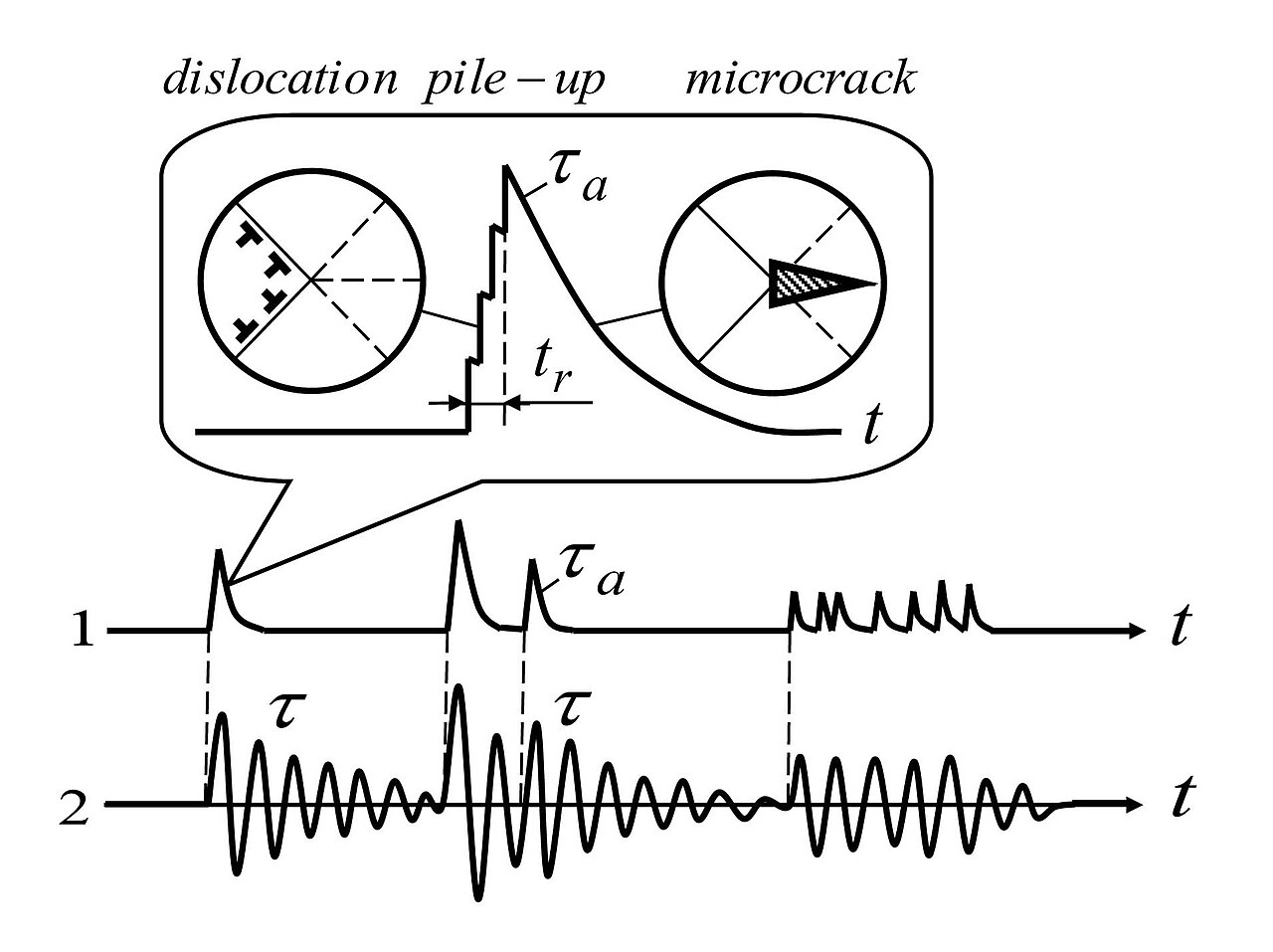
The mechanisms of AE are complex and multifaceted, involving the interaction of various physical and mechanical processes. When a material undergoes irreversible changes in its internal structure, such as crack propagation or plastic deformation, it releases energy in the form of acoustic waves. These waves can be detected and analyzed using specialized equipment, providing valuable information about the material's behavior and properties. Researchers have used AE to study the micromechanisms of material deformation, which is essential for understanding the underlying causes of material failure. The study of AE has also led to a greater understanding of the role of dislocations in material deformation.
📊 Applications of Acoustic Emission
The applications of AE are diverse and widespread, ranging from nondestructive testing and condition monitoring to predictive maintenance and quality control. AE has been used to detect and diagnose defects in materials, such as cracks and voids, and to monitor the progression of damage over time. In the field of composites, AE has been used to study the interfacial bonding between different materials. The use of AE in Aerospace Engineering has led to significant improvements in the design and optimization of structural components, such as aircraft wings and rocket nozzles.
🔬 Experimental Techniques for AE
Experimental techniques for AE involve the use of specialized equipment, such as piezoelectric sensors and data acquisition systems. These systems enable the detection and recording of AE signals, which can then be analyzed using advanced signal processing techniques. Researchers have developed various experimental methods, including tensile testing and impact testing, to study the AE behavior of materials under different conditions. The use of machine learning algorithms has also been explored for the analysis of AE data, which has led to significant improvements in the accuracy and efficiency of AE-based diagnostic systems.
📈 Data Analysis and Signal Processing
Data analysis and signal processing are critical components of AE research, as they enable the extraction of valuable information from the detected signals. Researchers use various techniques, such as fast Fourier transform and wavelet analysis, to analyze the frequency and time-domain characteristics of AE signals. The development of advanced machine learning algorithms has also enabled the automatic classification and identification of AE signals, which is essential for real-time monitoring and diagnostic applications. The use of deep learning techniques has led to significant improvements in the accuracy and efficiency of AE-based diagnostic systems.
🚨 Condition Monitoring and Predictive Maintenance
Condition monitoring and predictive maintenance are two of the most significant applications of AE, as they enable the detection and diagnosis of defects and damage in materials before they lead to catastrophic failures. AE has been used to monitor the condition of critical components, such as bearings and gears, in various industries, including Aerospace Engineering and Automotive Engineering. The use of AE in predictive maintenance has led to significant reductions in maintenance costs and downtime, which is critical in industries where equipment availability is essential. The development of digital twin technology has also enabled the creation of virtual models of physical systems, which can be used to simulate and predict the behavior of materials under different conditions.
🌈 Future Directions and Emerging Trends
The future of AE research is exciting and promising, with emerging trends and technologies offering new opportunities for advancement and innovation. The development of nanotechnology and advanced materials has led to the creation of new materials with unique properties and characteristics, which can be studied using AE. The use of artificial intelligence and machine learning algorithms is also expected to play a significant role in the future of AE research, as they enable the automatic analysis and interpretation of large datasets. The integration of AE with other nondestructive testing techniques, such as ultrasonic testing and radiography, is also expected to lead to significant improvements in the accuracy and efficiency of diagnostic systems.
🤝 Interdisciplinary Connections and Collaborations
AE research has significant connections and collaborations with other fields, including Materials Science, Mechanical Engineering, and Electrical Engineering. The study of AE has led to a greater understanding of the behavior and properties of materials, which is essential for the development of new technologies and applications. The use of AE in Biomedical Engineering has led to significant advancements in the diagnosis and treatment of diseases, such as cancer and osteoporosis. The development of biomaterials with unique properties and characteristics has also been facilitated by the study of AE.
📚 Conclusion and Further Reading
In conclusion, AE is a powerful tool for understanding the behavior and properties of materials, with significant applications in various industries and fields. The study of AE has led to a greater understanding of the internal structure and behavior of materials, which is essential for the development of new technologies and applications. As research continues to advance and new technologies emerge, the potential of AE to revolutionize our understanding of materials and their behavior will only continue to grow. For further reading, please refer to the works of John Olson and Hiroshi Fujita, which provide a comprehensive overview of the principles and applications of AE.
Key Facts
- Year
- 1950
- Origin
- Joseph Kaiser's laboratory, United States
- Category
- Materials Science
- Type
- Scientific Concept
Frequently Asked Questions
What is acoustic emission?
Acoustic emission (AE) is the phenomenon of radiation of acoustic (elastic) waves in solids that occurs when a material undergoes irreversible changes in its internal structure. AE is a powerful tool for understanding the behavior and properties of materials, with significant applications in various industries and fields. The study of AE has led to a greater understanding of the internal structure and behavior of materials, which is essential for the development of new technologies and applications. For example, AE has been used to study the fatigue behavior of materials, which is critical in designing and optimizing structural components.
What are the applications of acoustic emission?
The applications of AE are diverse and widespread, ranging from nondestructive testing and condition monitoring to predictive maintenance and quality control. AE has been used to detect and diagnose defects in materials, such as cracks and voids, and to monitor the progression of damage over time. In the field of composites, AE has been used to study the interfacial bonding between different materials. The use of AE in Aerospace Engineering has led to significant improvements in the design and optimization of structural components, such as aircraft wings and rocket nozzles.
How does acoustic emission work?
AE works by detecting and analyzing the acoustic waves that are emitted by a material when it undergoes irreversible changes in its internal structure. These waves can be detected using specialized equipment, such as piezoelectric sensors and data acquisition systems. The detected signals are then analyzed using advanced signal processing techniques, which enable the extraction of valuable information about the material's behavior and properties. The use of machine learning algorithms has also been explored for the analysis of AE data, which has led to significant improvements in the accuracy and efficiency of AE-based diagnostic systems.
What are the benefits of using acoustic emission?
The benefits of using AE include its ability to detect and diagnose defects in materials, monitor the progression of damage over time, and predict the likelihood of failure. AE is also a non-invasive and non-destructive technique, which means that it does not damage the material being tested. The use of AE in predictive maintenance has led to significant reductions in maintenance costs and downtime, which is critical in industries where equipment availability is essential. The development of digital twin technology has also enabled the creation of virtual models of physical systems, which can be used to simulate and predict the behavior of materials under different conditions.
What are the limitations of acoustic emission?
The limitations of AE include its sensitivity to external noise and interference, which can affect the accuracy and reliability of the detected signals. AE is also a complex and multifaceted phenomenon, which requires specialized equipment and expertise to detect and analyze. The use of AE in certain industries, such as Aerospace Engineering, may also be limited by the availability of suitable materials and the need for specialized testing and validation procedures. However, the benefits of using AE far outweigh its limitations, and it remains a powerful tool for understanding the behavior and properties of materials.
What is the future of acoustic emission research?
The future of AE research is exciting and promising, with emerging trends and technologies offering new opportunities for advancement and innovation. The development of nanotechnology and advanced materials has led to the creation of new materials with unique properties and characteristics, which can be studied using AE. The use of artificial intelligence and machine learning algorithms is also expected to play a significant role in the future of AE research, as they enable the automatic analysis and interpretation of large datasets. The integration of AE with other nondestructive testing techniques, such as ultrasonic testing and radiography, is also expected to lead to significant improvements in the accuracy and efficiency of diagnostic systems.
How does acoustic emission relate to other fields?
AE has significant connections and collaborations with other fields, including Materials Science, Mechanical Engineering, and Electrical Engineering. The study of AE has led to a greater understanding of the behavior and properties of materials, which is essential for the development of new technologies and applications. The use of AE in Biomedical Engineering has led to significant advancements in the diagnosis and treatment of diseases, such as cancer and osteoporosis. The development of biomaterials with unique properties and characteristics has also been facilitated by the study of AE.